Chapter
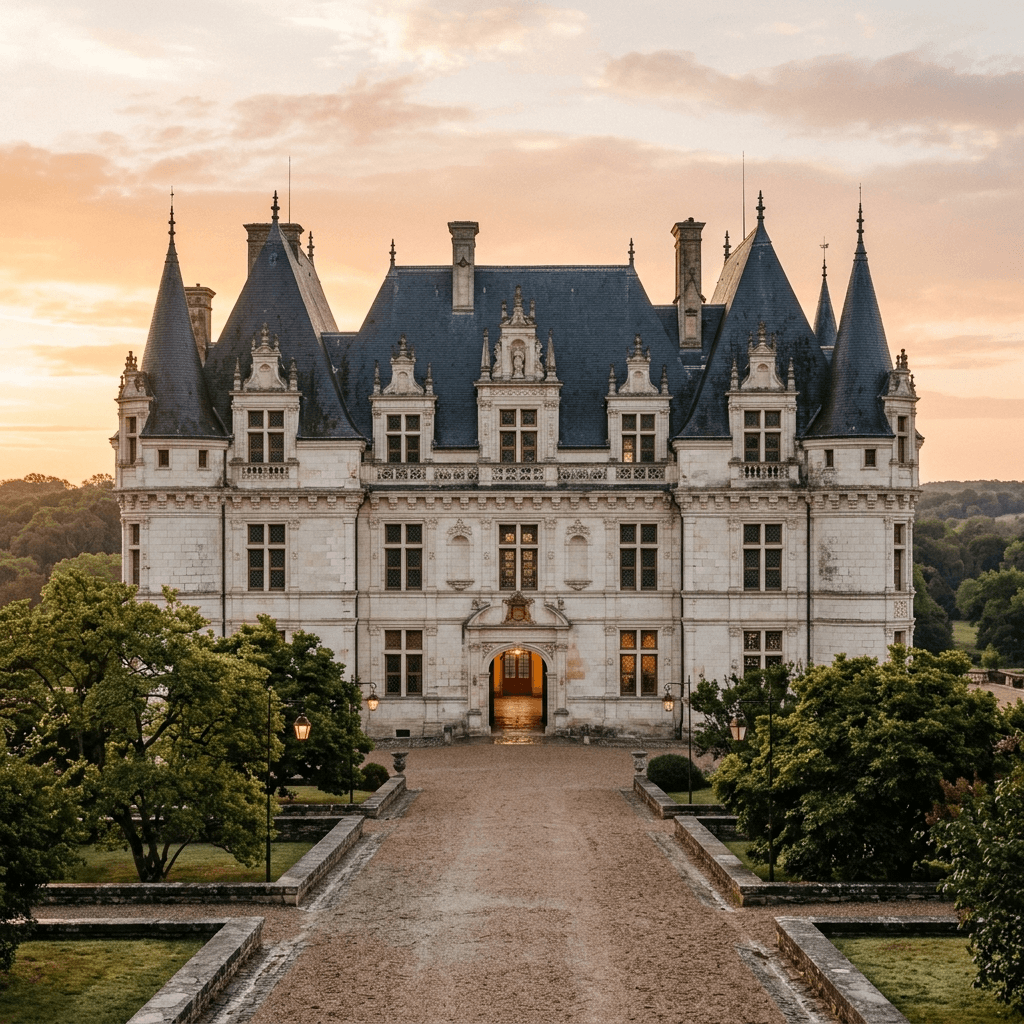
1. Château de Villandry: The Forgotten Renaissance Masterpiece You Need to Discover Before Visiting the Loire Valley
Chapter
1.1 Who Built the Château de Villandry? The True Story of Jean Le Breton, Minister to Francis I
Jean Le Breton was not a blue-blooded aristocrat, a vain duke, or a bored prince building a whim on the banks of the Loire. He was a man of state, a 16th-century technocrat who rose to the innermost circle of power under the reign of Francis I, occupying the strategic post of Controller-General of War — the Renaissance equivalent of a minister of military finance, responsible for overseeing the coffers that funded French military campaigns against the Holy Roman Empire. His trajectory perfectly illustrates the new type of elite emerging in early 16th-century France: men of bourgeois origin or minor robe nobility, elevated to power not by birth but by administrative competence and the king's personal trust. Le Breton was precisely this new man, and his personal fortune — built over decades of loyal service to the Crown — enabled him to acquire the lands of Colombier in 1532 and undertake the ambitious project of replacing the old medieval fortress with a residence that would reflect, in stone and gardens, everything he had learned, seen, and absorbed during his extraordinary diplomatic and military career.
The most fascinating chapter of Jean Le Breton's résumé is, without doubt, his tenure as French ambassador to Rome. Dispatched to the Italian peninsula to represent Francis I's interests at the Papacy, Le Breton gained privileged access to the most sophisticated circles of Italian Renaissance society at a time when Rome was buzzing with the works of Raphael, Michelangelo, and Bramante. More important than the courts and salons, however, were the gardens he visited and meticulously studied during his diplomatic post. The gardens of the Villa d'Este in Tivoli, with their monumental water features and cascading terraces, and the gardens of the Villa Medici in Rome, with their geometric layout and sophisticated dialogue between architecture and nature, left a deep imprint on the French minister's aesthetic sensibility. When Le Breton returned to France, he brought back not just diplomatic reports — he carried with him a complete visual repertoire of the most advanced Italian landscape art, knowledge he would pioneer in the gardens and architecture of Villandry.
What makes Jean Le Breton a truly exceptional figure in the history of French architecture is the fact that he did not content himself with being a mere passive patron, a distant financier who hired architects and waited for the results. Evidence suggests he acted as the true creative director of the Villandry project, translating his Italian experiences into a coherent architectural program that anticipated by decades the principles the French monarchy would officially adopt. His understanding of architecture as an instrument for the representation of power — an idea he absorbed directly from the papal palaces and cardinalitial villas of Rome — was applied with near-surgical precision to every detail of the castle. The rigorous symmetry of the façade, the calculated integration of building and landscape, the spatial hierarchy that organizes the built volumes — all of this reveals a design intelligence that transcends mere copying of Italian models and reaches the level of original creation. Villandry is, therefore, the architectural testament of a man who understood that the Renaissance was not merely a decorative style, but a new way of thinking about space, power, and the relationship between man and nature.
Chapter
1.2 What Stood Before the Château de Villandry? Discover the Medieval Fortress of Colombier, Demolished in 1532
Before the white tuffeau stone rose toward the sky of the Loire Valley to form the elegant façades of Villandry, the site was home to a fortress very different in both form and spirit. The estate was originally known as Columbine or Colombier — a name evoking the seigneurial dovecotes that dotted the medieval landscape of the Loire, unmistakable symbols of feudal privilege, since the right to keep dovecotes was strictly reserved for the nobility. This medieval fortress, built up over the 14th and 15th centuries, was a typical defensive structure of the region: massive, austere, inward-looking, and designed to withstand sieges and invasions. Its thick walls, watchtowers, and moats told the story of a fragmented France, torn apart by the Hundred Years' War, where every feudal lord had to secure his own survival by force of arms and the solidity of stone. Colombier was, therefore, a direct product of that dying medieval world — and that is precisely why Jean Le Breton decided to demolish it almost entirely.
The most extraordinary historical episode associated with the old fortress of Colombier dates back to the end of the 12th century, when the site — whose 14th-century keep Le Breton would later preserve as the symbolic core of his new castle — witnessed one of the most decisive diplomatic encounters in medieval European history. It was precisely at this spot that Philip II of France, known as Philip Augustus, met with Richard I of England, the legendary Richard the Lionheart, to negotiate the terms of a fragile peace between the two warring kingdoms. The meeting between the shrewd French monarch and the bellicose crusader-king of England, held beneath the shadow of medieval battlements, placed Colombier on the map of high European politics centuries before the first Renaissance flowers bloomed in its gardens. This past, laden with historical meaning, far from being erased by Le Breton's architectural revolution, was deliberately preserved as a layer of ancestral legitimacy enveloping the new construction.
Jean Le Breton's decision to demolish most of the medieval fortress of Colombier in 1532, sparing only the two 14th-century keep towers, is an architectural gesture charged with political symbolism. By destroying the walls, the moats, and the defensive curtain of the old feudal structure, Le Breton was not merely clearing physical space for his new residence — he was publicly declaring that the era of entrenched feudal lords was over and that a new order, centralized under the king's power and administered by men of state like himself, had begun. The selective demolition of 1532 thus constitutes a founding act: it marks the precise moment when Renaissance France took the place of medieval France on the lands of Villandry. Yet, by preserving the two keep towers as symbolic elements of the new architectural ensemble, Le Breton demonstrated refined political intelligence — he did not reject the past; he incorporated, domesticated, and re-signified it within the new order.
What remained of old Colombier after the demolition of 1532 was transformed into a fascinating architectural dialogue between two worlds. The two surviving towers were not concealed or disguised; on the contrary, they were visibly and proudly integrated into the new Renaissance composition, as if the modern castle sprouted directly from medieval foundations. This gesture of dynastic and territorial continuity was an unmistakable message to the local nobility: Le Breton and his descendants were not rootless upstarts, but the legitimate heirs to a lineage of power stretching back to the heroic times of Philip Augustus and Richard the Lionheart. The transition from Colombier to Villandry — the very name was changed in the 17th century to reflect the estate's new identity — is one of the most eloquent narratives in French architecture of how the Renaissance was not a traumatic rupture, but a conscious metamorphosis, one that preserved memory while radically transforming the present.
Chapter
1.3 When Was the Château de Villandry Built? The Complete Chronology from 1532 to 1536
The construction of the Château de Villandry was carried out in a remarkably short span of time by the standards of French Renaissance architecture: just 4 years, between 1532 and 1536. This impressive brevity was no accident, but the direct result of a combination of factors that converged to make the project achievable in record time. First, Jean Le Breton had considerable financial resources at his disposal, accumulated during his years as Controller-General of War to Francis I — a post that gave him privileged access to the royal Treasury and unparalleled opportunities for legitimate enrichment within the kingdom's administrative structure. Second, his position at the top of the French military hierarchy guaranteed him absolute priority in recruiting skilled labor and procuring construction materials on a large scale. And third, the Villandry project was not a labyrinth of endless wings and pavilions like Chambord — it was a compact, geometric, and streamlined composition that could be executed efficiently by teams of masons and stonecutters working simultaneously on different fronts of the construction site.
The year 1532 marks the official start of work with two simultaneous and complementary actions: the systematic demolition of most of the medieval fortress of Colombier — except the two keep towers to be preserved as symbolic anchors — and the excavation of the foundations for the new Renaissance building on the freshly cleared ground. The precise chronology of those first months of work reveals impressive logistics: while one demolition crew carefully dismantled the defensive walls and ancillary buildings of the old fortress, another crew was already digging foundation trenches and preparing the footings that would receive the first courses of tuffeau stone. This calculated overlap of tasks demonstrates that Le Breton and his master builders were not improvising — they were executing a meticulously crafted plan, most likely drawn up during the years when the minister was still serving as ambassador in Rome, dreaming of the castle he would one day build.
The year 1533 witnessed the rapid rise of the structural walls of the castle's main body. The tuffeau stone, quarried from local pits in the Loire Valley and transported by river to the vicinity of the building site, proved to be an ideal material for accelerated construction: soft enough to be carved with precision by stonemasons, yet strong enough to support multiple storeys and the heavy slate roofs that would crown the building. The workability of tuffeau allowed masonry crews to advance at a pace that would have been impossible with harder granites or limestones, and this geological feature of the Loire Valley — often underestimated in architectural narratives — was a decisive factor in completing construction within the ambitious schedule set by Le Breton.
By 1534, the structural skeleton of the castle was essentially complete. The U-shape that defines Villandry's plan was now fully visible, with the central block flanked by two perpendicular wings embracing the courtyard of honor facing the valley. The two medieval keep towers, preserved at the building's corners, had already been integrated into the new ensemble, and the slate roofs were beginning to be laid over the timber structures crowning the upper storeys. The speed of construction at this intermediate stage is attested by the stylistic uniformity that Villandry displays to this day — a uniformity possible only when a project advances without prolonged interruptions, under the direction of a single architectural program conceived from the outset as a coherent whole.
The years 1535 and 1536 were devoted to interior finishes, the installation of classically-framed windows that would revolutionize the lighting of the interiors, the completion of the roofs with their distinctive Spanish-influenced colored ceramic roof crests, and the start of the landscaping works that would give rise to the estate's first Renaissance gardens. In 1536, Jean Le Breton could at last contemplate his finished creation: in just 4 years, the old medieval fortress of Colombier had been transformed into one of the purest examples of French Renaissance architecture — a castle that, despite its modest scale compared to royal residences, rivaled them in conceptual sophistication, purity of line, and innovative integration of architecture and landscape. The chronology from 1532 to 1536 is not, therefore, merely a sequence of dates — it is the record of one of the most efficient and visionary architectural operations of the French Renaissance.
Chapter
1.4 Why Is the Château de Villandry Considered the Most "French" Renaissance Castle in the Loire Valley?
The claim that the Château de Villandry is the most "French" of the Renaissance castles of the Loire Valley may sound, at first glance, like a paradox — after all, its architecture is deeply rooted in the Italian models that Jean Le Breton absorbed during his embassy in Rome. Yet it is precisely at this point that the project's genius lies: Villandry is not a servile copy of Italian architecture transplanted onto French soil, but an original synthesis that adapts the principles of the Italian Renaissance to the building traditions, materials, and cultural spirit of Francis I's France. While Chambord is an exuberant hybrid mixing medieval towers with Renaissance ornamentation in an almost theatrical fashion, and Chenonceau is a bridge-gallery of uniquely feminine grace, Villandry is the purest and most orthodox expression of what one might call "early French classicism" — an architecture that pursues balance, proportion, and clarity as supreme values.
The intrinsically French character of Villandry is evident, first and foremost, in the very typology of the building. The U-shaped plan, with the central block flanked by two wings projecting forward and embracing the courtyard of honor, is a French reinterpretation of the internal courtyard of the Italian Renaissance palazzo. In Italy, urban palaces — such as the Palazzo Farnese in Rome — were organized around a completely enclosed inner courtyard, a private space turned inward. At Villandry, the courtyard of honor is open on one side, facing the valley and the gardens, establishing a dialogue between architecture and landscape that is deeply characteristic of the French sensibility. This openness toward the outside — toward the light, the river, the cultivated fields — reveals a relationship with nature that differs fundamentally from the urban enclosure of Italian palaces and foreshadows the long French tradition of castles that project themselves over the landscape as privileged balconies on the world.
The second element that gives Villandry its distinctly French character is the treatment of the façade. The castle's symmetrical façade, rigorously organized around a central axis, with its classically-framed windows rhythmically distributed and its volumes perfectly balanced, is often singled out by architectural historians as an early essay in the principles that would, a century later, reach their monumental expression at the Palace of Versailles. The bilateral symmetry that governs the composition is no superficial embellishment, but the visible manifestation of a worldview in which reason, order, and hierarchy are structuring values — a conception that would become the essence of French classicism under Louis XIV. Villandry is, in this sense, the direct ancestor of Versailles: already present within it, on a reduced scale but in pure form, are the principles of spatial organization that would define the architecture of power in France over the next two centuries.
There is also a third aspect, less obvious but equally revealing, that confirms Villandry's French identity: the choice and treatment of the building materials. Tuffeau stone, the soft white limestone of the Loire Valley, is the vernacular material par excellence of the region, used since Roman times to raise the cathedrals, castles, and houses that dot the banks of the river. By building his Renaissance castle entirely in tuffeau, Le Breton was not merely opting for a practical and economical solution — he was rooting his modern project in the local building tradition, creating an edifice that, despite its innovative architectural language, conversed perfectly with the cultural and geological landscape of the Loire Valley. The same logic applies to the slate roofs, the traditional covering material for noble buildings in France, whose steep pitches — so unlike the flat Italian terraces — are a practical response to the rainy climate of northern Europe and, at the same time, a statement of architectural identity. The Renaissance of Villandry is not imported — it is cultivated on French soil.
Chapter
1.5 What Did Jean Le Breton Learn in Italy and Bring Back to the Architecture of the Château de Villandry?
Jean Le Breton's embassy in Rome was far more than a diplomatic mission — it was a total immersion in the most effervescent laboratory of European Renaissance creativity. While representing the interests of the French Crown at the Papacy, Le Breton explored palaces, churches, and, above all, gardens that were completely redefining the relationship between man, architecture, and nature. Among the visual and conceptual references that most deeply impressed him were the gardens of the Villa d'Este in Tivoli and the gardens of the Villa Medici in Rome — two paradigmatic examples of the Italian Renaissance garden that functioned as laboratories of spatial control, technical mastery of water, and integration between architecture and landscape. What Le Breton understood when he visited these places were not merely ornamental details or decorative solutions, but structural principles of spatial organization that could be transplanted and adapted to the French context.
The Italian Renaissance garden, as Le Breton encountered it in Tivoli and Rome, operated according to a rigorous geometric logic that mirrored, on the horizontal plane, the very same rationality classical architecture applied on the vertical plane. The stepped terraces of the Villa d'Este, with their monumental ramps, dramatic staircases, and ingenious water features, showed Le Breton that the garden was not a decorative appendage to the palace, but a calculated extension of the architecture — a space where nature was disciplined by human geometry and placed at the service of an aesthetic and symbolic program. Water, in particular, fascinated the French minister: in the fountains, cascades, and canals of the Italian gardens, it ceased to be a passive natural element and became a building material with which sensory experiences were sculpted — sound, reflection, movement, and coolness were integrated into the architecture as components every bit as essential as stone and marble.
What Le Breton brought back to France, then, were not ready-made plans or literal drawings of the gardens he visited, but a repertoire of spatial concepts that he would apply in an original way at Villandry. The idea that the garden should be read as a succession of outdoor rooms, each with its own character and specific function, was transplanted to the Loire Valley and there acclimatized to French traditions of horticulture and landscaping. The notion of successive terraces articulating the transition between the castle and the surrounding landscape, allowing the view to unfold over the territory in a scenographic manner, was adapted to the gentle topography of the banks of the Loire. And the understanding that the garden could be a declaration of power and culture — every bit as eloquent as the architecture itself — was the most valuable insight the ambassador brought home from his sojourn on the Italian peninsula.
But the Italian influence on Villandry was not limited to the gardens. The very architecture of the castle incorporates lessons learned from the careful observation of Roman palaces. The classically-framed windows that rhythmically punctuate the façade — organized in horizontal bands and perfectly aligned vertical axes — are a direct import from the Italian Renaissance architectural vocabulary, which Le Breton was among the first to apply systematically in a French residence. The clear hierarchy between storeys, with the piano nobile elevated above a basement course separating it from the ground, echoes the organization of Florentine and Roman palaces. And the visual integration between the building and the gardens, articulated through terraces, balconies, and generous openings, is a practical application of the Italian concept of a spatial continuum between architecture and nature — a concept that, in the hands of Le Breton and his French successors, would evolve into one of the most distinctive features of château architecture in the Loire Valley.
Chapter
2. Architecture of the Château de Villandry: Discover the Secrets of Tuffeau Stone Construction
Chapter
2.1 How Does the Façade of the Château de Villandry Foreshadow the Perfect Symmetry of the Palace of Versailles?
The façade of the Château de Villandry is one of the most precursory achievements in the history of French architecture — and, at the same time, one of the least celebrated. When Jean Le Breton and his architects conceived the arrangement of the openings, the hierarchy of the storeys, and the rhythm of the vertical bays across the tuffeau wall face, they were, without knowing it, planting the seeds of what would become, a century later under the reign of Louis XIV, the compositional system governing the Palace of Versailles. The Villandry façade is organized around a rigorous central axis, with a main building block flanked symmetrically by two lateral wings projecting forward in a U-plan composition. This tripartite division — central pavilion, lateral wings, and corner articulations — already heralded the scheme that Louis Le Vau and Jules Hardouin-Mansart would carry to titanic scale at the palace of the Sun King. The difference, of course, is one of scale: what at Villandry is resolved in a few dozen meters of width would expand at Versailles to hundreds of meters of continuous façade.
The principle of absolute bilateral symmetry, which at Versailles would become almost an obsession, already reigns unchallenged over the composition of Villandry. Look closely at the castle's main façade: the number of windows to the left and right of the central axis is identical, the proportions of solid and void are repeated with mathematical precision, and even the ornamental details — the window frames, the cornices, the pediments — obey a mirroring logic that demonstrates complete mastery of classical compositional principles. This symmetry is not merely decorative; it is the formal expression of a worldview that associated the visual order of the building with the political order of the State and the cosmic order of the universe. To build symmetrically was, for a man like Le Breton, to affirm that his world was governed by reason and harmony — and not by the chance, violence, or arbitrariness typical of the feudal era that Villandry's architecture was precisely coming to replace.
Another aspect in which Villandry directly anticipates Versailles is the treatment of the exterior wall as a continuous and unitary surface, governed by a uniform rhythm of windows and pilasters. In the medieval fortresses that still dotted the Loire Valley, façades were often perceived as aggregates of distinct volumes, each with its own logic, accumulated over generations of renovations and extensions. At Villandry, the façade is a single, continuous, and coherent plane — a typically Renaissance invention that Versailles would inherit and amplify. The regularity with which the classically-framed windows succeed one another along the length of the building, interrupted only by the discreet projections of the corner pavilions and the central pediment marking the entrance, creates a visual experience of order and predictability that was revolutionary in the context of French architecture in 1532. The visitor's eye is not startled by asymmetries, does not stumble over irregularities, does not lose the thread of the composition — it glides along the façade as one might read a well-written text, with beginning, middle, and end clearly articulated.
Perhaps the subtlest yet most enduring legacy that the Villandry façade bequeathed to Versailles is the idea that the architecture of power should communicate not only strength, but also rationality and elegance. In the days of Philip Augustus and Richard the Lionheart, the castle communicated power through the brute solidity of its walls, the menacing height of its towers, the depth of its moats. At Villandry, for the first time in French civil architecture, power is expressed through proportion, clarity, and measure — precisely the language that Louis XIV would carry to paroxysm in the halls and gardens of Versailles. The façade of Villandry is, therefore, a turning point in the history of the representation of power through architecture in France, and anyone who contemplates it from the garden esplanade is witnessing not just a beautiful Renaissance building, but a silent revolution in the way the French elite chose to present themselves to the world.
Chapter
2.2 What Is the Courtyard of Honor of the Château de Villandry and Why Is It So Important to Your Visit?
The courtyard of honor of the Château de Villandry, traditionally known by its French term cour d'honneur, is the spatial and symbolic heart of the entire architectural composition — and understanding it is essential for any visitor who wishes to go beyond a superficial contemplation of the building. Unlike the enclosed inner courtyard that characterized Italian Renaissance palaces, the courtyard of honor at Villandry is a typically French invention: a space open on one side, defined by the central block of the castle at the rear and by the two lateral wings projecting forward like arms welcoming the visitor. This U-shaped configuration, which Le Breton and his architects were among the first to employ systematically in a French noble residence, creates a gradual transition between the outside world — the village, the fields, the river — and the inner world of the castle. The visitor does not abruptly penetrate the building; they are first embraced by the architectural arms of the courtyard, then led across it, and finally admitted into the castle's halls.
The social function of the courtyard of honor in Renaissance France is fundamental to understanding its importance. It was in this space that the ceremonial of arrival and reception of visitors took place — a theater of social hierarchy where every position and every movement carried meaning. The carriages of the most important figures crossed the courtyard and stopped before the main door of the central block; visitors of lesser rank were received in the lateral wings; servants and suppliers used the secondary entrances at the rear of the building. The courtyard of honor at Villandry was, therefore, a space of social performance, where architecture served as a stage set for the ritualized display of power, prestige, and the relationships of dependence that structured 16th-century society. Today, as you cross this same courtyard, you unknowingly retrace the path that nobles, ambassadors, and ministers walked nearly 500 years ago.
From a purely aesthetic standpoint, the courtyard of honor at Villandry offers one of the most gratifying visual experiences in the entire Loire Valley. If you stand at the center of the courtyard and slowly turn around, you will notice that you are at the focal point of a perfectly balanced composition: to your left and right, the lateral wings repeat as mirror images; before you, the central block of the castle rises with its façade rhythmically punctuated by classically-framed windows; behind you, the entrance gate frames the landscape of the valley like a painting. This play of successive framings — the landscape framed by the gate, the gate framed by the wings, the wings framing the courtyard, the courtyard framing the façade — is a demonstration of compositional sophistication that owes nothing to the most celebrated Italian palaces and, in fact, surpasses them in one crucial respect: the integration with the landscape.
The courtyard of honor at Villandry is also the ideal starting point for any visit to the castle — and today's guides and curators have understood this perfectly, organizing the visitor circuit to showcase this space as the articulating axis of the experience. From the courtyard, you can enter the interior of the castle, walk the terraces leading to the gardens, or simply pause to admire the architectural composition in its entirety. The advice from photographers and experts is clear: the best light for photographing the courtyard of honor comes in the early hours of the morning, when the rising sun strikes the tuffeau façade directly and makes it glow with a hue that oscillates between pale gold and luminous white — the moment when Villandry comes closest to the idealized vision that Jean Le Breton must have had when, in 1532, he drew the first lines of his castle on parchment.
Chapter
2.3 Tuffeau Stone: The White Limestone of the Loire Valley That Defines the Beauty of the Château de Villandry
Tuffeau stone is not a mere building material — it is the geological signature of the Loire Valley, the element that lends visual unity to all the great edifices dotting the river's banks, from the cathedrals of Tours and Angers to the castles of Chambord, Chenonceau, and, naturally, Villandry. It is a sedimentary limestone formed during the Upper Cretaceous period, approximately 90 million years ago, when the region we now know as the Loire Valley lay submerged beneath a shallow tropical sea. The shells, the skeletons of marine microorganisms, and the calcareous sediments that accumulated on the floor of this prehistoric sea were compacted over geological ages to form a rock of creamy white color, porous texture, and relatively low density — characteristics that would make tuffeau the building material of choice for French Renaissance architects.
The physical properties of tuffeau explain why Jean Le Breton and his contemporaries preferred it over other building stones available in 16th-century France. First, its relative softness — tuffeau is considerably easier to carve than granite or hard limestone — allowed stonemasons to sculpt frames, cornices, pediments, and ornamental details with a precision and delicacy that would have been extremely laborious, or even impossible, in more resistant materials. The classically-framed windows adorning the Villandry façade, the discreet reliefs punctuating the pediments, the sharp edges of the quoins — all of this was possible only because tuffeau lent itself to being worked like a noble material, yielding to the artisan's chisel. Second, the lightness of tuffeau compared to other ashlar stones significantly reduced the structural load on the foundations and allowed for the construction of wider spans and taller storeys.
But the true spectacle of tuffeau lies not in its mechanical properties, but in its appearance. The color of tuffeau is a fascinating chromatic phenomenon that shifts with the light, the humidity, and the time of day. Under the overcast skies typical of Loire Valley winters, tuffeau takes on a pearl-gray, almost silvery hue that lends the castle an air of melancholic gravity. Under the summer sun, the same stone explodes into an almost blinding whiteness, with golden reflections that make the Villandry façade appear lit from within. At dusk, when the grazing light of sunset hits the façade, tuffeau acquires nuances of pink, amber, and peach that transform the castle into an almost unreal vision. This chromatic mutability was fully appreciated by Renaissance architects, who exploited it consciously: a tuffeau castle is never the same building twice — its appearance changes with the seasons, with the hours, with the clouds, establishing a permanent dialogue between architecture and atmospheric phenomena.
The extraction and transport of tuffeau in the 16th century constituted a complex logistical operation that reveals the scale of Jean Le Breton's ambition. The tuffeau quarries were located in the limestone slopes bordering the Loire and its tributaries — the Cher, the Indre, the Vienne — and the stone was extracted in large rectangular blocks by teams of specialized quarrymen intimately familiar with the local geology. Once extracted, the blocks were transported by river on flat-bottomed barges that sailed downstream to the vicinity of the Villandry construction site. This dependence on river transport explains why most of the great Loire Valley castles are situated so close to the riverbanks: the Loire and its tributaries were the highways of Renaissance France, and without them, building in tuffeau would have been economically unviable. Villandry, located a short distance from the Cher, benefited fully from this natural transport infrastructure, and the speed with which the castle was erected between 1532 and 1536 owes a considerable share to the efficiency of this logistical chain.
There is also a symbolic dimension to the choice of tuffeau as a building material that should not be underestimated. By constructing his Renaissance castle entirely from the local stone of the Loire Valley — the very same stone with which the Gothic cathedrals of Chartres, Bourges, and Tours had been raised — Le Breton was inscribing his residence in an architectural lineage stretching back to the Middle Ages, one deeply rooted in regional identity. His castle was modern in its formal language, yet traditional in its raw material — a combination that perfectly encapsulates the spirit of the French Renaissance, which was never a complete break with the past, but a gradual transformation of existing traditions. The light bathing the Villandry façade on spring mornings is the same light that illuminated the towers of the Colombier fortress in the days of Philip Augustus — the stone changed form, but not substance, and it is this material continuity that gives the castle its aura of near-timeless permanence.
Chapter
2.4 Slate Roofs and Colored Roof Crests: The Hidden Spanish Influence in the Architecture of the Château de Villandry
The roofs of the Château de Villandry hold a fascinating story of cultural exchange between France and Spain in the 16th century — a story most visitors overlook, focused as they are on the tuffeau façades and the meticulously trimmed gardens. Yet it takes only a glance upward to notice that something unusual is happening on the rooftop of this French Renaissance castle. The roofs are covered in slate of a deep blue-gray that contrasts dramatically with the whiteness of the stone — a chromatic combination that would become the hallmark of French palatial architecture and that, at Villandry, appears in one of its earliest fully realized forms. But what truly draws the eye in the castle's silhouette are the colored ceramic roof crests crowning the rooftops — decorative elements of Hispanic origin that reveal unsuspected cultural connections between the court of Francis I and the Spain of the Catholic Monarchs.
The presence of colored ceramic roof crests on the rooftops of Villandry is no isolated decorative whim, but part of a broader current of Spanish influence that ran through 16th-century French architecture. Spain, which at that moment was consolidating itself as the greatest European power under the reign of Charles V, exerted considerable cultural influence over France — despite the political and military rivalries pitting Francis I against the emperor. The Spanish ceramic tradition, a direct heir to the Moorish techniques that flourished on the peninsula during centuries of Islamic rule, produced pieces of a chromatic richness and technical complexity that had no equivalent in France. Incorporating these colored ceramics into his castle's roof was, for Le Breton, a way of demonstrating cosmopolitanism and sophistication, of showing the visitor that the owner was au courant with the most refined aspects of European material culture.
The visual contrast between the dark slate and the colored roof crests is not merely decorative — it is a calculated play of opposites designed for a scenographic effect. The slate provides a dark, absorptive, grave surface that visually anchors the building and lends it solidity; the roof crests introduce notes of color — vitrified blues, greens, ochres, and yellows — that catch the light and make the rooftop vibrate against the sky. This dialogue between the somber and the luminous, between the heavy mass of the roof and the chromatic lightness of the crests, lends the silhouette of Villandry a liveliness that sets it apart from the monotony of uniformly dark medieval roofs. The Spanish influence thus manifests itself as a touch of Mediterranean vivacity applied over the Nordic gravity of French architecture — a fusion made possible only because Le Breton, as a cosmopolitan ambassador and courtier, possessed the visual repertoire necessary to appreciate and combine cultural references from diverse origins.
From a technical standpoint, the rooftop of Villandry deserves attention for its structural complexity. The slate roofs of the Loire Valley are not simple inclined planes, but complex volumes with multiple pitches, dormers, lucarnes, and chimneys that articulate into a sophisticated three-dimensional composition. At Villandry, the roof of the central block rises above the roofs of the lateral wings, establishing a visual hierarchy that reinforces the spatial organization of the building. The steep pitches — far steeper than Italian roofs — are a response to the northern European climate, where snow and rain require coverings that shed water quickly. Slate, an impermeable material resistant to frost and abundant in French quarries, was the natural choice for this function. But, as with everything at Villandry, the technical solution is never purely technical — it is always, also, an aesthetic and symbolic decision.
Chapter
2.5 Classically-Framed Windows: How the Italian Renaissance Transformed the Interiors of the Château de Villandry
The classically-framed windows of the Château de Villandry represent one of the quietest yet most profound revolutions in French Renaissance architecture. In the medieval fortresses that preceded Villandry — including the old Colombier demolished in 1532 — openings to the outside world were treated with defensive suspicion: narrow windows, often devoid of glass and protected by iron bars, were more arrow loops than sources of light. Military function took precedence over any consideration of comfort or aesthetic pleasure, and the interior of medieval castles was, as a consequence, a world of gloom and shadows, where natural light entered sparingly and the view of the outside landscape was fragmented by vertical slits. The systematic introduction of generously-sized classically-framed windows — one of the first manifestations of the Renaissance vocabulary in French civil architecture — radically transformed the experience of living in a castle and marked the beginning of a new relationship between interior and exterior, between man and landscape.
The classical frame surrounding each window at Villandry is no superfluous adornment, but an architectural element loaded with meaning. Derived directly from the Roman models that Italian architects of the Quattrocento had rediscovered and systematized — particularly the windows of the Florentine palaces of Michelozzo and Alberti — the classical frame consisted of a set of standardized elements: lateral pilasters that vertically framed the opening, a horizontal entablature that crowned it, and, often, a triangular or curved pediment that lent it architectural dignity. By applying this formal system to the openings of his castle, Jean Le Breton was doing more than decorating walls — he was importing into France an entire system of proportions and visual hierarchies developed in Italy over the course of more than a century. Each window at Villandry is, in itself, an architectural miniature that repeats, on a reduced scale, the principles of symmetry, order, and clarity that govern the building as a whole.
The impact of these windows on the quality of the interiors at Villandry was transformative. For the first time in the history of French residential architecture, the main rooms of a castle could be generously flooded with natural light pouring through large panes of glass — a luxury made possible only by the political stability brought by monarchical centralization under Francis I, since the threat of military attack had receded enough that windows no longer counted as defensive vulnerabilities. The natural light that floods the halls of Villandry transforms the tuffeau stone of the interior walls into luminous surfaces that seem to emit their own radiance; the exposed-beam ceilings and wooden floors acquire, under this uniform, diffuse illumination, an intensified material presence. The interior architecture of Villandry is not just a matter of walls and floors — it is an experience of light, and this experience is possible only because Le Breton understood, from the Italian examples, that the window was every bit as important as the wall.
The distribution of windows on the castle's façade follows a mathematical rhythm that not only organizes the building's exterior, but also structures the interior spaces. Each window corresponds to a room or a part of one, and the vertical alignment of the openings across the different storeys establishes a hierarchy of uses legible on the façade: taller and more ornamented windows on the piano nobile, progressively simpler windows on the upper and lower storeys. This vertical hierarchization of the interiors through the treatment of openings is a lesson learned directly from Italian Renaissance palaces, where the piano nobile — the noble floor — was distinguished from the others by its ceiling height and the richness of its ornamentation. At Villandry, this same hierarchical logic structures the experience of the visitor as they move through the castle's rooms: they ascend to the piano nobile and immediately perceive, through the light, the height, and the relationship with the outdoors, that they have reached the symbolic heart of the residence.
Chapter
3. The Keep Towers of the Château de Villandry: The Last Medieval Remnants in a Renaissance Palace
Chapter
3.1 Why Does the Château de Villandry Still Have Two Medieval Towers If It Is 100% Renaissance?
The question many visitors ask — why preserve two medieval towers in a castle conceived as a manifesto of Renaissance architecture? — has a complex answer that reveals much about the mindset of the French elite in the 16th century. The two keep towers were not kept by accident, for lack of funds to demolish them, or out of Jean Le Breton's sentimental attachment to the past. Their preservation was a political and strategic decision, rooted in the understanding that power, in Ancien Régime France, was legitimized as much by novelty as by antiquity. By keeping the towers of the old Colombier fortress visible and integrated into the new Renaissance composition, Le Breton sent a clear message to the local elites and to the court of Francis I: his family were not rootless upstarts, but the legitimate heirs to a lineage of power stretching back to the heroic age of Philip Augustus and Richard the Lionheart.
From a legal and feudal standpoint, preserving the keep towers served a precise function. In 16th-century France, the right to possess a keep tower — the architectural element symbolizing seigneurial authority over a territory — was a strictly regulated privilege tied to specific feudal rights. By demolishing the old fortress and building a modern castle, Le Breton could, in theory, be tacitly renouncing those rights. By keeping the towers, he was publicly affirming that the transfer of property — and the seigneurial privileges attached to it — remained intact and unchallenged. The keep towers thus functioned as a legal and symbolic anchor guaranteeing the continuity of the new owners' feudal rights despite the radical transformation of the main building.
The decision to preserve exactly two towers — no more, no less — also reveals a compositional intent. In the body of a symmetrically organized Renaissance castle, two corner towers were the exact number needed to create visual balance without compromising the clarity of the façade. A single tower would create a disturbing asymmetry; three or four towers would push the building back toward the fortress-castle typology that Le Breton was deliberately abandoning. Two towers, positioned at the building's corners, serve as counterpoints that frame the composition without dominating it — a compromise between feudal memory and Renaissance innovation that mirrors, in architecture, the very political balance that Francis I's France sought between tradition and modernity.
Chapter
3.2 Decorative Battlements at the Château de Villandry: How Military Function Became Pure Ornament
The battlements crowning the two keep towers of Villandry are one of the most eloquent examples of what architectural historians call the "domestication of military vocabulary" — the transformation of originally functional elements of defensive architecture into ornaments that evoke power without, however, exercising it. In the context of medieval fortresses, battlements were crenellated parapets atop walls and towers, designed to allow defenders to fire arrows or pour boiling oil on attackers while sheltering behind the merlons. They were, therefore, purely warlike devices, whose form was determined by function. On the towers of Villandry, these same battlements remain visible, but their meaning has been entirely transformed: they protect no one, there are no archers perched behind them, and the only battle they witness is the silent battle between tradition and innovation being waged within the very structure of the building.
The ornamental domestication of battlements at Villandry belongs to a broader movement that ran through 16th-century French architecture and would reach its peak under Francis I. The Château de Chambord itself — with its circular towers crowned by decorative battlements, lacy chimneys, and lantern turrets mimicking miniature defensive towers — takes this ornamental logic of military architecture to the extreme. But while at Chambord the decorative exuberance dissolves the military reference into a spectacle of near-theatrical fantasy, at Villandry the battlements retain a gravity and legibility that keeps them anchored to their functional origin. They are not disguised, softened, or ironized — they stand there, honest and massive, as a textual quotation from the military past the castle has just left behind. The crucial difference is that now they serve no purpose except to signify — and this is, precisely, the gesture that defines Renaissance architecture in its relationship with medieval vocabulary.
The presence of the decorative battlements at Villandry also fulfills an important semantic function in the symbolic economy of the building. They signal to the observer that the keep towers belong to a different, earlier architectural order than the rest of the castle — they are medieval fragments inserted into a Renaissance composition, and the battlements are the trademark identifying their military origin. Without them, the towers could be mistaken for corner pavilions of the new Renaissance building; with them, the towers declare unequivocally: "we come from the 14th century, we are survivors of the world that Villandry replaced." The battlements thus function as architectural captions helping the visitor decipher the historical stratigraphy of the castle, distinguishing what is medieval from what is Renaissance in a building that deliberately mixes the two registers.
Chapter
3.3 The Keep Tower as a Symbol of Power: What Do the Towers of the Château de Villandry Represent?
The keep tower — from the French *donjon* — was, throughout the Middle Ages, the supreme architectural symbol of feudal power. More than a defensive structure, it was the lord's residence, the last redoubt in case of siege, the administrative center of the domain, and the physical, visible manifestation of seigneurial authority over the territory and the populations living within it. Its verticality — often accentuated by a height that far exceeded that of the surrounding walls — was an assertion of dominion projecting over the landscape and visible from miles away. The keep tower said, without need for words: "here lives and governs the lord of this place." When Jean Le Breton decided to preserve two of these 14th-century towers in his Renaissance castle, he was, consciously or not, preserving this millennial symbolic charge and incorporating it into the new building.
The symbolic function of the towers at Villandry in the context of the French Renaissance differs radically from their original function in the medieval fortress of Colombier. In the Middle Ages, the towers symbolized the military power and political autonomy of the feudal lord — a power that, in the 16th century, was being rapidly eroded by the monarchical centralization promoted by Francis I and his successors. What the towers come to symbolize in the new context is something entirely different: no longer the menacing independence of the feudal lord, but the continuity of a lineage of service to the Crown. Le Breton was not a feudal lord challenging the king; he was a minister of the king occupying lands with history. The towers of Villandry thus represent the metamorphosis of feudal power into administrative power, of the lord of the land into the servant of the State — a transition that defines the very essence of the Ancien Régime French monarchy.
On the level of architectural composition, the keep towers of Villandry function as visual anchors that give weight and gravity to the castle's silhouette. Without them, the building could appear excessively horizontal, almost fragile in its Renaissance elegance. The towers introduce a vertical counterpoint that balances the composition and roots it to the ground, creating a dynamic tension between the horizontal expansion of the lateral wings and the vertical ascent of the corner towers. This equilibrium between horizontality and verticality is one of the subtlest achievements of Villandry's architecture, and it would not have been possible had Le Breton demolished the medieval towers rather than preserved them. The presence of the towers gives the castle a solidity and telluric presence that complement, without contradicting, the airy elegance of its Renaissance façades.
Chapter
3.4 What to See at the Towers of the Château de Villandry Today: A Guide for Photos and Visiting
The two keep towers of the Château de Villandry are among the most photogenic and underrated elements of the visitor circuit — perhaps because the spectacular gardens monopolize most visitors' attention, overshadowing these silent survivors from the 14th century. Yet setting aside time to observe, photograph, and understand the towers is essential for a complete experience of Villandry, and a few practical tips can transform a hurried visit into a journey of discovery through the layers of history these structures hold. The first piece of advice concerns the best time to photograph them: early morning and late afternoon offer the most dramatic light for capturing the texture of the aged tuffeau and the contrast between the medieval and Renaissance stonework.
From a photographic standpoint, the best position for framing the keep towers in relation to the castle as a whole is from the courtyard of honor, with the photographer standing near the entrance gate and the camera aimed toward the central block of the building. From this angle, the two towers appear framing the Renaissance façade in a composition that visually summarizes the entire historical narrative of Villandry: the medieval past that frames and legitimizes the Renaissance present. An equally rewarding second perspective is obtained from outside the castle, with the camera positioned on the upper terraces of the gardens and aimed at the south façade. From this elevated angle, the towers stand out against the sky of the Loire Valley and you can appreciate in detail the decorative battlements crowning the towers — details that, seen from ground level, might go unnoticed.
The interior of the keep towers is not fully open to visitors — part of the structures houses service and administrative spaces of the castle that do not form part of the regular tour circuit. However, access to the lower floors is possible during the guided visit, and it is well worth the opportunity to observe up close the difference between the medieval and Renaissance masonry. Inside the towers, the stone is darker, more irregular, marked by centuries of exposure to the elements and by the construction techniques of the 14th century — a revealing contrast with the pale, regularly dressed tuffeau of the Renaissance wings. This contrast between two ways of building — two eras, two mindsets — materializes in the thickness of the walls (far wider in the towers than in the rest of the castle), in the reduced size of the original openings, and in the atmosphere of ancestral solidity you breathe as you cross the threshold of a tower that already stood when Philip Augustus and Richard the Lionheart discussed the terms of peace in 12th-century France.
For visitors with time to spare and a desire to deepen their understanding of the keep towers, it is recommended to combine observation of the towers with reading the information panels installed in the courtyard of honor and at the visitor center. These materials offer information on the medieval history of Colombier, the meeting between Philip Augustus and Richard I, and the original function of the towers in the 14th-century fortress. Finally, dedicated photographers should not miss the chance to photograph the towers at dusk, when the golden evening light bathes the tuffeau and the battlements stand out dramatically against a sky tinged with orange and purple — an image that condenses into a single frame all the poetry and all the history that make the Château de Villandry one of the most rewarding and complete architectural experiences in the Loire Valley.
Chapter
4. Interiors of the Château de Villandry: What's Inside the Castle and Why It's Worth Going In
Chapter
4.1 What Is the Great Hall of the Château de Villandry Like? Renaissance Tables, Carved Chairs, and Noble Décor
The Great Hall of the Château de Villandry does not command attention through megalomaniacal ostentation, but through restrained elegance and a wealth of artisanal detail that invites the eye to linger. Upon entering this room — the social heart of the residence for more than two centuries — the visitor is immediately drawn to the imposing solid-oak Renaissance tables dominating the center of the hall, authentic 16th-century pieces whose surfaces display the dark patina that only five centuries of use and polishing can produce. The carved chairs that surround them are not merely functional seats: each backrest features hand-carved reliefs depicting plant motifs, heraldic coats of arms, and allegorical scenes typical of the French Renaissance, executed by anonymous craftsmen whose technical skill still challenges the understanding of today's woodworkers. The furniture arrangement is by no means casual — it strictly follows the etiquette of the period, with the main table positioned perpendicular to the largest window so that natural light would enhance both the food served and the silverware on display, at a time when a family's social prestige was also measured by its ability to properly light its banquets.
Lifting one's gaze, the ceiling reveals one of the most fascinating architectural features of the Great Hall: exposed chestnut beams, massive and dark, crossing the ceiling in geometric patterns that bear pure witness to the French building tradition of the Renaissance. These beams were neither painted nor hidden behind false ceilings — they are displayed bare, with their grain, knots, and adze marks, as if determined to remind every generation that even the French nobility of the 16th century, raised to the rank of Secretary of State like Jean Le Breton, still valued the structural honesty of wood over the gilded stucco that would become fashionable in the centuries to follow. The coffered panels formed by the timber framing create a visual rhythm that organizes the space and naturally guides the eye toward the monumental limestone fireplace occupying the main wall — a piece of generous proportions whose hood bears the coat of arms of the Le Breton family carved in high relief, flanked by pilasters that echo the architectural motifs of the castle's exterior façade.
The walls of the Great Hall are lined with a collection of Flemish tapestries that would, by themselves, merit a dedicated visit. Woven in the workshops of Brussels and Oudenaarde between the 16th and 17th centuries, these monumental pieces depict scenes from the Old Testament and episodes from classical mythology with a chromatic richness that, more than 400 years later, still preserves vibrant shades of indigo blue, carmine red, and moss green obtained from natural pigments such as indigo, cochineal, and woad. Each tapestry is a silent lesson in the history of technique: the wool and silk threads, dyed by hand, were woven on high-warp looms by artisans who devoted months — sometimes years — to a single piece, achieving densities of up to 20 threads per square centimeter, which explains the astonishing sharpness of the details even when viewed up close. The arrangement of the tapestries in the hall is far from random: they cover the walls from floor to ceiling, serving at once as thermal insulation — essential during the harsh winters of the Loire Valley — and as a display of wealth, since a single large-scale tapestry could cost more than an entire rural estate at the time.
The Great Hall's décor is completed by a series of family portraits that turn the room into a veritable genealogical gallery of the Le Breton family and their descendants. These are oil-on-canvas paintings from the 16th to 18th centuries, with original gilded carved frames displaying the characteristic craquelure of old paintings — those fissures in the pictorial layer that, far from being defects, serve as a natural certificate of authenticity that no forger can reproduce. The figures portrayed gaze down at the visitor from behind their ruffled collars and brocade bodices, characters who actually lived in this castle, walked these corridors, sat at these tables. There is something deeply moving about this pictorial presence: these are not portraits purchased in antique shops to create a backdrop, but faces that belong to the house, whose eyes seem to follow the visitor as they move through the hall — a discreet, centuries-old reminder that we are walking on the same floor they walked long before us.
Chapter
4.2 The Porcelain and Earthenware Collection of the Château de Villandry: Rare Pieces Imported from Italy and China
High up in the keep tower of the Château de Villandry, in a space with an almost monastic atmosphere where bare stone walls filter the light into sepia tones, rests one of the most precious porcelain and earthenware collections in the Loire Valley — a treasure that surprises even visitors who arrive expecting only flowers and gardens. The collection, patiently assembled over generations and enriched by the Carvallo family during the restoration process in the 20th century, spans pieces dating from the 16th to 18th centuries, sourced from the major ceramic centers of Europe and Asia. What makes this collection particularly remarkable is not just the individual rarity of each piece, but the dialogue it establishes between two radically distinct ceramic traditions that reached the tables of the French nobility through different trade routes: on one side, Italian faience and majolica, with their vivid colors and narrative motifs; on the other, Chinese porcelain, with its translucent whiteness and cobalt-blue decoration that Renaissance Europeans considered almost magical, as they were — until 1708 — incapable of reproducing the formula for hard-paste porcelain.
The Italian pieces in the Villandry collection represent the finest production of the major ceramic centers of the Italian Peninsula during the 16th century: faience plates from Faenza, Deruta, and Urbino decorated using the "istoriato" technique, which consisted of painting narrative scenes onto the plate's surface as if it were a miniature canvas. On these exquisitely delicate pieces, which the visitor can admire in climate-controlled display cases inside the tower, one recognizes episodes from classical mythology — the Rape of Europa, the Judgment of Paris, the Labors of Hercules — painted with marten-hair brushes and pigments that, subjected to a single firing in a wood-burning kiln, fixed themselves onto the tin-glaze enamel with a vividness that 500 years of existence have not managed to dull. The coats of arms of the noble families who commissioned each piece frequently appear on the rims, and specialists have identified specific orders placed by Florentine and Venetian merchants who maintained commercial ties with the French court, showing how the Château de Villandry, even far from Paris, was fully plugged into the luxury trade networks that connected Renaissance Europe.
From the other side of the world, the Chinese porcelains in the collection tell an equally fascinating story about the maritime routes that, beginning in the 16th century, began regularly bringing goods from the Far East to French Atlantic ports. These are pieces from the so-called "transitional period" of the Ming dynasty and the early Qing dynasty, particularly the blue-and-white porcelains produced in the kilns of Jingdezhen — the furnace-city that for centuries supplied the Chinese imperial palaces and, later, the European markets. What impresses about these pieces is the almost otherworldly quality of the paste: thin as an eggshell, translucent when held up to the light, an alchemy of kaolin and petuntse that European ceramists tried in vain to decipher for 200 years. The decorative motifs — five-clawed dragons, phoenixes amid stylized clouds, landscapes of mountains and lakes with tiny pavilions — reveal an aesthetic universe completely foreign to the European frame of reference, and perhaps it was precisely this radical exoticism that so fascinated French collectors of the Grand Siècle, who paid small fortunes for a single Ming vase and displayed them in cabinets of curiosities alongside tropical shells and fossils of mythological animals.
The display of the tableware in the keep tower of the Château de Villandry is in itself a work of top-tier museography, with lighting carefully calibrated to enhance the translucency of the Chinese porcelains without damaging them with excessive heat, and display cases that allow the pieces to be viewed in a full 360 degrees, revealing maker's marks, reign seals, and, in some cases, inscriptions in Chinese characters that specialists have translated as poetic dedications or indications of imperial provenance. There are also notable examples of 17th-century Portuguese earthenware, testifying to Portugal's role as a privileged intermediary in the porcelain trade between Asia and Europe, as well as some pieces of French faience from Nevers and Rouen that illustrate how, from the late 17th century onward, French ceramists finally began to master techniques that could compete with Italian and Chinese imports. For Brazilian visitors, accustomed to the porcelains of colonial plantation houses, the Villandry collection offers a fascinating point of reference for what was considered the pinnacle of domestic luxury in a French noble residence during the Ancien Régime — and helps to understand why these objects, now locked away in display cases, were once so coveted that they inspired transcontinental trade routes and mobilized entire fortunes.
Chapter
4.3 Who Are the People in the Portraits at the Château de Villandry? The Family Gallery That Tells 500 Years of History
Walking through the halls and corridors of the Château de Villandry is like leafing through a 500-year-old family album painted in oil — and every face watching us from the gilded frames has a name, a story, and a concrete role in the long and turbulent trajectory of this estate. The portrait gallery spread across the castle's various rooms was not assembled on purely aesthetic grounds, nor with the intention of impressing visitors with celebrated names from French history; it is, above all, a three-dimensional genealogical document that successive owners patiently built up over generations, adding each new member as they were born, married, or inherited. The result is one of the most complete and credible collections of family portraits in existence in a privately owned French castle, with paintings spanning from the 16th to the 19th century, executed by artists of varying degrees of renown — from obscure provincial painters to masters with established studios in Paris — and which today allow visitors to put concrete faces to the names that populate the castle's information panels.
The founding patriarch who opens the gallery is Jean Le Breton, the man who in 1532 acquired the old fiefdom of Colombiers and on its foundations built the castle we know today. His portrait, painted in his mature years, shows him in the characteristic attire of a high-ranking crown official: a dark velvet doublet, a ruffled collar of Venetian lace, the insignia of the Order of Saint Michael hanging from a ribbon across his chest — the highest mark of distinction granted by Francis I to his most loyal servants. His gaze is direct, almost defiant, and his hands rest on a sealed document that historians have identified as one of the letters patent granting him authority over the royal finances. Beside him, the portrait of his wife, Anne Gédoyn, completes the founding couple: she wears a damasked brocade bodice whose gold threads still gleam under the hall's lighting, and around her neck a pearl necklace that, according to the family's inventory of possessions, was a wedding gift from the king himself. These two inaugural portraits function as a painted deed of ownership, a visual affirmation that the Le Breton family was in Villandry to stay — and indeed they stayed, for more than two centuries.
Moving forward in time, the gallery documents the successive generations that inherited the castle and its titles, including the heirs of the branch of the Marquises of Castellane, who acquired the property in the 18th century, when the direct lineage of the Le Breton family died out after more than 200 years of uninterrupted occupation. The portraits from this period already display the aesthetic taste of the Grand Siècle and the Rococo period: powdered wigs, silk coats embroidered with silver thread, hand-painted ivory fans, and a softer color palette, with a predominance of pastel tones and landscape backgrounds that replace the Renaissance sobriety of the earlier portraits. It is possible to follow, face after face, the evolution not only of French fashion and artistic taste across three centuries, but also the physical transformation of the castle itself, since some portraits were painted with the property's windows and gardens as a backdrop, serving as an unintentional architectural record of the landscape evolution of Villandry.
The most dramatic chapter of this family history is represented in the portraits and photographs from the early 20th century, which document the providential arrival of Joachim Carvallo and his wife Ann Coleman at the castle in 1906. A particularly moving photograph hangs in the library: the couple on the day of the purchase, he with his characteristic Belle Époque physician's mustache, she in an American-cut dress that betrays her millionaire origins, both posing in front of a castle whose façades already bear the visible marks of neglect — glassless windows, ashlars stained with damp, ivy partially covering one of the towers. Alongside it, a later portrait, from the 1930s, shows the same Carvallo, aged but victorious, his hands calloused from three decades of personally wielding shovels, hoes, and plants, standing before a completely transformed castle. The juxtaposition of these two images, separated by only 30 years but by an abyss of labor and dedication, is perhaps the most eloquent document of what it means to save a heritage from destruction — and visually represents the transition from the Le Breton and Castellane families to the Carvallo family, who to this day, in the person of Henri Carvallo, manage and preserve this legacy.
Chapter
4.4 The Flemish Tapestries of the Château de Villandry: Centuries-Old Fabrics That Narrate Biblical and Mythological Scenes
Few decorative elements at the Château de Villandry impress as much as the extraordinary collection of Flemish tapestries that covers the walls of its main halls — and to appreciate them one must first understand that, in the Renaissance, a tapestry was not a mere textile adornment, but one of the most expensive and prestigious luxury objects a noble family could possess. The price of a single large piece, woven by hand over months or years in the workshops of Brussels, Bruges, Tournai, or Oudenaarde, could equal the value of an entire rural estate, servants included. Kings and princes commissioned them as diplomatic gifts; wealthy families included them in wedding dowries as the ultimate display of status; and during the frequent wars that ravaged the Low Countries throughout the 16th and 17th centuries, tapestries were systematically looted as spoils of war, worth more than gold coin. The pieces displayed at Villandry belong to this aristocratic lineage of European tapestry — they are not modern reproductions or second-rate items, but authentic examples from the golden age of Flemish weaving, acquired by the castle's successive owners over generations and meticulously preserved.
Technically, each tapestry in the collection is a marvel of density and precision. The high-warp looms used in Flemish workshops allowed artisans — the so-called "liciers" — to individually control each warp thread, producing a weave so compact that, in the most detailed areas, one can count between 15 and 20 wool and silk threads per square centimeter. This staggering thread density explains the almost photographic sharpness with which one can distinguish, even from several meters away, the facial expressions of the figures, the patterns of the brocades they wear, the leaves on the trees framing the scenes, and even the reflections of light on metallic surfaces. The pigments, extracted from strictly controlled natural sources — indigo blue imported from India, cochineal red farmed on prickly pear plantations in colonial Mexico, saffron yellow grown in the fields of Tuscany — were fixed onto the fibers using metallic mordants in processes that dyers guarded as trade secrets, passed down only from master to apprentice. The result is a chromatic palette that, 400 years later, retains a vibrancy that modern synthetic dyes rarely achieve.
Iconographically, the Villandry tapestries fall into two major thematic cycles that converse with each other and with the castle's architecture. The first, of biblical inspiration, narrates episodes from the Old Testament with a fidelity to the sacred text that reflects both the piety of the French nobility after the Council of Trent and the propagandistic use of these images as an assertion of Catholic orthodoxy during the time of the Protestant Reformation. Recognizable among the depicted scenes are the sacrifice of Abraham, the crossing of the Red Sea, the judgment of Solomon — each framed by lush borders of acanthus leaves, fruit, flowers, and small animals that, beyond decorative, served as visual commentary on the main narrative. The second cycle delves into classical mythology, with scenes drawn from Ovid's Metamorphoses and the Homeric epics, reflecting the Renaissance's renewed interest in Greco-Roman culture. The abduction of Helen, the love affair of Venus and Adonis, the feats of Hercules parade across compositions that echo the mannerist style of the great Flemish painters of the period, revealing how the preparatory cartoons for tapestries were often commissioned from first-rate artists such as Bernard van Orley or members of Rubens' circle.
The function of these tapestries went far beyond the decorative. During the harsh winters of the Loire Valley, when temperatures plunge below zero and the biting Atlantic wind sweeps across the plain, the limestone walls of the castles become extremely cold and damp — and the tapestries, covering them from floor to ceiling, served as first-rate thermal insulation, retaining the heat from the fireplaces and preventing wall moisture from seeping into the living spaces. During large receptions, the tapestries were also instruments of prestige: guests immediately recognized the provenance and value of each piece, and a host's ability to entirely cover the walls of a hall with Flemish textiles was an infallible indicator of wealth and good taste. Finally, the tapestries played a nearly cinematic narrative role for a largely illiterate population: servants, children, and less educated visitors "read" the biblical and mythological stories through the woven images, in a process of visual education that the Catholic Church always knew how to masterfully instrument. Visiting the tapestry collection at Villandry, therefore, is about far more than admiring old textiles — it is about participating in an aesthetic and cultural experience that simultaneously engages the history of art, of technique, of religion, and of daily life, all of it interwoven thread by thread before our eyes.
Chapter
4.5 What Was a Castle Kitchen Like in the 16th Century? Utensils and Fireplaces in the Kitchen of the Château de Villandry
Descending into the kitchens of the Château de Villandry is to take a sensory journey to the beating heart of a Renaissance noble residence — the space where the luxury of the upper halls found its most mundane and, paradoxically, most fascinating origin. The kitchen that visitors can explore today retains its original 16th-century layout, with dimensions that impress less through sheer size than through the intelligence with which every square centimeter was designed to meet the demands of a noble table that, on festive occasions, could serve dozens of guests over meals stretching for several hours and featuring multiple courses — soups, roasts, stews, meat pies, fruits, dried sweets, wines, and liqueurs. This was, therefore, not a domestic kitchen in the contemporary sense of the term, but a veritable gastronomic production unit that employed professional cooks, assistants, apprentices, pantry boys, and an army of servants moving in a choreography rehearsed with military precision between the kitchen and the banquet hall.
The architectural heart of this space — and the first thing that catches the eye upon entering — are the monumental limestone fireplaces that occupy practically the entire length of one wall. These are structures of colossal proportions, with openings so wide that a grown man can stand inside without his head touching the hood, and fitted with a system of wrought-iron tie rods and pot-hangers that allowed the height of the pans to be adjusted relative to the fire — temperature control in its purest form, 400 years before the invention of the gas stove. In these fireplaces, fed with oak and beech wood harvested from the estate's forests, several large animals were roasted simultaneously on rotating spits that required the constant presence of a "turner" — usually the kitchen's youngest apprentice — whose sole job was to manually turn the crank for hours, ensuring even cooking so that one side would not burn while the other remained raw. The hooks, grills, copper saucepans, and cast-iron cauldrons displayed next to the fireplaces are original pieces, rescued during Carvallo's restoration, proudly bearing the marks of intense use that make them infinitely more valuable than spotless replicas.
The collection of utensils displayed in the Villandry kitchen amounts to a veritable museum of Renaissance culinary art, with pieces that reveal a surprising level of specialization by modern standards. There are copper molds for pâtés and terrines that allowed cooks to create edible sculptures in the shapes of castles, heraldic animals, and family coats of arms; molds for biscuits and puff pastry with geometric designs of Moorish inspiration; marble and bronze mortars whose considerable weight attests to the seriousness with which spices imported at the price of gold were ground — cinnamon from Ceylon, nutmeg from the Moluccas, black pepper from the Malabar Coast, and cloves from the Moluccan islands, products that reached the Loire Valley after sea voyages of more than a year and cost the equivalent of several months' wages for a craftsman. The presence of these utensils and exotic ingredients in a 16th-century French castle kitchen is eloquent testimony to the first commercial globalization, driven by the Portuguese and Spanish voyages of exploration, and to how quickly the European nobility incorporated flavors and techniques from around the world into its gastronomic repertoire — long before the term "fusion" ever became fashionable.
A visit to the Villandry kitchen also dismantles the romanticized image of princely meals as exclusively refined experiences. Alongside the precision instruments — balance scales, carving knives with mother-of-pearl handles, silver spoons with family monograms — one finds the evidence of the hard and often brutal labor that sustained aristocratic gastronomy: iron rings on the walls for hanging whole carcasses of freshly slaughtered animals, stone basins for bleeding poultry, hatchets for quartering large game such as wild boar and deer brought from the forests of the Touraine. The stone floor, sloped toward a central drainage channel, reminds us that kitchen hygiene depended on buckets of water carried by hand from the well and on a brigade of scullions who kept the environment in minimal conditions of cleanliness during banquets that could last up to six hours. Visiting this space is, for the 21st-century tourist, an exercise in historical humility: the same hand that in the lit halls played lutes and recited poetry by Ronsard was, in the dim light of the kitchen, the hand that bled a lamb, cleaned entrails for sausages, and endured the unbearable heat of the fireplaces burning 14 hours a day.
Chapter
4.6 The Master Bedroom of the Château de Villandry: Discover How a Noble Family Slept During the Renaissance
The master bedroom of the Château de Villandry — or "chambre de parade," as it was called in period inventories — is a lesson in social history condensed within four walls, and visiting it attentively is tantamount to understanding how the French nobility of the Renaissance conceived of something we now consider banal: the act of sleeping. The first thing that jumps out is that the noble bedroom of the 16th century was in no way a private space in the contemporary sense of the term. The bed, the room's central and dominant piece, was a furniture of ceremony, often set upon a dais that raised it a few steps above floor level, and fitted with a richly decorated canopy of fabrics that could include Genoese velvet, Lyonnais damask, and gold-thread trimmings — a veritable textile architecture within the stone architecture. Sleeping in this bed was a public act: the lord and lady of the castle received visitors, dispatched business with administrators, heard petitions from vassals, and even took part in official ceremonies without leaving it, a practice that strikes us today as exotic but was entirely natural in a society where the boundary between public and private followed lines completely different from our own.
The bed displayed in the master bedroom of Villandry is an authentic piece from the late Renaissance, in solid walnut carved with plant and heraldic motifs that echo the décor of the Great Hall. Its dimensions, which may surprise the visitor accustomed to modern standards, are considerably smaller than the king-size beds of contemporary hotels: the sleeping surface itself would barely accommodate two adults of modern stature, which is explained by the habit of the time of sleeping semi-reclined, with the torso propped on pillows and bolsters that kept the head elevated. This position, which seems uncomfortable to us today, stemmed from medical beliefs widely disseminated by the treatises of Galen that still guided Renaissance medicine: it was believed that a fully horizontal position favored the accumulation of cold humors in the brain, causing apoplexy and other ailments that pre-scientific medicine attributed to imbalances of bodily fluids. The mattress, stuffed with wheat straw or horsehair depending on the season, was supported by a network of braided ropes that required periodic tightening — hence the expression "sleeping with taut ropes," which survives in several European languages — and over it were spread linen sheets woven on the estate's domestic looms, embroidered with monograms and coats of arms.
Beyond the bed, the master bedroom of Villandry houses a set of furniture and objects that compose the full picture of Renaissance noble intimacy. The cabinet or "dressoir" — a two-tier oak piece with carved doors and wrought-iron handles — did not store clothes, but displayed the family's silverware and fine tableware, functioning as a showcase of movable wealth to which any visitors to the bedroom had full visual access. Near the window, a prie-dieu with its velvet cushion worn by use attests to the importance of private devotion in the daily routine of the French Catholic nobility, who began and ended each day with prayers performed precisely at this piece of furniture. On a central table covered in tapestry, a silver washstand with basin and ewer for morning ablutions reminds us that running water was a luxury that not even the most sophisticated Renaissance castles possessed — personal hygiene depended entirely on the manual transport of heated water in buckets from the kitchens to the bedrooms, a task performed by servants who climbed up and down the service stairs dozens of times a day.
A detail that often escapes more hurried visitors, yet reveals much about domestic life in the Renaissance, is the presence of thick velvet or wool curtains that completely surrounded the bed, attached to the canopy by wooden or metal rings. These curtains, far more than a decorative element, were a practical, first-order necessity: closed at night, they created a microclimate warmed by the occupants' own body heat, isolating them from the freezing air that, even with the fireplace lit, dominated the vast and poorly sealed rooms of medieval and Renaissance castles. In the morning, a servant specifically assigned to this task would open the curtains and present the lord and lady with a hot drink — usually spiced wine or meat broth — to help them face the thermal shock of transitioning from the warm nest of the bed to the ambient temperature of the room. Visiting the master bedroom of Villandry, then, is to part the curtain of time and glimpse, for a few moments, the unexpected intimacy of people who lived 500 years before us and who, despite all the cultural and material differences, shared with us the fundamental gesture of seeking, at the end of each day, refuge and rest between linen sheets.
Chapter
5. The Château de Villandry Before Restoration: The Story of Abandon and Decay That Nearly Destroyed the Monument
Chapter
5.1 Who Owned the Château de Villandry Between the 17th and 19th Centuries?
The line of succession that kept the Château de Villandry in private hands after the founding family is as fascinating as it is full of gaps, and reconstructing it helps to understand why the property reached the 20th century in such a deplorable state. The Le Breton family — who built the castle and lived in it without interruption for more than 200 years — dominated the scene between 1532, when Jean Le Breton acquired the fiefdom, and the mid-18th century, when the direct lineage finally died out for lack of male heirs. During that long period of nearly two and a half centuries, the castle served as the main residence of a family of the high robe nobility — the so-called "noblesse de robe" — royal officials who had risen socially not through the sword, but through service to the crown in the administration of finances and diplomacy. This origin partly explains the residential character and human scale of the castle: the Le Breton family were not dukes of royal blood who needed to impress entire courts, but sophisticated administrators who designed their residence as a comfortable and elegant retreat, suitable for receiving distinguished guests but not crowds of vassals.
When the last direct descendant of the Le Breton family died without leaving heirs, the property passed through matrimonial alliances to the branch of the Marquises of Castellane, a Provençal family of even older lineage who came to the Loire Valley with habits and priorities different from those of their predecessors. The Castellane family maintained the castle in reasonable condition for several decades, but already without the almost visceral attachment that the founder's direct descendants had felt for the property. The decisive blow, however, came not from poor domestic management, but from a political cataclysm that entirely reconfigured the land map of France: the French Revolution of 1789. Like virtually all castles belonging to the nobility, Villandry was confiscated by the revolutionary state and declared a "bien national" — national asset — a legal category that allowed the government to sell it at public auction to raise funds, often at derisory prices that benefited speculators and opportunists with no emotional or historical connection to the heritage they were acquiring.
The 19th century brought new owners, some of them linked to the highest sphere of Napoleonic power. Napoleon Bonaparte himself acquired the castle at one point and transferred it to his brother Jérôme Bonaparte, who briefly appeared as the owner of Villandry — a historical detail that few visitors know and that ties the castle not only to the Renaissance of Francis I, but also to the tumultuous period of the First French Empire. However, ownership by members of the imperial family did not translate into restoration or preservation: Jérôme Bonaparte, involved in his brother's complex political and military maneuvers, never made Villandry his main residence, and the castle continued its slow but inexorable trajectory toward ruin. The successive owners of the 19th century were either unable or unwilling to reverse the process of decay, and the coup de grâce came in the form of a seemingly innocuous decision: the replacement of the Renaissance gardens with a landscape park in the English style, a decision that buried, literally and metaphorically, the most valuable part of Villandry's landscape heritage. By the early 20th century, the castle was a burden no one wanted to carry, and its demolition for the sale of building materials was seen not as a tragedy, but as a perfectly reasonable commercial solution.
Chapter
5.2 How the 19th-Century English-Style Park Buried the Original Gardens of the Château de Villandry
The landscape fashion that swept through France during the 19th century was, for the Château de Villandry, a death sentence executed with shovel, hoe, and thousands of cubic meters of earth. The so-called "English garden" — or landscape park — that became hegemonic across Europe from the mid-18th century onward represented an almost visceral reaction against the geometric rigidity of Renaissance and Baroque French gardens, whose ultimate paradigm was Versailles. Where formal French gardens imposed symmetry, straight lines, geometric flowerbeds, broderie parterres, and trees pruned into architectural forms, the English garden preached exactly the opposite: apparent naturalness, winding paths, irregularly shaped lakes, clumps of trees planted to look like spontaneous woodland, and a general aesthetic that sought to imitate — or rather, idealize — the English countryside. It was nature "enhanced" by the human hand, but a hand that hid itself, that disguised its intervention, creating landscapes that appeared to have sprung spontaneously from the ground but in fact demanded planning every bit as meticulous as the formal gardens they meant to replace.
At Villandry, the implementation of the English-style park was carried out with a devastating efficiency that still leaves landscape historians baffled. Rather than simply abandoning the Renaissance gardens or gradually converting them, the 19th-century owners opted for a radical solution: covering them completely with a layer of earth that, in some places, reached several meters in thickness. The terraces that Jean Le Breton had carved into the hillside overlooking the Cher — and which formed the backbone of the Renaissance landscape design — were filled in and leveled to create the gently undulating surfaces that English taste demanded. The large reflecting pool, which served as the hydraulic and aesthetic heart of the garden, was drained and covered with grass. The irrigation channels that distributed water across the different garden levels were clogged or destroyed. The thousands of boxwoods that formed the intricate designs of the parterres were uprooted or simply buried, and over their vegetal graves were planted oaks, elms, and beeches arranged in apparent randomness. What remained visible of the Renaissance garden at the dawn of the 20th century was precisely nothing — not a single flowerbed, not a single channel, not a single boxwood hedge gave away the buried masterpiece sleeping beneath the English lawn.
The tragedy of this transformation was not only material, but documentary: by burying the gardens, the English-style park also erased the memory of what they had once been. When Joachim Carvallo began his restoration work in 1906, there was not a single architectural plan, not a single period drawing, not a single document that precisely indicated what the original 16th-century gardens had looked like. All the reconstruction work had to be done from indirect and fragmentary sources: old engravings that partially showed the property, travelers' diaries that summarily described what they saw, monastic texts that mentioned the existence of kitchen gardens and orchards in the region, and a patient, obsessive archaeological investigation of the site itself, with manual excavations that, centimeter by centimeter, revealed the buried foundations of the terraces, the conduits of the irrigation channels, and even the planting patterns that the Renaissance boxwoods had imprinted on the soil. The English-style park at Villandry is, therefore, the unwitting villain of this story — a foreign fashion that, applied without historical sensitivity, nearly achieved what neither the Wars of Religion, nor the French Revolution, nor the Napoleonic confiscations had managed: the complete disappearance of one of the most refined creations of European Renaissance landscape design.
Chapter
5.3 The Château de Villandry Was Nearly Demolished in 1906: The True Story of How Its Stones Were About to Be Sold
The year 1906 marks the lowest point on a curve of decay that had been steepening for decades — the moment when the Château de Villandry ceased to be a ruined residence and officially became a condemned building, its most likely fate being systematic dismantling and the sale of its parts as construction material. The legal and financial situation of the property had become untenable: the owners of the time, distant heirs of the families that had once loved and maintained the castle, lacked the resources needed for a restoration that was already shaping up to be colossal, nor could they find buyers willing to take on the burden of a Renaissance building classified as a virtual ruin. The proposed solution was neither illegal nor uncommon in the context of Belle Époque France: put the castle up for sale as a quarry of materials, allowing contractors and builders to purchase its dressed limestone blocks, its centuries-old oak beams, its slate tiles, its wrought-iron fittings, and even its fireplace marbles, as if the castle were a vertical quarry from which ready-to-reuse building components could be extracted, layer by layer.
The practice of demolishing castles to sell their materials was, at the turn of the 19th to the 20th century, shockingly commonplace. It is estimated that dozens, perhaps hundreds of French castles and stately manors vanished in this way between the Revolution and the First World War, victims of a lethal combination of factors: the extinction of the noble lineages that maintained them, the decline of the aristocracy as the economically dominant class, the rising costs of maintaining old buildings — which required roofs, window frames, and heating systems incompatible with the family budgets of the remaining minor nobility — and, above all, the absence of effective legislation for the protection of historical heritage, which in France would only consolidate decades later. Villandry was one step away from joining this grim statistic. Advertisements for the sale of the materials were actually published in regional newspapers, and builders from the Tours area were already assessing the parceling out of the stones — the castle's proximity to the city, intersected by the railway line, made the operation logistically viable and commercially attractive. The stones of the Château de Villandry could, within a few months, have been serving as foundations for bourgeois homes in the suburbs of Tours, and no one would have batted an eye.
It was at this precise moment of maximum danger that Joachim Carvallo entered the scene, a Spanish doctor settled in Paris who had never visited the Loire Valley and who, by chance or destiny — depending on one's inclination toward romantic explanations — saw the castle advertised in a magazine and decided to go see it in person. What Carvallo found when he arrived at Villandry in the spring of 1906 was a picture of degradation that would have sent any rational investor running: roofs full of holes, floors rotted through, windows without glass, interior walls covered in mold, a partially collapsed tower, and gardens that no longer existed. But where everyone saw a ruin with no future, Carvallo — with the trained eye of a scientist who had worked alongside a Nobel Prize winner and the aesthetic sensibility his European education had given him — saw a sleeping treasure. Against the opinion of practically all his friends and colleagues, who considered the purchase an act of financial madness, he decided to acquire the castle. The fortune of his wife, the American heiress Ann Coleman, was mobilized for the transaction, and instead of stones sold off piecemeal, Villandry gained an owner willing to dedicate the rest of his life, his personal fortune, and an energy of labor that finds parallel only in the obsession of great collectors and patrons. The demolition was canceled at the last moment, and what was meant to be a pile of historical rubble transformed, over the next 30 years, into the monument we visit today.
Chapter
5.4 Historic Photographs of the Château de Villandry: The True State of Decay at the Beginning of the 20th Century
The historical photographs of the Château de Villandry dating from the early 20th century are among the most impactful documents that the visitor can consult — whether in the castle's own archives or in specialized publications on the history of Loire monuments — and they serve as the kind of "before" picture that makes the "after" of the gardens and façades all the more miraculous. The images, captured by anonymous photographers from the Tours region between 1905 and 1908, show a castle unrecognizable to anyone who visits it today: the limestone façades, which currently display a uniform golden hue resulting from decades of careful restoration, appear in the old photographs covered by huge dark patches of damp, crusts of lichen and moss, and vast curtains of ivy that, far from being picturesque, had penetrated so deeply into the masonry joints that entire stones were displaced from their original position. In some shots, one can clearly see that dressed stone blocks had already fallen from the cornices and lay on the ground among knee-high weeds — evidence that the decay was not merely aesthetic, but structural.
The interior photographs are, if possible, even more shocking. Records made during the same period show the grand halls that we admire today, lined with tapestries and period furniture, completely empty, with the floor covered in rubble, plaster fallen from the ceilings, and, in some images, pools of water accumulated on the wooden floors due to widespread roof leaks. In the kitchens, the monumental Renaissance fireplaces were partially obstructed by fallen bricks and bird nests; in the keep tower, where the precious porcelain collection now rests, the floor had collapsed in several places and light streamed through holes in the roof, creating a ghostly lighting effect that the photographers of the time captured with unintentional dramatic flair. The interior staircases, the very same ones today's visitor climbs effortlessly, appear in the photographs as hazardous passages, with worn and missing steps, torn-out handrails, and walls peeling in large slabs of plaster that piled up on the landings. It is impossible to look at these records and not feel a shiver — and an immense retrospective gratitude toward Carvallo and his determination.
Particularly striking are the rare aerial or high-point photographs that show what existed — or rather, what did not exist — where the current gardens now lie. Where today the six hectares of geometric parterres, ornamental kitchen gardens, and Renaissance-inspired ponds stretch out, the photographs from the early 20th century show only a vast expanse of rolling lawn, dotted here and there by scattered trees and a few neglected shrubs — all that remained of the English-style park that had buried the original gardens. There is not a single hint, a single visual clue, a single contour in the land to tell the observer that, a few meters below that seemingly natural surface, slept the terraces, the channels, the flowerbeds, and the reflecting pool of the Renaissance masterpiece. The photographs of the banks of the Cher and the Loire in the castle's surroundings complete the picture of abandonment: collapsed stone quays, breached levees, grounds invaded by riverside vegetation that had nothing of the landscape order that now frames the castle. Looking at these images before walking through the gardens is an exercise recommended to every visitor: it turns the stroll into an experience of near-resurrection, in which every boxwood bed, every meter of restored channel, every fruit tree planted in its exact historical spot tells the silent story of a man who refused to accept that beauty can disappear forever.
Chapter
6. Dr. Joachim Carvallo and the Restoration of the Château de Villandry: The Spanish Scientist Who Saved a French Heritage Landmark
Chapter
6.1 Who Was Joachim Carvallo? The Doctor Who Worked with Nobel Laureate Charles Richet and Gave Everything Up for a Castle
The biography of Joachim Carvallo before Villandry is that of a talented immigrant who rose on his own merits in the competitive scientific community of Belle Époque Paris — and this fact is key to understanding the magnitude of the sacrifice he made in leaving medicine behind. Born in 1869 in Spain, Carvallo completed his medical studies with brilliance, specializing in physiology, the branch of biomedicine that studies the functioning of living organisms and which, at the turn of the 19th to the 20th century, was undergoing a revolution of discoveries that would forever transform the understanding of the human body. Settled in Paris, he joined the prestigious laboratory of Charles Richet, one of the greatest physiologists of his generation, whose work on anaphylaxis would earn him the Nobel Prize in Physiology or Medicine in 1913. Carvallo was, therefore, a first-rate researcher, part of a team that was literally writing the founding chapters of modern allergology — and his contribution to Richet's research is documented in scientific publications of the time, which cite him as a co-author in studies on hypersensitivity reactions and immunological mechanisms. Nothing, absolutely nothing, suggested that this methodical and reserved Spaniard was about to trade the lab coat for the muddy boots of a restorer.
What made Carvallo take the apparently irrational decision to buy Villandry in 1906 remains, in part, a mystery — and perhaps it is better this way, because the mystery preserves the poetic dimension of a choice that no cost-benefit analysis could ever explain. It is known that he was traveling through the Tours region — possibly accompanying his wife Ann Coleman, heiress to one of the great American industrial fortunes of the 19th century — when he saw the castle advertised in a local publication or a magazine specializing in real estate. The sight of that ruined Renaissance building, with its empty windows and ivy-covered façades, produced in him an impact that he himself would later describe as a "revelation" — a strong word, with almost mystical resonances, which contrasts sharply with the precise, antiseptic vocabulary of the laboratory reports he had been writing until then. The fact is that Carvallo not only bought the castle against all sensible advice but also completely abandoned his scientific career: he never published another article, never returned to the laboratory, and never practiced medicine again. During the 30 years between the purchase in 1906 and his death in 1936, Joachim Carvallo was exclusively the restorer of Villandry — a man who traded the pursuit of scientific truth for the pursuit of historical beauty, and in that radical exchange found the meaning of an entire lifetime.
Chapter
6.2 How Much Did the Château de Villandry Cost in 1906? The Purchase Price and the Million-Euro Investment in Restoration
Speaking in exact figures for the purchase of the Château de Villandry in 1906 is a task that demands caution, since the accounting records of the original transaction have either been lost or remain in family archives with restricted access. However, historians who have delved into the finances of the restoration — based on Carvallo's correspondence, bank records, contracts with suppliers, and personal notes by the Spanish doctor preserved by the family — estimate that the amount paid for the castle and its adjoining land was somewhere in the range of a few tens of thousands of gold francs, a significant but not astronomical sum, compatible with the advanced state of ruin in which the property found itself. For comparison, a castle in good condition in the same region of the Loire Valley would have cost, at the time, between 200,000 and 500,000 gold francs, so the price paid for Villandry precisely reflected its condition as a condemned property. The acquisition itself was, from a financial standpoint, the easy part: the purchase price was covered — or mostly covered — by the personal fortune of Ann Coleman, Carvallo's American wife, heiress to a family that had grown wealthy in the industrial and railway sectors of the United States during the Gilded Age, the period of staggering economic expansion that followed the American Civil War.
What makes the financial story of Villandry truly impressive is not the acquisition price, but the astronomical cost of the restoration that followed — a cost that Carvallo bore almost entirely with his wife's fortune, supplemented by bank loans secured by mortgages on the couple's other properties. The figures, although not fully documented, are estimated at values that, converted into today's currency, would easily reach tens of millions of euros. The removal of the English-style park and the excavation of the buried Renaissance terraces alone consumed thousands of hours of manual labor, carried out by teams of gardeners, stonemasons, and rural workers hired locally — at a time when heavy machinery did not exist and every cubic meter of earth had to be moved with shovel, hoe, and horse-drawn carts. The reconstruction of the boxwood parterres required the purchase and planting of tens of thousands of seedlings, sourced from specialized nurseries across France. The restoration of the castle's architectural structure mobilized stonemasons, carpenters, roofers, blacksmiths, glaziers, and stucco workers, in a continuous operation that stretched over 30 years and required the purchase of materials compatible with 16th-century building techniques — limestone from historic quarries, slate roof tiles, oak from managed forests, hand-forged iron fittings — whose unit cost far exceeded that of the standardized industrial materials that were beginning to dominate the construction market.
The financial cost, however, is merely the most visible face of the investment Carvallo made in Villandry. There was also the opportunity cost — the scientific career he abandoned, the articles he did not publish, the discoveries he did not make, the academic prestige he did not reap — and the physical cost of three decades of grueling work, in the open air, often under the blazing summer sun or the icy drizzle of Loire winters, personally handling mason's and gardener's tools alongside the hired workers. There was, finally, the emotional cost: Carvallo and Ann Coleman lived through all 30 years of the restoration amid ongoing construction, dust, noise, workers moving through newly restored rooms, constant uncertainty about the project's financial viability, and the silent anguish of knowing that Villandry's ruin could drag the couple's financial ruin along with it. That they persevered, and that at the end of three decades they delivered to the world the monument we visit today, is something that borders on the incomprehensible — and that makes Joachim Carvallo one of the most extraordinary figures in the history of French heritage.
Chapter
6.3 How Did Carvallo Restore the Château de Villandry Without Original Plans? The Challenge of Architectural Reconstruction
The greatest challenge Joachim Carvallo faced when beginning the restoration of the Château de Villandry in 1906 was the total absence of technical documents indicating how the castle and its gardens had originally been designed. There was not a single architectural plan, not a single flowerbed drawing, not a single terrace sketch, not a single descriptive memorandum surviving from the 16th century — only the ruined castle, the buried gardens, and the deafening silence of documentation that time, wars, and the Revolution had scattered or destroyed. For any conventional restorer, this lack of primary sources would have been a sentence of improvisation — or worse, of scenic invention, the kind of restoration that creates a past that never existed and that Viollet-le-Duc, the great 19th-century French restorer, defended as legitimate, but that the modern school of restoration condemns as historical falsification. Carvallo, faithful to his scientific training, refused to invent. Instead, he treated the absence of documents as a research problem — and plunged into an investigation that would consume years of work before the first shovelful of earth was even removed from the buried gardens.
His research strategy combined sources that no academic historian had previously thought to cross-reference. First, medieval and Renaissance monastic texts that mentioned the Villandry region and described, even if only in passing, the existence of orchards, kitchen gardens, irrigation channels, and fish ponds on the lands surrounding the castle. Second, old engravings and paintings — some of them military maps, others panoramic views produced by traveling artists — that partially showed the silhouette of the castle and offered clues about the layout of the built volumes and open spaces. Third, the diaries of foreign travelers — especially English and Italian — who journeyed through the Loire Valley in the 16th and 17th centuries and recorded their impressions of the castles they visited, offering textual descriptions that Carvallo subjected to meticulous analysis, extracting from seemingly banal phrases — "the garden stretched down to the river," "water ran through stone channels," "the fruit trees were planted in squares" — precious information about the original configuration of the spaces. Finally, and most decisively, archaeological prospection on the site itself, with manual excavations that, centimeter by centimeter, revealed the foundations of the terraces, the conduits of the irrigation channels, and the planting patterns that the roots of the Renaissance boxwoods had imprinted on the soil — a veritable underground archaeological archive that the English-style park had unwittingly preserved, sealing it under tons of earth added in the 19th century.
The execution of the architectural restoration itself was equally guided by principles that we now recognize as precursively modern, but that in Carvallo's time were far from consensual. He insisted on using materials and techniques compatible with the 16th-century originals: the limestone blocks for replacing damaged ashlars were extracted from the same historic quarries in the Tours region that had supplied the Renaissance builders; the slate tiles that replaced the ruined roofs were cut and fixed according to traditional methods, with copper nails hammered by hand; the window and door frames were remade in oak, following the profiles and joinery systems documented in similar constructions of the Loire Valley; and the interior stucco and plasterwork was executed with slaked lime and river sand, exactly as 16th-century artisans would have prepared them. This absolute material fidelity explains why the visitor who walks through Villandry today has the sensation of being in a castle that has been continuously inhabited for 500 years — and not in a set rebuilt for tourists — and why Carvallo's restoration was, in 1934, officially recognized by France with the classification of the entire ensemble as a Monument Historique, the country's highest heritage distinction.
Chapter
6.4 The Spanish Touch at the Château de Villandry: The Hispano-Moorish Influence That No Other Loire Castle Has
To walk through the gardens of the Château de Villandry with an eye even minimally informed by art history is to sense that something there escapes the strict recipe of the French Renaissance — and this uniqueness has a name, a surname, and a nationality. Joachim Carvallo, Spanish by birth and by cultural background, did not limit himself to reconstructing the Renaissance gardens he found buried: he infused them, consciously and deliberately, with elements from the landscape tradition of his homeland, creating a Hispano-French synthesis that has no parallel in any other castle of the Loire Valley. The most visible of these Spanish contributions is the prominence given to water — not merely as a functional element for irrigation, but as a mirror, a reflective surface, an aesthetic protagonist that organizes the space around it. The large reflecting pools that punctuate the terraces of Villandry directly evoke the ponds and channels of the Hispano-Moorish gardens of Granada, Córdoba, and Seville, where water is not an accessory but the very heart of the garden, the element around which everything organizes itself and on whose still surface the sky, the clouds, and the architecture are reflected as in a living painting in perpetual mutation.
This Hispano-Moorish influence is neither accidental nor intuitive — it is the fruit of the biography of a man who grew up in Spain and who, before becoming a doctor and scientist in Paris, absorbed in childhood and youth the aesthetic of Andalusian courtyards, of the gardens of the alcázars, of the orchards irrigated by acequias that the Arabs had introduced to the Iberian Peninsula eight centuries earlier. When Carvallo found himself faced with the task of recreating gardens for which he had only fragmentary information, it was natural — perhaps inevitable — that he would draw on his deepest cultural repertoire to fill the gaps that the historical documentation left open. The result is a French Renaissance garden that breathes, in many of its most emblematic spaces, a perfectly recognizable Mediterranean and Moorish atmosphere: in the abundance of running water flowing from fountain to fountain, from channel to channel, from pond to pond, creating a liquid soundtrack that accompanies the visitor throughout the route; in the presence of shaded and cool spaces that function as veritable oases amid the rigorous geometry of the parterres; and in the use of terracotta pots, aromatic plants, and fruit trees that evoke more the Spanish convent gardens than the severe compositions of boxwood and yew of the formal gardens of northern France.
The dialogue between the two traditions — the French Renaissance and the Hispano-Moorish — reaches its peak in the play of reflections between the reflecting pools and the castle's architecture. At Villandry, unlike what happens at Versailles or Vaux-le-Vicomte, water is not confined to decorative basins or lateral channels subordinated to the garden's main axis: it occupies the center of the composition, expanding into generous surfaces that duplicate the image of the castle, of the clouds, and of the surrounding vegetation, and invite the visitor to a contemplative pause that is pure Moorish spirit — the idea that the garden is not just to be looked at, but to be inhabited, to induce states of mind, to dilate the perception of time. This "Spanish touch," as landscape historians call it, is what gives Villandry its unmistakable personality and what explains why, among dozens of Loire castles with restored gardens, this is the one that most captivates visitors: because here the Cartesian rigor of the French Renaissance marries the aquatic sensuality of the Hispano-Moorish world, and from this unlikely marriage was born a garden that is, at once, profoundly historical and singularly personal — the invisible signature of a Spaniard who saved a French monument without ever renouncing his roots.
Chapter
6.5 Who Owns the Château de Villandry Today? The Carvallo Family and the Current Management of the Estate
More than a century after the providential acquisition of 1906, the Château de Villandry remains in the hands of the same family that saved it from demolition — an exceptional case of private heritage continuity that defies the rule that restored castles invariably end up in the hands of the State, foundations, or corporate groups. The current owner and manager of the castle is Henri Carvallo, a direct descendant of Joachim Carvallo, who took over the administration of the property, continuing a family legacy that now spans four generations. The Carvallo family's presence at Villandry is not merely symbolic or honorary: Henri and his family actually live in a private wing of the castle — the same wing that sheltered Joachim and Ann Coleman during the three decades of restoration — and actively participate in the day-to-day management, the curatorship of the collections, the supervision of the gardens, and the definition of visitation and preservation strategies. This is not, therefore, a castle turned into a cold museum by a state bureaucracy, but a family home that, due to extraordinary historical circumstances, is also one of the most visited monuments in France — and that reconciles these two natures with a poise that surprises heritage management specialists.
The current management of the Château de Villandry under Henri Carvallo's direction is characterized by a remarkable ability to balance the preservation of the historical legacy with the demands of a tourism business that receives, annually, hundreds of thousands of visitors from all over the world — among them a growing number of Brazilians, who discovered Villandry more recently but already rank among the castle's most enthusiastic audiences. This balance manifests itself in concrete decisions: maintaining the audio guide in multiple languages — including Portuguese —, providing accessibility resources for visitors with reduced mobility, refusing to turn the gardens into a theme park with permanent shows and entertainments that would distort their contemplative nature, and requiring that all restoration and conservation interventions follow the same standards of historical rigor established by Joachim Carvallo more than a century ago. This last point is particularly relevant: the gardeners who today prune the thousands of boxwoods in the parterres use techniques and tools that have changed little since the 1920s, and the new generations of gardeners are trained by the older ones, in a transmission of knowledge that is itself an intangible heritage of the estate.
The continuity of the Carvallo family at the helm of Villandry is not merely a charming genealogical footnote — it is a determining factor for the authenticity of the visitor experience. Unlike castles managed by state bodies or large hotel and entertainment groups — where management decisions often obey political logics or short-term profitability pressures — a family-run property like Villandry can afford to think in terms of decades or even generations. The trees planted today in the orchards and gardens are not thought of for the coming summer, but for the decades ahead; restorations are planned on a time horizon that transcends electoral cycles and tourism market fluctuations; and the emotional bond with the place — that intangible ingredient that no management committee can simulate — shines through in small details that the attentive visitor notices: a discreet plaque honoring Joachim Carvallo, a portrait of Ann Coleman in the library, the quiet pride of the gardeners who speak of the castle as if they were speaking of their own home. To visit Villandry is also to witness that love for a place — when taken to its final consequences, as Joachim Carvallo took it — can not only save a monument, but create a dynasty of guardians that perpetuates itself across generations, and that Henri Carvallo embodies today with the same discretion and the same dedication that his great-grandfather showed when signing the check that prevented the stones of this castle from being sold off piecemeal in 1906.
Chapter
7. Is the Château de Villandry Inhabited? The Only Great Loire Castle Still Serving as a Family Residence
Chapter
7.1 Why the Château de Villandry Is a Living Home, Not a Museum: The Carvallo Family Philosophy
What fundamentally separates a museum from a residence is the presence of everyday life in its most intimate corners, and this is precisely what the Carvallo Family preserves at Villandry with almost philosophical determination. Henri Carvallo, the current owner and great-grandson of Joachim Carvallo — the visionary Spanish physician who purchased the estate in 1906 and devoted his fortune and final years to the monumental restoration of the castle and the recreation of its Renaissance gardens — lives with his wife and children in the private wings of the building, maintaining the family tradition. The Carvallo philosophy can be summed up in a phrase Henri often repeats in interviews: "A castle that is not lived in is a castle that dies." For the family, turning Villandry into a conventional museum — with rooms cordoned off by velvet ropes, sterile artificial lighting, and standardized educational panels — would mean extinguishing the soul of the place, severing the visceral bond between the building and those who love it as a home.
This philosophy materializes in every detail of the visitor experience. The fireplaces in the public rooms are lit during the cold months, not out of protocol-driven obligation, but because the house is lived in and the warmth of the fire is part of its breathing. The floral arrangements decorating tables and consoles are regularly refreshed with flowers cut from the castle's own gardens, creating fresh, seasonal compositions you would never find in a traditional museum — where plastic replicas or dried arrangements prevail to cut maintenance costs. The windows are opened daily to ventilate the rooms, the crystal chandeliers are cleaned by hand by a team that includes family members themselves, and the 18th-century Aubusson and Savonnerie carpets are vacuumed with the same care a homemaker would devote to her own floors. Nothing at Villandry smells of mothballs or accumulated dust: the scent in the corridors is of beeswax, freshly picked roses, polished wood — the smells of a house that was never converted into a stage set, but remains the stage of real life.
The Carvallos' dedication to authenticity goes far beyond superficial aesthetics. The furniture visitors admire in the public rooms was not acquired at international auctions on purely curatorial criteria — it was gathered over generations, inherited from ancestors, chosen for aesthetic affinity and domestic functionality. The collection of Spanish Golden Age paintings adorning the gallery and reception room walls directly reflects Joachim Carvallo's Iberian origins; he brought from Spain not only his personal fortune but also his artistic sensibility and cultural patriotism. The decorative objects scattered throughout the rooms — music boxes, pendulum clocks, Sèvres and Limoges porcelain, leather-bound books — are not there as numbered and catalogued display pieces, but as belongings of a family that simply never stopped living within these walls. This is the abyssal difference between visiting Villandry and visiting any other castle-museum in the Loire: here, the past is not stored in display cases — it is seated at the dining table, hanging on the bedroom walls, breathing in the scent of the garden that drifts through the open windows of the library.
Chapter
7.2 What Visitors CANNOT See at the Château de Villandry: The Family's Private Quarters
However generous the Carvallos' hospitality may be — and it is, in fact, remarkable by the standards of contemporary European aristocracy — a substantial portion of the castle remains strictly off-limits to the public eye. The family's private wings occupy a considerable part of the main building and represent the last bastion of intimacy in a property that welcomes over 300,000 strangers every year. What exists behind those closed doors is a source of perpetual curiosity among visitors and guides alike, and it precisely feeds the fascination that sets Villandry apart from a conventional museum: the certainty that, as you admire the set table in the historic dining room, someone is actually living, reading, talking, cooking, and sleeping just a few meters away, separated only by a wall or a corridor.
The Carvallos' private quarters include bedrooms, family living rooms, a modern private kitchen — distinct from the historic 18th-century kitchen included in the visitor circuit — bathrooms, administrative offices, and a private library entirely separate from the historic library open to the public. These rooms are decorated with an eclectic, personal mix of period furniture, objects inherited from previous generations, family photographs in silver frames, contemporary artworks acquired for personal taste rather than market value, and all the discreet comforts of modern life — central heating, electricity, plumbing, internet access — integrated with utmost respect for the Renaissance structure. One detail that draws smiles from the castle's longest-serving staff: Henri Carvallo's children grew up playing hide-and-seek in the very same corridors and staircases that Jean Le Breton, the powerful Finance Minister of François I, had built between 1532 and 1536. Past and present coexist at Villandry in a way that would be unthinkable in any other historic monument in the Loire Valley.
The existence of these private spaces imposes a fascinating and complex logistics on the castle's management as a tourist attraction. The visitor circuit must be meticulously planned so as not to interfere with the family's routine — opening hours, group circulation, events, and even nighttime lighting are all negotiated between the demands of a professional tourism operation and the needs of a family residence. At certain times of the year — such as during Christmas celebrations or important family events — the castle reduces its visiting hours or closes specific wings without detailed advance notice, a practice that would be unacceptable in a public museum but one that Villandry's repeat visitors have learned to accept as part of the charm of visiting an inhabited home. This creative tension between public and private, between the transparency of the historic monument and the opacity of the family home, is one of the factors that makes every visit to Villandry a slightly different and always unpredictable experience — you never know if the owner will cross your path in the garden, if a window that was open on your last visit will now be closed because someone is occupying that room, or if the aroma of dinner being prepared will escape from a half-open service door.
Chapter
7.3 Events and Festivals at the Château de Villandry: How the Owners Share the Castle with the Public
Opening Villandry to the public is not merely a financial concession or a legal obligation tied to a classified monument — it is a deliberate act of cultural sharing that the Carvallo Family has turned into a genuine art of hospitality. The castle's annual calendar of events and festivals was carefully conceived over decades to offer visitors experiences that go far beyond passive contemplation of historic interiors and manicured gardens. Every season, Villandry reinvents itself as a stage for happenings that mobilize the local population, attract visitors from across Europe, and cement the castle's reputation as one of the most vibrant living cultural centers in the Loire Valley — a remarkable achievement for a property that is, after all, first and foremost a family home.
The most emblematic event on the Villandry calendar is the Nights of a Thousand Lights (Les Nuits des Mille Feux), traditionally held on the first evenings of July. During these absolutely magical nighttime celebrations, the castle gardens are illuminated by over 2,000 candles and torches strategically positioned along the terraces, geometric flowerbeds, pergolas, and linden tree alleys. The effect is of an almost unreal beauty: the flickering flames dance across the surface of the reflecting pool, mirror themselves in the chapel's stained glass windows, and cast shifting shadows over the Renaissance facades. The evening's climax is a fireworks display launched from the castle towers, exploding over the gardens in cascades of light and color perfectly synchronized with French classical music. These nights draw thousands of visitors and stand as the most perfect example of how the Carvallo Family understands hospitality not as obligation but as privilege — opening the gates of their own backyard so that strangers may be dazzled by the beauty of the estate illuminated by stars and fire.
During spring and summer, the gardens of Villandry are not a passive backdrop but the very protagonists of a series of events celebrating horticulture as a high art. Gardening workshops led by the castle's head gardeners teach participants centuries-old pruning, planting, and maintenance techniques that keep the gardens immaculate year after year. Thematic guided tours explore the symbolism of the Renaissance flowerbeds — each geometric design in the Gardens of Love, for instance, represents an aspect of human passion with an allegorical precision rooted in 16th-century gardening treatises. Temporary photography and contemporary art exhibitions occupy castle rooms and garden spaces, creating a fascinating dialogue between the artistic creation of the past and the aesthetic expressions of the present. And during the autumn months, when the gardens take on golden and coppery hues, wine-tasting events featuring local vintages from the Indre-et-Loire bring regional producers together on the castle terraces, celebrating the age-old symbiosis between Loire Valley viticulture and the great noble residences that dot its banks.
Perhaps the most eloquent gesture of the Carvallo Family's philosophy of sharing is the maintenance of the castle's ornamental kitchen garden — the Potager — not merely as a tourist attraction of stunning beauty, with its nine squares of vegetables, herbs, and flowers arranged in geometric patterns that blend colors with painterly precision, but as an actual source of food. The vegetables harvested from the Potager — pumpkins, eggplants, tomatoes, peppers, rainbow chard, ornamental cabbages — supply the castle restaurant's kitchen and, in years of particularly generous harvest, are donated to charities in the Tours region. The complete cycle — planting, growing, harvesting, cooking, serving, and donating — closes within the walls of Villandry in a way that is extremely rare in the circuit of European tourist castles, where kitchen gardens are typically scenographic and the vegetables, when they exist at all, are discarded for failing to meet aesthetic display standards. At Villandry, the Renaissance kitchen garden is simultaneously a masterpiece of landscape art, a source of sustenance, an educational tool, and a living testament to the continuity of a domestic tradition stretching back to the 16th century.
Chapter
8. Château de Villandry vs. Other Loire Castles: What's the Difference and Why Visit?
Chapter
8.1 Villandry or Chambord? Refined Intimacy vs. Monumental Grandeur
Visiting Chambord is, inevitably, an act of surrender to the architectural sublime. The castle, commissioned by François I in 1519 as a hunting lodge transformed into a monarchical statement, stands as one of the most staggering creations of the European Renaissance: 440 rooms, 365 fireplaces, 84 staircases, and a central double-helix staircase attributed to Leonardo da Vinci that defies the laws of gravity and common sense. Surrounded by a walled forest estate of an impressive 5,440 hectares — the largest walled property in Europe — Chambord was designed to crush the visitor with its superhuman scale. The experience of walking its endless corridors, climbing the helical staircase, and emerging onto the rooftop terrace among the 282 chimneys and turrets is, without question, breathtaking. But there is a price to pay for this immensity: Chambord was never properly furnished, never inhabited with the domestic continuity that characterizes a residence, and its vast chambers — many of them empty or furnished with generic pieces from state depots — can leave visitors with the feeling of having admired a hollow shell of stone, a grandiose stage set without a soul.
Villandry offers precisely what Chambord cannot: human scale, domestic warmth, the comforting sense that you are visiting a home rather than a national monument. Where Chambord has 440 rooms, Villandry has just over fifteen rooms open to visitors, each furnished with original period pieces arranged as though the occupants had just stepped out for a stroll in the gardens. Where Chambord displays the absolute monarchical power of a king who built to impress foreign ambassadors, Villandry displays the cultivated good taste of a family that decorated to live. The Chambord experience is that of an architectural spectacle; the Villandry experience is that of shared intimacy. For the traveler with limited time who must choose between the two, the decision should hinge on what they seek: if the goal is to witness the apex of Renaissance megalomania at its most colossal scale, Chambord is irreplaceable. But if the desire is to experience aristocratic life as it truly was — and as it, miraculously, still is — Villandry is the infinitely superior choice.
There is also the garden factor, which tips the scales decisively in Villandry's favor. Chambord's forest park is essentially a hunting reserve — native woodland enclosed by a 32-kilometer wall, beautiful in its wild state but completely barren as a landscape experience for the average visitor who cannot venture on hours-long hikes. Villandry, by contrast, offers 6 hectares of meticulously designed gardens that can be comfortably explored in one to two hours, with benches strategically placed for contemplation, discreet information plaques that educate without excessive didacticism, and a stunning variety of settings — from the ornamental garden to the potager, from the herb garden to the labyrinth, from the sun garden to the cloud garden — that rewards the attentive eye at every step. At Chambord, the visitor walks; at Villandry, the visitor strolls. The difference may seem semantic, but anyone who has experienced both forms of wandering knows they are fundamentally distinct experiences.
Chapter
8.2 Villandry or Chenonceau? The Men's Castle vs. the Famous Ladies' Castle
Few castles in the world possess a narrative as seductive as Chenonceau, the renowned "Ladies' Castle" that spans the Cher River atop an elegant arcaded gallery like a jewel resting on water. Chenonceau's history is, indeed, a succession of extraordinary women who shaped its destiny: Catherine Briçonnet, who oversaw the original construction; Diane de Poitiers, the mistress of Henri II, who received the castle as a gift and built the bridge and the gardens that bear her name; Catherine de Médicis, who ousted her rival after the king's death and transformed the bridge into an Italian-style party gallery; Louise de Lorraine, who turned the castle into a mausoleum of perpetual mourning after the assassination of Henri III; and Madame Dupin, who saved Chenonceau from revolutionary destruction in the 18th century. This narrative is extraordinarily powerful and explains why Chenonceau is the most visited Loire castle after Chambord — and the most photographed of all — but it is also a narrative that, precisely because of its strength, tends to eclipse the actual experience of the visit.
Chenonceau's problem is its own success. The physical narrowness of the castle — a long, slender construction stretching over the river — combined with the influx of visitors that often exceeds comfortable absorption capacity, results in a visiting experience that can be frankly suffocating during high-season months. Lines to access the gallery bridge, jostling to photograph the famous kitchen installed atop the river pillars, school groups clogging the corridors, and a one-way flow that prevents visitors from stopping, contemplating, absorbing — all of this conspires to turn a visit to Chenonceau into a logistical exercise in physical endurance. The castle's beauty is undeniable, but the price to appreciate it can be frustratingly high.
Villandry, by contrast, distributes its visitation incomparably more comfortably. The vast 6-hectare gardens act as a natural buffer against tourist density: even on peak days, there is always a quiet corner to escape to, an isolated bench beside the reflecting pool, a shaded alley where the murmur of fountains drowns out the hum of groups. The interiors, though smaller than Chenonceau's, are navigated in a more organic, less controlled flow, allowing visitors to return to a room that particularly enchanted them or to linger a few extra minutes admiring a specific detail without being pushed along by the crowd. And there is a delicious historical irony that makes the comparison even more compelling: if Chenonceau is the "Ladies' Castle," Villandry could be called the "Men's Castle" — it was built by Jean Le Breton, Finance Minister of François I and one of the negotiators of the Treaty of Cambrai; it belonged to the Marquis de Castellane, ambassador of Louis XV; it was saved and restored by Joachim Carvallo; and today it is managed by Henri Carvallo. A male lineage of owners and managers that contrasts with Chenonceau's female narrative — and which, in a way, balances the gender history of the Loire Valley.
But the most important difference between the two castles lies neither in gender history nor in visitor logistics, but in the fundamental fact that Villandry is still an inhabited home. Chenonceau, however beautiful it may be, is a stage set — a superbly furnished stage set, filled with masterpieces by Correggio, Rubens, Tintoretto, and Van Loo, but still a stage set. No one sleeps at Chenonceau, no one wakes to the morning light filtering through its chapel's stained glass, no one prepares breakfast in its 17th-century kitchen. At Villandry, life pulses among the Renaissance stones. It is this pulse — subtle, almost imperceptible, yet unmistakable to those who have developed a sensitivity for this kind of difference — that makes Villandry a more intimate, more authentic, and for many travelers, more memorable experience than a visit to the most famous of all the Cher Valley castles.
Chapter
8.3 Villandry or Amboise? Two Visions of the French Renaissance Just 30 km Apart
Separated by just 30 kilometers along the Loire River, Villandry and Amboise offer two radically different interpretations of the French Renaissance, and visiting them in sequence is one of the most revealing exercises a culturally curious traveler can undertake in the region. Amboise is the Renaissance in its political and tragic dimension: the medieval fortress transformed into a royal residence by Charles VIII, who imported Italian architects and artists after his military campaigns on the peninsula — and who, ironically, died after striking his head on the low lintel of a door in his own castle in 1498. It was at Amboise that François I spent his controversial youth, that Leonardo da Vinci spent his final three years of life as a royal guest — his remains rest in the Chapel of Saint-Hubert, a jewel of Flamboyant Gothic embedded in the castle wall — and that the Conspiracy of Amboise of 1560 resulted in the public hanging of hundreds of Protestants from the castle balconies, an episode that permanently stained the image of the Valois monarchy.
The experience of visiting Amboise today is dominated by its spectacular geographical position: the castle rises atop a rocky promontory commanding the confluence of the Loire and the Amasse, offering from its terraces one of the most impressive panoramic views in the entire valley — the bluish slate rooftops of the medieval town at the castle's feet, the wooded islands of the Loire, the bridges crossing France's longest river, the vineyards of Vouvray and Montlouis stretching across the hills on the opposite bank. This view, combined with the Chapel of Saint-Hubert and Da Vinci's tomb, constitutes the core of Amboise's tourist experience — but also its limitation, for the castle's interiors suffered so heavily from revolutionary depredations and Napoleonic demolitions that only about one-fifth of the original structure survives. What one visits today at Amboise is, essentially, a magnificently situated fragment of something that was once far larger, a domesticated ruin that impresses more through topography than through the remaining architecture.
Villandry, in turn, represents the Renaissance in its domestic and humanist dimension. 30 kilometers away, the castle built by Jean Le Breton between 1532 and 1536 embodies the Renaissance ideal of the Italian villa transplanted to French soil: a country residence designed not for military defense nor monarchical ostentation, but for the delight of the senses and the cultivation of the spirit. Le Breton, who had accompanied François I on military campaigns in Italy and negotiated the peace treaty with Charles V, knew firsthand the villas of the Medici and Roman cardinals that combined erudite architecture, geometric gardens, and residential comfort in a synthesis hitherto unknown in France. Villandry is the direct result of this diplomatic and aesthetic experience: a castle built not for a king, but for a refined statesman who wished to live well, eat well, contemplate beauty, and cultivate the land. No monarch ever resided at Villandry — a unique fact among the great Loire castles — and this absence of royal blood, far from diminishing the castle's interest, elevates it to a category of domestic authenticity entirely its own.
The geographical proximity of the two castles makes it perfectly possible — and highly recommended — to visit them on the same day, ideally starting with Amboise in the morning, when the morning light bathes the castle's facade in a particularly photogenic golden glow, and ending with Villandry in the afternoon, when the lower light of the setting sun accentuates the volumes of the flowerbeds and lengthens the shadows of the linden trees across the terraces. The contrast between the two experiences encapsulates in a few hours the entire diversity of the French Renaissance: on one side, monarchical power, historical tragedy, topographical grandeur, and architectural fragmentation; on the other, noble intimacy, residential continuity, landscape perfection, and complete preservation. If Amboise is the memory of the Renaissance as power, Villandry is the memory of the Renaissance as the art of living — and those who experience both memories in sequence understand the Loire Valley in its full complexity far better than those who limit themselves to a single castle per trip.
Chapter
8.4 Why the Château de Villandry Is the Loire Valley's Most Underrated Castle (And Why That's Good for You)
There is a delicious paradox in the Loire Valley's tourist circuit: Villandry is home to some of the most famous gardens in the world — photographs of its Renaissance Potager grace the covers of gardening magazines, landscape design books, and travel documentaries in dozens of countries — and yet the castle itself remains, among first-time travelers, curiously underrated. The reason is as simple as it is revealing: most tourists planning a Loire itinerary do so based on generic lists of "must-see castles" that prioritize the flashy scale of Chambord or the saccharine romanticism of Chenonceau, relegating Villandry to a footnote about gardens — as if the gardens were a botanical appendix to the castle, rather than the conceptual heart of the Renaissance project that gave rise to it. Those who fall into this classificatory trap miss the essence of Villandry — and, paradoxically, it is precisely this widespread misunderstanding that makes a visit to the castle a far more pleasant experience for those who arrive with an open mind and calibrated expectations.
Villandry's underrated status translates into very concrete blessings for the attentive visitor. Tourist density in the gardens, while considerable in July and August — after all, 330,000 people pass through annually — is distributed in a far more organic, breathable way than in the claustrophobic corridors of Chenonceau or the vast but impersonal halls of Chambord. At Villandry, space is not the limiting factor: the 6 hectares of gardens across three terrace levels offer pockets of solitude even on peak days, and the circuit's flexibility allows visitors to spend three hours exploring every detail of the flowerbeds or forty-five minutes on a panoramic visit, depending on their interest in gardening and their travel schedule. Inside the castle, the absence of kilometer-long lines and shoulder-to-shoulder packed groups allows for a contemplation that borders on intimacy — you can, literally, stand for several minutes before the Alonso Cano painting in the Spanish art gallery without anyone shoving you or crossing your field of vision with a selfie stick.
Villandry's underestimation also manifests itself in a surprisingly positive way in the quality of commerce and services around the castle. While the souvenir shops around Chambord and Chenonceau have surrendered to the logic of mass tourism — generic fridge magnets, T-shirts printed with clichés, trinkets manufactured in China that have nothing to do with the history or culture of the Loire — the village of Villandry, with its little more than 1,100 inhabitants, preserves a commerce of human scale and artisanal quality. The village bakery produces baguettes and croissants that rank among the best in the region, family-run cafés serve buckwheat galettes and Breton cider in unhurried settings, and local producers sell wines from Chinon, Bourgueil, and Saint-Nicolas-de-Bourgueil at prices un-inflated by predatory tourist demand. Having lunch in Villandry before or after visiting the castle is not a gastronomic survival operation as it can be at other overexploited tourist hotspots — it is an authentic immersion experience in the local culture of the Indre-et-Loire.
Perhaps the most valuable consequence of Villandry's relative underestimation is the quality of visitor it attracts. The audience at Chambord and Chenonceau is, by statistical definition, the generic audience of European mass tourism: tour buses disgorging fifty passengers at a time, travelers who tick the photographic check-in and leave within twenty minutes, families with bored children who are there because the tour package itinerary said so. At Villandry, the proportion of visitors genuinely interested in gardening, art history, Renaissance landscape design, or simply the experience of visiting a still-inhabited aristocratic home is significantly higher. This means the exchanges of glances and smiles with fellow visitors, the casual conversations on garden benches, and even the shared silence before the beauty of the flowerbeds are of a different quality — more respectful, more curious, more aware of the privilege of being there. Underestimating Villandry is a mistake that generic travel guides make. Correcting that mistake in your own itinerary is a gift you give yourself.
Chapter
9. The Gardens Surrounding the Château de Villandry: How Nature and Architecture Complete Each Other
Chapter
9.1 How the Château de Villandry's Terraces Create Different Views of the Facade at Every Level
The topographical genius of Villandry lies in the three terrace levels that stagger the terrain in successive steps between the village and the castle, creating a progression of perspectives that transforms the building's Renaissance facade into a work of kinetic art — something that only fully reveals itself to those who move through the space. The ornamental garden — the first terrace, immediately below the castle — offers the closest and most intimate view of the facade, with the heart-, fan-, and butterfly-shaped flowerbeds that make up the famous Gardens of Love framing the base of the building as if the stone sprouted directly from the botanical designs. From this level, the facade asserts itself with all its verticality, the windows with alternating triangular and curved pediments seem closer, and the ground-floor arcaded gallery establishes a shadow line that visually separates the building from the green carpet stretching at its feet. It is the view of the castle as pure architectural entity, unmediated by distance, almost tactile in its proximity.
Descending to the second terrace — the water garden — the perspective transforms radically. The greater distance softens the details of the facade, allowing the eye to take in the entire castle as a unified composition: the corner towers, the bell tower spire, the rhythmic distribution of windows, the interplay of volumes between the central body and the lateral wings. And it is at this level that the optical miracle defining the visual experience of Villandry occurs: the reflecting pool, a perfectly still sheet of water 50 meters long, mirrors the castle facade with such fidelity that it creates an inverted architecture, a submerged Villandry floating on the liquid surface like a mirage. From the water terrace, the castle is not merely a building to be admired — it is a building that unfolds into its aquatic double, multiplies in the light, momentarily dissolves the solidity of stone into the fluidity of the reflected image. This optical experience, which changes with every viewing angle and every variation in light throughout the day, is the beating heart of the landscape experience at Villandry.
The third terrace — the highest, beyond the reflecting pool — offers the broadest and most distant view of the ensemble. It is from here that one fully grasps the castle's placement in the landscape: the building at the highest point of the terrain, the terraces cascading downward, the Renaissance Potager further below with its nine squares of colorful vegetables, the bell tower of the Villandry village church emerging among the treetops, and in the distance the Cher Valley fading into the bluish haze of the Touraine. From this level, the castle facade reclaims its landscape dimension, merging with the rural surroundings from which it should never have been severed. It is the view that Jean Le Breton likely envisioned when he conceived the project: not an isolated castle as a self-sufficient architectural object, but an organic castle planted on the hillside like a centuries-old tree, its roots plunged into the terraced gardens and its crown framing the sky of France.
The progression between the terraces is not merely a succession of views — it is a carefully choreographed visual narrative that leads the visitor from intimacy to grandeur, from architectural detail to landscape ensemble, from matter to contemplation. Each level reveals a different castle because each level places the observer in a different spatial relationship with the building. The facade that seemed austere and vertical from the ornamental garden reveals itself as serene and horizontal from the reflecting pool, and dissolves into a landscape element from the highest terrace. This mobility of perception is one of the most sophisticated aesthetic experiences a historic garden can offer — and one of Villandry's best-kept secrets for those willing to move beyond a quick facade photo before rushing to the souvenir shop.
Chapter
9.2 The Château de Villandry's Reflecting Pool: The Visual Effect That Doubles the Architecture on the Surface
At the heart of the second terrace of Villandry's gardens rests one of the most refined creations of Renaissance landscape art: a reflecting pool of perfectly calculated proportions that transforms the contemplation of the castle into an experience of almost metaphysical beauty. The water feature, with its 50 meters of length and surface kept immobile by a system of communicating vessels that prevents turbulence, was positioned with mathematical precision on the central axis of the castle facade. The effect is one of hypnotic symmetry: the real architecture and its reflected image form a dual composition that seems to float between heaven and earth, between the solidity of stone and the fluidity of water, between the material world and a specular universe where every pediment, every window, every chimney of the castle finds its inverted double on the silvery surface.
The magic of Villandry's reflecting pool lies not only in the beauty of the reflected image but in the sophistication of the artifice that makes it possible. Unlike a natural lake with a casually reflective surface, the Villandry water feature was designed by Joachim Carvallo as an optical device, an instrument of contemplation as deliberate as a camera lens: the edges are rectilinear and parallel to the facade to frame the reflection without perspective distortion, the depth is calibrated to maximize reflection without allowing the stone bottom to break the mirror illusion, and the water is kept free of aquatic plants and debris by a gardening team that tends the pool the way a curator tends the surface of a painting. The result is a liquid sheet that, on windless days, is indistinguishable from a glass mirror: so smooth, so still, so perfectly reflective that visitors often need to approach the edges to confirm that the image before them is not a painting or a contemporary art installation, but simply water in its most domesticated and geometrically controlled state.
The experience of observing the castle reflected in the pool varies dramatically with atmospheric conditions and time of day, rewarding repeat and patient visits. At dawn, when the sun rises behind the castle, the facade cuts a golden silhouette against the light, and the pool captures this diffused luminosity in tones of amber and pink that no photographic filter can reproduce. At midday, the zenithal light falls directly on the facade and its reflection, eliminating shadows and creating an image of almost abstract clarity — the castle and its double appear drawn with ruler and compass by a Platonic architect. In the late afternoon, the setting sun strikes the facade laterally, lengthening the shadows of pediments and pilasters and bathing the pool in a palette of ochres, pinks, and violets that intensifies until twilight. And on those rare full-moon nights when the castle remains open — during the Nights of a Thousand Lights, for example — the pool reflects simultaneously the facade illuminated by candles and torches and the moon suspended in the sky, creating a triple composition (real castle, reflected castle, reflected moon) that verges on the supernatural.
The function of the reflecting pool transcends aesthetic delight and is deeply inscribed in the symbolic program of the Renaissance garden. In the Renaissance gardening treatises that Joachim Carvallo obsessively studied during the recreation of the gardens — particularly the works of Jacques Androuet du Cerceau and Olivier de Serres — water occupies a central position as an element of spiritual purification, as a mirror of the owner's soul, and as a metaphor for divine knowledge reflecting creation. By positioning the reflecting pool on the castle's central axis, Carvallo was not merely creating a spectacular visual effect: he was restoring a layer of philosophical meaning that had been lost when the Renaissance gardens were destroyed in the 19th century. Villandry's reflecting pool is, therefore, simultaneously a masterpiece of hydraulic engineering, a delight for the eyes and photographers, and a window into the worldview of an era when gardening was also philosophizing.
Chapter
9.3 What Is the Troglodytic Greenhouse at the Château de Villandry? The Secret Cavern Where Orange Trees Survive the Winter
Hidden beneath the castle structure, carved directly into the limestone bedrock that serves as the building's foundation, lies one of the most extraordinary and least publicized wonders of Villandry: an 18th-century troglodytic greenhouse that represents a climate engineering solution of almost unbelievable intelligence for its time. The term "troglodytic" refers precisely to the nature of the construction — a vast artificial cavity hewn into the limestone, like the hundreds of troglodyte dwellings that dot the cliffs of the Loire Valley. But unlike the caves inhabited by peasants and artisans of the region, this cavity was conceived for a very specific and luxurious purpose: to shelter, during the winter months, the precious orange and lemon trees that decorated the castle terraces throughout spring and summer.
The genius of Villandry's troglodytic greenhouse lies in the extraordinarily clever exploitation of the limestone rock's geothermal properties. The Touraine is a region where winters, though not harsh by continental standards, produce frequent frosts between November and March that would be fatal to Mediterranean citrus trees. Buried several meters below the surface, the greenhouse naturally maintains a constant temperature of approximately 12 to 14 degrees Celsius throughout the winter, without any need for artificial heating. The limestone walls, with their impressive thickness exceeding three meters in some places, function as a passive thermal insulator, retaining the heat accumulated during summer and releasing it slowly over the cold months. Small openings strategically positioned in the vault allow sufficient sunlight to enter, keeping the trees in a state of vegetative dormancy — alive, healthy, but without active growth — during the months of forced rest. In spring, when the risk of frost disappears, the orange and lemon trees are removed from the greenhouse and transported back to the terraces, where they remain until the following autumn, completing an annual cycle that has repeated for more than two centuries.
The existence of this troglodytic greenhouse tells a fascinating story about the luxury and sophistication of French aristocratic life in the 18th century. Owning orange trees in the Loire Valley — over 500 kilometers north of the Mediterranean — was an unmistakable symbol of wealth and refinement. Citrus trees were not mere fruit producers; they were objects of ostentation, living pieces of botanical collecting that signaled to visitors that the castle owner had the resources to maintain a specialized infrastructure — the troglodytic greenhouse, the team of gardeners, the seasonal transport of the heavy wooden boxes containing the trees — exclusively dedicated to cultivating exotic plants. In the symbolic language of aristocratic gardens of the Ancien Régime, orange trees represented man's dominion over nature, the ability to subvert climatic cycles and geographical limitations through the force of technical knowledge and economic power. Villandry's troglodytic greenhouse is the architectural testament to this Promethean ambition — and the fact that it still functions, with the same passive thermal efficiency and the same original purpose, more than two hundred years after its construction, is a quiet triumph of vernacular engineering over contemporary technological dependence.
Today, the troglodytic greenhouse is not open to regular public visitation — its subterranean nature and the conservation conditions of the trees do not permit constant visitor traffic — but its existence permeates the garden experience in an indirect and poetic way. The orange and lemon trees that adorn the terraces during summer are the very same ones that spend winter in the protected darkness of the limestone cave, and knowing this adds a layer of meaning to the presence of these trees in the gardens. They are not mere decorative elements brought from a commercial nursery and discarded at the end of the season — they are living beings that have belonged to Villandry for generations, that have witnessed seasons unfold for decades, that have been cared for by successive teams of gardeners passing down empirical knowledge about the greenhouse's upkeep as a trade secret. On special occasions — during the European Heritage Days in September or by appointment for technical visits — small groups may access the greenhouse and witness this marvel of subterranean architecture. For most visitors, however, the greenhouse remains a legend whispered by the guides, an underground secret that feeds the mystery and fascination of a castle where there is always something new to discover, something that the previous visit did not reveal.
Chapter
9.4 How Does the Château de Villandry's Garden Irrigation Work? The Gravity-Fed System That Does Away with Pumps
In an age when sustainability has become a buzzword and garden irrigation often depends on mechanized systems that consume electricity and strain water tables, the gardens of Villandry offer a quiet lesson in ancestral hydraulic engineering: the entire 6-hectare complex — the ornamental garden, the water garden, the sun garden, the labyrinth, the decorative kitchen garden, and the beds of medicinal and aromatic herbs — is irrigated by a purely gravity-fed system that entirely dispenses with electric pumps. The water that keeps alive the more than 115,000 annual and perennial plants at Villandry, that supplies the reflecting pool and fountains, that feeds the canals winding between the geometric flowerbeds, reaches every square meter of garden exclusively through the action of gravity — a physical principle that the original 16th-century designers mastered as naturally as contemporary engineers master electronics.
The secret of the system lies in the topography of the terraces and the strategic location of the water garden — the highest terrace of the landscaped complex — which functions as an elevated reservoir from which water distributes by gravity to the lower levels. The water is drawn from a natural spring that wells up in the subsoil of the castle's own grounds — a detail that is far from accidental, as the existence of this perennial water source was certainly one of the determining factors in selecting the site for the original castle construction in the 16th century. From the spring, the water is channeled to the water garden through underground limestone conduits, where it accumulates in a large settling tank that allows sediments and impurities to settle before the water is distributed. From the settling tank, the water flows through a series of stone-lined channels — some visible, delightfully integrated into the landscape design of the flowerbeds, others hidden beneath the soil — that carry it, always on a gentle and constant slope, to each of the lower terraces.
The water flow is controlled with clockwork precision by a system of manual sluice gates — small metal or wooden plates that can be raised or lowered to regulate the volume and direction of water in each channel. This control allows gardeners to irrigate specific sections of the gardens as needed, avoiding waste and ensuring each plant species receives exactly the amount of water its botanical characteristics require. The plants of the ornamental garden, for example, receive more frequent and abundant irrigation than the aromatic herbs of the medicinal plant garden, whose Mediterranean origins make them naturally more drought-resistant. The system is operated manually by the gardening team — there are no electronic sensors, programmable timers, or solenoid valves. Everything is done with the empirical knowledge accumulated over generations of gardeners who know every centimeter of the gardens, every microclimate of every flowerbed, every drainage subtlety of every square meter of soil.
The ecological elegance of Villandry's irrigation system is of an almost prophetic relevance. While contemporary gardens of comparable scale consume thousands of kilowatt-hours per month pumping water and generate significant carbon footprints in their daily operation, the gardens of Villandry — which produce a landscape beauty infinitely superior to that of most modern gardens — operate with a near-zero environmental impact. The only energy consumed in the irrigation process is the solar energy that evaporated water from the oceans, the wind energy that carried clouds over France, and the gravitational energy that brings the water back to the soil — a perfectly closed, perfectly renewable, perfectly sustainable cycle. There is a powerful lesson in this centuries-old system for the landscape architects, urban planners, and environmental managers of the 21st century: the most sophisticated technology is not always the one that consumes the most electricity or depends on the latest chips. Sometimes, the most intelligent solution was already there, carved in stone and organized by gravity, waiting for someone to have the humility to recognize it and the wisdom to preserve it. The gardens of Villandry, by dispensing with pumps and relying exclusively on gravity for their irrigation, are the most eloquent example that true technical sophistication often blurs into the most elementary natural simplicity.
Chapter
10. How to Visit the Château de Villandry: Tickets, Hours, Prices, and Tips for a Perfect Visit
Chapter
10.1 How to Get to the Château de Villandry from Paris or Tours? Train, Car, and Excursions
Villandry's privileged location in the Indre-et-Loire department puts the château at a surprisingly manageable distance from Paris, especially if you know how to combine the available modes of transport. Departing from Gare Montparnasse, the TGV (Train à Grande Vitesse) covers the 230 kilometers to Tours in approximately 1 hour and 15 minutes — a comfortable journey that lets you watch the gradual transition from the Parisian urban landscape to the golden fields and vineyards of the Loire Valley. TGV tickets can be purchased on the SNCF Connect website up to 3 months in advance, and prices vary significantly depending on how early you book: those who reserve weeks ahead find fares starting at €15 to €25 per leg, while last-minute tickets can exceed €60.
Upon arriving at Tours Centre station, you are just 15 kilometers from the château, but you still have to cover this final stretch — and this is where many visitors underestimate the logistics. The most charming and efficient option is to take the TER regional train on the Tours–Port-Boulet line to Savonnières station, a tiny stop about 5 kilometers from Villandry; the trip takes just 8 minutes and costs around €3. From Savonnières, you can call a taxi (it's best to book in advance by calling the local dispatch, as the station has no fixed taxi stand) or, in the summer months, use the seasonal bus that connects the region's main attractions. Another alternative is to get off at St-Pierre-des-Corps station, the railway hub where many TGVs stop before Tours Centre, and from there cover the remaining 5 kilometers by taxi or local transport.
For those renting a car — a solution that offers total freedom to explore the Loire Valley at your own pace — the route from Paris follows the A10 motorway to exit 24 (Tours), then the A85 to exit 9 (Villandry), totaling roughly 2 hours and 30 minutes of driving. From Tours, the route is even simpler: just take the D7 departmental road toward Villandry, a bucolic lane that winds between sunflower fields and small family-run vineyards. The château's parking lot is spacious, free, and located less than 200 meters from the ticket office, with spaces shaded by centuries-old plane trees that already set the mood for the atmosphere of the place.
If you prefer to delegate logistics to experts, organized excursions departing from Tours or Paris are a comfortable alternative — and often more cost-effective than they seem when you add up the total cost of trains, taxis, and individual tickets. Agencies operating from Tours typically offer half-day tours combining Villandry with other nearby châteaux such as Azay-le-Rideau and Langeais, for prices between €50 and €80 per person, including transport in an air-conditioned minivan and a guide in French or English. Excursions departing from Paris are naturally longer and more expensive (€120 to €200), but include round-trip transfer on the same day and visit at least two or three châteaux — an appealing cost-benefit ratio for those with limited time in France.
Chapter
10.2 How Much Does It Cost to Visit the Château de Villandry? Individual and Combined Tickets with Gardens in 2026
The ticket policy at the Château de Villandry reflects the dual nature of the property — a private residence that opened to the public without losing its family soul — and the prices are remarkably fair by Loire château standards. The combined château + gardens ticket costs approximately €14 per adult in 2026, granting full access to the furnished interior of the château (dining room, kitchen, bedrooms, art gallery) and all the themed gardens, including the Ornamental Garden, the Water Garden, the Herb Garden, and the Vegetable Garden. For those who only want to explore the gardens — and believe me, it is perfectly possible to spend 2 hours just among flowerbeds and pergolas — the gardens-only ticket costs about €8 per adult, a bargain considering the magnitude of the botanical spectacle.
Children and teenagers enjoy progressive reduced rates: there is usually free admission for children under 8 years old, a reduced rate for the 8 to 18 age bracket (around €6 to €7 for the combined ticket), and a student discount upon presentation of a valid ID. Large families should look out for the family ticket, which typically offers an overall discount when two adults and two or more children purchase together, resulting in savings of 15% to 20% off the individual price. Visitors with reduced mobility pay a reduced rate and are entitled to one free accompanying person, simply by presenting supporting documentation at the ticket office.
The emphatic recommendation is to purchase tickets in advance through the château's official website, not only for the convenience of skipping the line — which in summer can exceed 30 minutes under the Loire sun — but because on high-season days (July and August, French public holidays, and weekends in May) château tickets sell out hours in advance. The website accepts international credit cards and issues a QR code that you present directly at the priority entrance, with no need to visit the physical ticket office. There is also the option to buy on site, but prepare for queues: the ticket office opens 30 minutes before the château and closes 1 hour before full closing time.
It is worth mentioning that Villandry participates in some regional joint-ticket initiatives, such as the Pass Châteaux de la Loire, which includes entry to multiple châteaux with a progressive discount — if you plan to visit 3 or more châteaux in the region, the pass can reduce the total cost by up to 25%. Another golden tip: the château offers free garden entry on select special dates, such as the Journées du Patrimoine (third weekend of September) and during the Rendez-vous aux Jardins festival (first weekend of June), when the gardens open free of charge and the village of Villandry organizes a local producers' market that turns the visit into a community celebration.
Chapter
10.3 What Is the Best Time to Visit the Château de Villandry and Avoid Crowds?
Timing is absolutely critical at Villandry, and not only to escape the crowds that congest the viewpoints of the ornamental garden: sunlight dramatically determines the visual experience of the flowerbeds, facades, and perspectives that made this château famous. In spring and summer, when the château opens at 9 a.m., the first hour of operation offers what photographers call the "morning golden hour of the gardens": the sun is still low, shadows are long and dramatic, flowers display droplets of dew, and — crucially — the large tour groups have not yet arrived. They typically disembark between 10:30 and 11:30 a.m., coming from Tours or other châteaux. Arriving at 9 a.m. sharp means having the gardens practically to yourself for at least 45 minutes, enough time to photograph the famous geometric flowerbeds of the Garden of Love without anyone accidentally in the frame.
The second-best time is the afternoon, after 3 p.m., when the tour buses begin to depart and the light takes on a warmer, more enveloping quality, ideal for photographing the Renaissance facade of the château reflected in the water mirrors of the Water Garden. Between 3 p.m. and 5 p.m., especially in autumn, the Loire Valley light assumes amber tones that enhance the gold of the limestone and the deep green of the 30 kilometers of boxwood hedges that structure the gardens. The château stops admitting visitors around 5 p.m. or 5:30 p.m., depending on the season, but anyone already inside may stay until full closing, usually 6 p.m. or 6:30 p.m. — that final hour is magical, with fewer people and an almost monastic tranquility in the interior halls.
The high-season months — July and August — naturally concentrate the largest flow of visitors, and also the most unpredictable weather: summer heat in the Loire Valley can be intense, with temperatures exceeding 35°C (95°F), and the boxwood flowerbeds offer no shade. On those days, prioritize early morning or late afternoon, and bring a hat, water, and sunscreen. Late spring (May and June) and early autumn (September and October) are the most climatically pleasant and visually rewarding seasons: in May, tulips and the first roses burst with color; in September, the vines and fruit trees of the vegetable garden display ripe harvests and the 1,000 linden trees on the estate turn golden.
Absolutely avoid Tuesday and Saturday mornings in summer, not because of the château itself, but because the village of Villandry holds its weekly market on those days and the narrow streets leading to the parking lot become congested with stalls and locals. The market bustle, however, can be a blessing in disguise: if you park early and explore the stalls before entering the château, you will discover local goat cheeses, lavender honey, artisanal pâtés, and fresh fruit that turn any subsequent picnic into a quintessential Loire feast.
Chapter
10.4 1, 2, or 3-Day Loire Valley Itinerary: How to Combine the Château de Villandry with Other Châteaux
The Château de Villandry occupies a strategically central geographical position in the Loire Valley, which makes it a departure point or mandatory stop for any itinerary that aims to capture the essence of the region in just a few days. The distance of only 15 kilometers to Tours — a city that functions as a logistical hub with a TGV station, hotels for every budget, and an impressive Gothic cathedral — allows you to establish a fixed base in the city and radiate daily excursions without the fatigue of changing accommodation every night. What I propose below are three tried-and-tested itinerary formats, calibrated for different travel paces and degrees of Renaissance château obsession.
1-day itinerary (intensive): Start at 9 a.m. at Villandry, devoting 2 to 3 hours to the château + gardens at the pace the place deserves. At noon, hit the road to Azay-le-Rideau, just 20 kilometers away, a Renaissance structure that seems to float over the waters of the Indre River and whose richly furnished interior perfectly complements the architectural experience of Villandry; have lunch at one of the riverside bistros in Azay-le-Rideau and tour the château in 1 hour and 30 minutes. If stamina allows, end the day in Tours, where Place Plumereau — a medieval square with 15th-century half-timbered houses — offers the ideal setting for an open-air dinner with local wines, just 15 minutes by car from Villandry on the way back. This one-day itinerary covers two complementary châteaux (one focused on gardens, the other on waterside architecture) and still reserves the evening to absorb the urban atmosphere of Tours.
2-day itinerary (classic): On the first day, follow the plan above (Villandry + Azay-le-Rideau), but add a strategic stop on the way back to Tours: the Château de Langeais, 30 kilometers from Villandry, a medieval castle with a functional drawbridge and a meticulous re-creation of 15th-century daily life that contrasts vividly with Villandry's Renaissance. The second day is dedicated to the Loire Valley's most iconic duo: start with Chenonceau (30 kilometers from Villandry), the bridge-château over the Cher River whose formal gardens of Diane de Poitiers and Catherine de' Medici dialogue directly with Villandry's horticultural tradition, and continue to Amboise (30 kilometers from Villandry), where the royal castle dominates the landscape from atop a promontory and houses Leonardo da Vinci's tomb in the Saint-Hubert chapel. Between châteaux, have lunch in Amboise, which boasts excellent restaurants and the curious Clos Lucé museum-house, Leonardo's last residence.
3-day itinerary (complete): Add to the 2-day itinerary a journey eastward, where the monumental Château de Chambord (80 kilometers from Villandry, about 1 hour by car) fully justifies the longer journey. The double-helix staircase attributed to Leonardo da Vinci, the 440 rooms, and the 5,440-hectare forest surrounding the château compose an experience on an entirely different scale from Villandry's intimacy. On the way back, make a stop in Blois, whose château synthesizes four distinct architectural styles (medieval, Gothic, Renaissance, and classical) and offers a museum of French history that contextualizes everything you saw in the previous days. This third day closes the narrative arc of the Loire visit: from Villandry (the private residence and its organic gardens) to Chambord (the royal monument of boundless ambition), you will have traversed the full spectrum of French Renaissance architecture, politics, and landscape art.
Chapter
10.5 Secrets of the Château de Villandry That Guided Tours Won't Tell You: 7 Details You'll Only Notice with This Guide
The Château de Villandry harbors subtleties that escape most visitors, even those who book full guided tours. The audio guides — available in 15 languages, including Portuguese in some seasons — cover the official history, the genealogy of the owners, and the symbolism of the gardens well enough, but there are deeper layers that require a trained eye or a dedicated informant. The first of these secrets lies on the main facade: a 16th-century sundial carved directly into the limestone, so discreetly integrated into the architectural decoration that most visitors walk past it without noticing. Still functional today, this Renaissance scientific instrument marks the hours with remarkable precision on sunny days and bears witness to the era's fascination with timekeeping and astronomy — a detail that connects Villandry to the humanist spirit that animated the courts of the Loire.
The second secret is found on the interior walls of the courtyard of honor, where Latin inscriptions engraved in the stone reveal moral and philosophical maxims that Jean Le Breton, minister of Finance to Francis I and builder of the current château, had inscribed as a sort of personal manifesto of the humanist ideal. Phrases such as _"Hic tutus esse potes"_ and other similar sayings function as a silent dialogue with the attentive visitor — and almost no one pauses to decipher them. The third hidden detail concerns the name of the château: the estate was originally called "Colombier", the French word for dovecote, in reference to a medieval pigeon-breeding structure that existed on the grounds before the Renaissance construction. The change to "Villandry" occurred when Jean Le Breton acquired the property in 1532 and renamed it after the adjacent village, a gesture of symbolic reinvention that erased the medieval feudal past and asserted the Renaissance present.
The fourth secret is arguably the most intriguing: the existence of persistent rumors about an underground passage connecting the château to some external point, perhaps the village church or a strategic exit to the river. Although no modern archaeological excavation has conclusively confirmed the passage, accounts from longtime village residents and subsurface inconsistencies detected by ground-penetrating radar during restoration campaigns in the 1990s keep the speculation alive. If it exists or once existed, the underground passage would be consistent with the profile of Jean Le Breton, a diplomat and the king's trusted man who certainly would have valued discreet escape routes in politically volatile times.
The fifth secret is an absence: Villandry is widely considered the most peaceful château in the Loire Valley — there are no records of ghosts, apparitions, dark legends, or notorious murders in its history. While châteaux such as Blois, Amboise, and Chinon carry entire catalogs of beheadings, conspiracies, and hauntings, Villandry has preserved itself as a peaceful private residence for five centuries, never having hosted a king overnight nor having been the stage for bloody dramas. The sixth secret is botanical and statistical: the estate's avenues are lined with 1,000 linden trees planted in symmetrical rows that, in summer, exude a sweet and hypnotic fragrance that permeates the air for hundreds of meters. The seventh and final secret is that the gardens total an impressive 30 linear kilometers of boxwood hedges — a length equivalent to a half marathon — all pruned by hand by a permanent team of 10 gardeners working year-round, following rigorous organic methods that forgo pesticides and synthetic fertilizers, a philosophy upheld by the Carvallo family for over a century.
Chapter
11. Curiosities of the Château de Villandry: 15 Surprising Facts Few People Know
Chapter
11.1 Why No King of France Ever Lived at the Château de Villandry? (And Why That Is Its Greatest Distinction)
Unlike Chambord — built as a hunting lodge for Francis I —, Amboise — a royal residence during the reign of Charles VIII —, and Blois — the stage for conspiracies involving Henri III and the Duke of Guise —, the Château de Villandry never hosted a king of France as a resident. The reason is simple and carries a delicious historical irony: Villandry's builder, Jean Le Breton, was himself a high-ranking Crown official — minister of finance and secretary of state to Francis I — who knew the inner workings of royal power intimately. It was precisely this familiarity that led him to build a residence that deliberately did not compete with the royal châteaux: Villandry is a minister's château, not a monarch's, and this distinction of class and ambition shows through in every architectural proportion.
The absence of kings shaped the property's destiny in crucial ways. During the French Revolution of 1789, when châteaux associated with royalty were looted, burned, or stripped of their assets, Villandry passed through relatively unscathed — not because it was intentionally spared, but because it was simply not on the revolutionaries' radar as a symbol of monarchical power. The estate changed hands a few times between the 18th and 19th centuries, but never suffered the systematic devastation that befell other Loire châteaux. At the beginning of the 20th century, when Joachim Carvallo — a Spanish physician settled in France — and his wife Ann Coleman — heiress to an American steel fortune — acquired Villandry in 1906, they found a château in relatively good condition, with its main structures preserved.
The true distinction of never having had kings as residents manifests itself in the atmosphere visitors experience today. Villandry does not smell like a museum; it has no velvet ropes separating you from the furniture; it does not impose the reverential distance that royal châteaux demand. The halls are heated by fireplaces that actually work in winter (the Carvallo family occupies a private wing of the château to this day), the flowers in the vases are fresh and changed daily, and the rooms display a decoration that reflects the personal taste of the owners across generations, not the archaeological reconstruction of a curator. This preserved domesticity is, ironically, what makes Villandry more authentically "real" than many châteaux that housed kings: here you visit a home that never ceased being a home.
Chapter
11.2 The Original Name of the Château de Villandry Was "Colombier": Discover Why It Changed and What It Means
Before being Villandry, the estate went by the name of Colombier — the French word for "dovecote" — a designation that dates back to the Middle Ages and reveals a great deal about the rural landscape that preceded the Renaissance intervention. In feudal France, the right to maintain a dovecote (colombier) was a strictly regulated seigneurial privilege: the size of the dovecote and the number of pigeons were proportional to the lord's landholdings, and the presence of this structure on a property signaled unequivocal noble status. Colombier's original dovecote was an independent cylindrical tower, typical of the Touraine region, housing hundreds of pigeons whose droppings fertilized the farmland and whose meat fed the lord's table during the winter months.
When Jean Le Breton acquired the property in 1532, he found a modest, functional medieval fortress, with its characteristic dovecote dominating the landscape. Le Breton, however, was no feudal lord interested in maintaining the status quo: he was a Renaissance humanist who had accompanied Francis I on military campaigns in Italy and returned deeply impressed by the terraced gardens of Italian villas. The first thing he did — symbolically more than architecturally — was rename the property. The name Villandry was borrowed from the village surrounding the château, an operation of toponymic appropriation that dissolved the feudal identity of "Colombier" and inserted the new residence into a broader and more prestigious geography.
The choice of name carries layers of meaning worth unpacking. In the Renaissance tradition, naming a property after the region's toponym — rather than a personal name or a physical feature — was a gesture of territorial rootedness that asserted power over the surrounding landscape. At the same time, erasing "Colombier" meant erasing the memory of the medieval agricultural function and affirming the property's new vocation as a pleasure residence and a display of cultural wealth. The fact that the medieval dovecote did not survive Le Breton's Renaissance renovation — it was demolished to make way for the current château's west wing — confirms that the name change was no mere bureaucratic whim, but part of a project of total reinvention of the property.
Chapter
11.3 Is There a Secret Tunnel at the Château de Villandry? The Truth About the Underground Passage
The question about Villandry's secret tunnel is probably the one that most fires up visitors' imaginations — and also the one that elicits the most evasive answers from official guides. The truth, as far as can be ascertained, is that there is indirect but not conclusive evidence of an underground passage that would connect the château to an external point not yet identified with certainty. The clues come from three sources: oral accounts passed down through generations of Villandry village residents, who mention a walled-up gallery running beneath the current rue Principale; anomalies detected by ground-penetrating radar during restoration campaigns in the 1990s, which revealed subsurface cavities inconsistent with ordinary foundations; and the biography of Jean Le Breton himself, who as a diplomat and negotiator of sensitive treaties for Francis I certainly would have had reasons to value a discreet escape route.
The château's architecture offers suggestive clues for historical mystery enthusiasts. Villandry's cellar is exceptionally deep and complex for a château that never had a military vocation, with corridors extending beyond the perimeter of the visible building above ground. In one of these corridors, a masonry wall clearly more recent than the others — dated by specialists to the 17th or 18th century — blocks what could be the continuation of a gallery. The current administration of the château, true to the discretion that characterizes the Carvallo family, prefers not to fuel speculation: the official response is that "no functional underground passage has been identified or authenticated," which, note carefully, is not the same as categorically denying its existence.
Skeptics rightly point out that secret tunnels are a recurring trope in European château folklore — virtually every medieval fortress has its legend of a hidden passage — and that the cavities detected by ground-penetrating radar may simply be old grain silos, drainage ditches, or natural disturbances in the region's limestone terrain. Proponents of the hypothesis counter that Villandry is exactly the type of property where a secret passage would make historical sense: built by a minister who negotiated treaties with the Holy Roman Empire and England, located close enough to the Cher River for a river exit to be strategic, and furnished with cellars that clearly exceed the storage needs of a residential château. Until an authorized archaeological excavation investigates the suspicious wall in the cellar, Villandry's tunnel will remain in that fertile territory between legend and plausible hypothesis — which is, after all, where the best château stories dwell.
Chapter
11.4 The Sundial of the Château de Villandry: A 16th-Century Scientific Instrument That Still Works Perfectly
Almost no one notices it on their first visit, and many leave Villandry without ever having spotted it. The 16th-century sundial is carved directly into the château's main facade, integrated into the sculptural decoration with such naturalness that the contemporary gaze, distracted by smartphones and wristwatches, simply does not register it. It is a vertical declining sundial, a sophisticated typology for its time, with the gnomon — the metal rod whose shadow projects the hour — fixed onto a limestone surface where hour lines, seasonal correction curves, and markings that allow adjusting the reading according to the time of year were engraved.
The instrument is not merely decorative: it was designed and calibrated by a specialized artisan who mastered the principles of gnomonics, the science of sundial construction, a field that in the Renaissance mobilized mathematicians, astronomers, and goldsmiths. Villandry's sundial belongs to the same scientific tradition that produced the astronomical instruments of Oronce Finé and the celestial globes of Gerardus Mercator, contemporaries of the château's construction. Its presence on the facade was no decorative whim, but a cultural statement: Jean Le Breton, as a humanist formed in the circle of Francis I, wanted his residence to display, literally on the wall, the mastery of the liberal arts that distinguished the Renaissance courtier from the medieval warrior.
What makes this sundial exceptional is that it still works perfectly, after more than 480 years of exposure to the elements of the Loire Valley. On sunny days, the gnomon's shadow traces the markings with an accuracy of just a few minutes — a reliability that no mechanical clock of the period could match without daily adjustments. To witness the phenomenon, stand before the main facade (the one facing the courtyard of honor, not the one facing the gardens), lift your gaze to the second floor, between two windows, and observe the rectangular surface engraved in the stone. If the sun cooperates, you will see the gnomon cast a sharp shadow across the hour lines — it is one of those rare moments when a 16th-century château speaks directly to a 21st-century visitor through a universal code that requires no translation: the position of the sun in the sky.
Chapter
11.5 Ghosts at the Château de Villandry? Why This Is the Most "Peaceful" Château in the Loire Valley
If you are the type who visits châteaux nurturing the secret hope of a supernatural chill — a portrait whose eyes seem to follow you, a corridor inexplicably icy in the middle of August, the sound of footsteps in an empty hall — Villandry is likely to disappoint you. And it is precisely this absence that constitutes one of the château's most remarkable and least commented-upon features. While Blois morbidly showcases the cabinet where the Duke of Guise was assassinated on the orders of Henri III in 1588, while Amboise offers themed nighttime tours about conspiracies and executions, and while Chambord feeds legends about apparitions of Francis I roaming its endless corridors, Villandry boasts an almost absolute peace: there is no historical record of murder, execution, or violent death in its five centuries of existence, and no consistent account of paranormal activity has ever been documented.
The explanation for this tranquility lies in the very nature of the property. Villandry was never the stage for dynastic disputes, never hosted war councils, never served as a prison for political enemies, and never was the theater of family vendettas. Each of these "nevers" that punctuate its history is a traumatic episode that never took place — and each traumatic episode that never took place is a ghost that never formed. The continuity of use as a private residence, including the Carvallo family living in a wing of the château to this day, reinforces the feeling of uninterrupted domesticity: homes inhabited by happy families rarely generate haunting legends, and Villandry is, above all, a happy home.
This absence of horror stories does not diminish the château — on the contrary, it offers the visitor a singular experience on the Loire circuit. At Villandry, you can stroll through the halls in the late afternoon, when most tourists have already left and the light begins to fade, without the diffuse unease that many châteaux project in their quieter hours. There are no rooms where children refuse to enter, no guides who lower their voices when recounting tragedies, no static electricity of fear hanging in the air. What there is, is the scent of the 1,000 linden trees drifting in through the open windows in summer, the distant sound of gardeners finishing the day's work in the flowerbeds, and a rare and precious sensation that you are visiting — as the villagers say — le château le plus paisible de la Loire: the most peaceful château in the Loire.
Chapter
11.6 The Latin Phrases on the Walls of the Château de Villandry: Translation and Meaning of the Courtyard Inscriptions
Upon entering the courtyard of honor at Villandry, the visitor is enveloped by architecture of harmonious proportions and golden-toned limestone, but few raise their eyes to the walls with the attention they deserve. Carved into the stone, in discreet bas-relief, are Latin phrases that Jean Le Breton had inscribed as a sort of personal philosophical testament, a silent manifesto of the Renaissance humanism that guided the property's reconstruction. These inscriptions are not mere calligraphic ornaments: each one was handpicked to communicate values, warnings, or reflections that Le Breton considered worthy of being literally set in stone — the most permanent medium the 16th century knew — for posterity.
The most frequently cited and photographed phrase is "Hic tutus esse potes", which translates as "Here you may be safe" or "Here you may find security." The choice of this maxim for the entrance of a residence built by a minister of finance and diplomat who had spent his life negotiating in foreign courts is no accident: after decades immersed in the turbulent waters of international politics during the reign of Francis I, Jean Le Breton conceived Villandry as a refuge, a place where palace conspiracies, diplomatic intrigues, and the threats of war had no entry. The inscription functions simultaneously as a welcome to the guest, as a statement of the host's principles, and as a symbolic exorcism of the outside world.
Other inscriptions, less well known because they require closer examination of the courtyard walls, include variations on Stoic and Epicurean themes that circulated in the humanist circles of Renaissance France. There are references to the fleetingness of time, the value of friendship, the importance of virtue over wealth — themes that directly echo the readings of Seneca and Cicero that every cultivated man of the Renaissance consumed. What makes these inscriptions particularly moving is the awareness that Le Breton had them engraved in a château he knew would be occupied not by kings, but by his own family and the friends he invited: they are words written in stone for an intimate audience, not for monumental posterity, which lends them a frankness and sincerity rare in the official architecture of the period.
Chapter
12. FAQ — Frequently Asked Questions About the Château de Villandry
Chapter
12.1 Is Château de Villandry Accessible for Visitors with Reduced Mobility?
Yes, Château de Villandry is partially accessible for visitors with reduced mobility. The gardens — the true highlight of any visit — are mostly flat on the lower levels, and the gravel paths allow wheelchair access, though the ground can be slightly uneven in some sections. The upper terraces, however, are only reachable via stairs and have no lifts or ramps — a typical limitation for 16th-century heritage sites. The château's interior, unfortunately, has no elevator: the main rooms are on the ground floor, but the upstairs bedrooms require climbing an original Renaissance-era stone staircase. Accessible restrooms are available at the reception desk. For visitors with mobility difficulties, the recommendation is to focus on the lower gardens (Potager and Love Gardens), which offer a spectacular visual experience even without ascending to the terraces.
Chapter
12.2 Can I Take Photos Inside Château de Villandry?
Yes, photography is allowed virtually everywhere at Château de Villandry, both in the gardens and indoors. The only restriction concerns flash photography: it is prohibited inside the château to preserve the delicate fabrics of the 16th and 17th-century Flemish tapestries and the oil paintings in the Carvallo collection. Tripods and professional equipment (such as external lighting) require prior authorization from management. The estate is a true photographer's paradise: the symmetrical tuffeau façade at sunset, the ornamental pond reflecting the château from the upper terrace, and the geometric beds of the Potager seen from above are among the most photographed sights in the Loire Valley. Pro tip: arrive early to capture the gardens in the soft morning light and without crowds in the background.
Chapter
12.3 Can I Bring My Dog to Château de Villandry?
Dogs are only allowed in the gardens of Château de Villandry, and exclusively on a leash (mandatory). Access to the château's interior is prohibited for animals, with the exception of guide dogs for visually impaired visitors, which are permitted in all areas. In the gardens, you must clean up after your pet — waste bags are available at reception. An important tip: avoid visiting on very hot days in summer, as the gardens offer little shade and the gravel paths can become scorching hot for your dog's paws. If you're travelling through the Loire Valley with your dog, Villandry is one of the most pet-friendly options among the region's major châteaux — at Chambord and Chenonceau, for example, the rules are stricter.
Chapter
12.4 Is There a Restaurant or Café at Château de Villandry? Where Can I Eat During My Visit?
Yes, Château de Villandry has both a restaurant and a picnic area. La Terrasse, the on-site restaurant, operates from April to October and serves a seasonal menu that showcases produce grown right in the Potager Décoratif — the vegetables you see in the ornamental beds could land on your plate at lunchtime. The menu includes salads, quiches, regional dishes, and desserts, with prices in the €15 to €25 range per person. For those who prefer a more budget-friendly option, there is a shaded picnic area near the car park where you can enjoy food you've brought from home. Pack a basket, a bottle of Vouvray or Normandy cider, and turn your visit into a full culinary experience. During the winter months (November to March), the restaurant closes and the best alternative is to eat in the village of Villandry or in the city of Tours, just 15 km away.
Chapter
12.5 What Is the Best Time of Year to Visit Château de Villandry?
The best time to visit Château de Villandry depends on what you want to see. Spring (April to June) is spectacular: the Potager Décoratif bursts into colour with the season's first plantings, and the flowers in the Love Gardens are at their peak. Summer (July and August) offers the most lush gardens and the most reliable weather, but it is also peak season: brace yourself for crowds, especially on weekends. Autumn (September and October) is the best-kept secret: the warm hues of the foliage, the season's golden light, and the Garden Days event (the last weekend of September, when vegetables are distributed to visitors) make for a truly unique experience. Winter (November to March) has the advantage of absolute tranquillity — you can have the gardens practically to yourself — but the beds lie dormant and the landscape is more subdued. The château itself, with its cosy interiors and fireplaces, takes on a special charm during the colder months.
Chapter
12.6 Are Guided Tours Available in Portuguese or English at Château de Villandry?
Official guided tours at Château de Villandry are offered in French and English, with fixed schedules during the high season (April to October). There are currently no guided tours in Portuguese, but the château provides a free information booklet in 11 languages — including Portuguese, Spanish, German, Italian, Japanese, and Chinese — that covers all rooms open to visitors with detailed explanations. For the gardens, information panels scattered throughout the terraces explain the history and design of each space in French and English. A modern alternative is the audio guide (available in French, English, German, Spanish, and Italian), which can be rented at reception for approximately €4. Groups wishing to have a Portuguese-speaking guide can hire a private external guide — the management recommends contacting the Tours tourist office, which keeps a list of certified guides available in multiple languages.
Chapter
12.7 How Long Does a Visit to Château de Villandry Take?
A complete visit to Château de Villandry — château and gardens — takes 2 to 3 hours on average. The gardens account for most of that time: the Potager Décoratif and the Love Gardens alone deserve at least 1 hour of careful exploration, especially if you enjoy photography. The climb to the upper terraces (Water Garden and Herb Garden) adds another 30 to 45 minutes. The château's interior is considerably smaller than that of other Loire châteaux (such as Chambord or Chenonceau) and can be toured in 30 to 45 minutes — there are around 6 rooms open to the public. If you are short on time, prioritise the gardens, which are Villandry's most unique experience. With time to spare, the souvenir shop, the picnic area, and the La Terrasse restaurant can stretch the visit to 4 hours or more. For an immersive experience, it is ideal to set aside an entire morning or afternoon.
Chapter
12.8 Does Château de Villandry Have Parking?
Yes, Château de Villandry offers a large free car park for visitors, located less than 100 metres from the main entrance. The car park is on level ground, with spaces for cars, vans, and coaches. During the high season (July and August), especially on weekends, the car park can fill up by 11 a.m. — when this happens, an additional overflow car park is set up in a nearby field, signposted by management. Motorcycles and bicycles also have designated parking areas. For visitors with reduced mobility, dedicated spaces are available close to the ticket office. A valuable tip: if you are doing a driving itinerary through the Loire Valley, Villandry is an excellent first stop in the morning — an empty car park and the gardens bathed in the rising sun make for the best photos of your trip.
Chapter
12.9 Is Château de Villandry Suitable for Children?
Yes, and it is arguably the most kid-friendly château in the Loire Valley. While other châteaux in the region can be tiring for young children (long staircases, formal halls, lengthy tours), Villandry offers a perfect balance: the outdoor gardens are a natural playground where children can run around, explore the boxwood hedge labyrinths in the Love Gardens, marvel at the vibrant colours of the Potager, and play near the ornamental pond. The château's interior is compact — the tour doesn't drag on — and the children's activity booklet (available in French and English) turns the visit into a treasure hunt with questions and riddles. There are baby-changing facilities at reception. For families, the recommendation is to come in the morning, when children are at their most energetic, and wrap up with a picnic outdoors. Strollers navigate the gravel paths of the lower gardens fairly well, but they are not ideal for the upper terraces (stair access only).
Chapter
12.10 Can I Visit Just the Château Without the Gardens? Or Just the Gardens Without the Château?
Yes, Château de Villandry offers three ticket options to suit every interest. The combined ticket (château + gardens), at €14 (adult), is the most popular option and offers the best value. The gardens-only ticket, at €8, is ideal for those short on time or who have already seen the château's interior — and, honestly, the gardens are the main reason people come to Villandry. The château-only ticket, at €8, is less common but exists for those visiting on days of heavy rain or with a specific interest in the historic interiors and art collection. Children aged 8 to 18 and students pay half price; children under 8 enter free. All tickets can be purchased online in advance — highly recommended during the high season.
Chapter
12.11 What Is the Nearest Airport to Château de Villandry?
The nearest airport to Château de Villandry is Tours Val de Loire Airport (IATA code: TUF), located just 18 km away — about a 20-minute drive. This airport handles domestic flights and a few European routes, mainly operated by Ryanair (London, Dublin, Porto, Marseille). For long-haul international flights, Paris-Charles de Gaulle Airport (CDG) is the main gateway, located approximately 250 km away (around 2.5 to 3 hours by car via the A10 motorway). Alternatively, Paris-Orly Airport (ORY) is 230 km from Villandry. From Paris, the most comfortable way to reach Villandry is to take the TGV from Gare Montparnasse to Tours (1h15 journey) and, from there, rent a car or take a taxi to the château (15 km).
Chapter
12.12 Can I Buy Souvenirs and Local Products at Château de Villandry?
Yes, the shop at Château de Villandry is one of the most comprehensive among the Loire Valley châteaux and goes well beyond standard tourist souvenirs. Alongside books on the château's history, postcards, garden posters, and tapestry replicas, the shop has a section dedicated to local products: artisan soaps made with lavender from the gardens, honey produced in the estate's own beehives, seeds of varieties grown in the Potager so you can try recreating a little piece of Villandry at home, and ceramics inspired by the Renaissance motifs of the flower beds. There is also a selection of Loire wines (Vouvray, Chinon, Bourgueil) and artisan preserves. For those who fell in love with the gardens, the book "Les Jardins de Villandry" (available in several languages) is the ultimate souvenir — with photographs of the gardens across all four seasons and detailed explanations of each terrace and bed.
Chapter
12.13 What Should I Wear to Visit Château de Villandry?
The golden rule for visiting Château de Villandry is: comfortable footwear. You will be doing a lot of walking — the gardens spread across 6 hectares over three terrace levels, and the ground is gravel and packed earth. High heels are definitely not recommended. In summer, wear light clothing, a hat or cap, and sunscreen — the gardens have very little shade, and the Loire Valley sun can be intense, especially between 12 p.m. and 4 p.m. Bring a reusable water bottle; there are drinking fountains near reception. In spring and autumn, a light jacket is advisable — the wind on the upper terraces can be chilly even on sunny days. In winter, wrap up warm: the château has no central heating in most of the historic rooms, and the humidity of the Loire Valley makes it feel colder than the actual temperature. An umbrella or raincoat is a smart item to carry in any season — the weather in this region is notoriously unpredictable.
Chapter
12.14 Does Château de Villandry Offer Any Special Experiences or Exclusive Events?
Yes, Château de Villandry organises several special events throughout the year that turn a simple visit into a memorable experience. The most famous is the "Garden Days" (Journées du Potager), held on the last weekend of September, when visitors can literally harvest and take home fresh vegetables grown in the Potager Décoratif — a unique tradition among French châteaux. In summer, the "Nights in the Gardens" (Nuits des Jardins) illuminate the terraces with over 2,000 candles and project colourful lights onto the château's façade, creating a magical visual spectacle (typically on Friday and Saturday evenings in July and August). There are also gardening workshops and Loire wine tastings on specific dates. For up-to-date information on events, check the official website chateauvillandry.fr before your visit — many events require advance booking and have limited spaces.