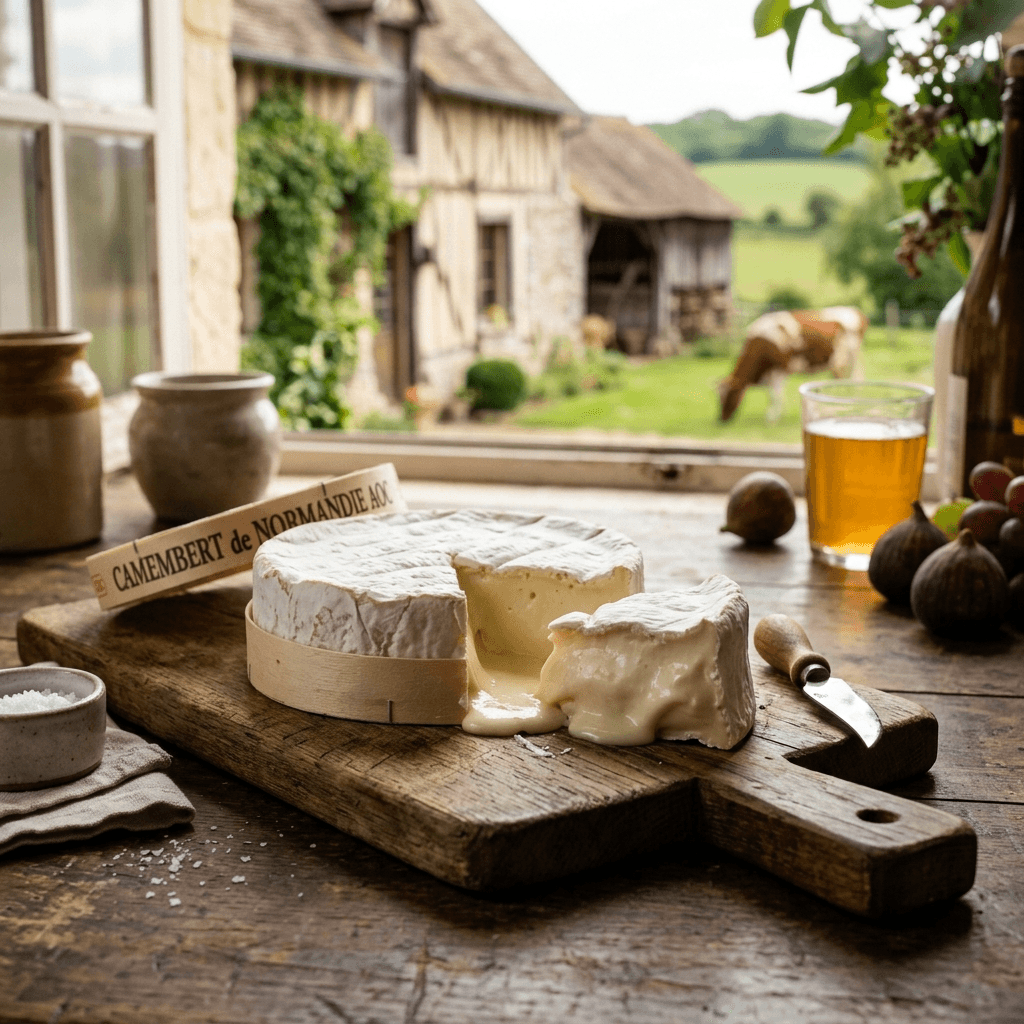
Chapter
1. The True History of Camembert de Normandie: Who Really Invented This Legendary Cheese?
Chapter
1.1 Discover the Legend of Marie Harel and the Refractory Priest: A Made-Up Story?
The official story of Camembert, told on thousands of packages, tourist websites, and gastronomic guides, is one of France's most famous: in 1791, during the French Revolution, a Norman peasant woman named Marie Harel allegedly sheltered a refractory priest — the Abbé Charles-Jean Bonvoust — who, in secret, taught her the secret technique for making soft cheese with a bloomy rind, originating from the Brie region. Grateful for the refuge, Marie Harel supposedly perfected the recipe and created what we know today as Camembert.
This story is as beautiful as it is completely fabricated.
The legend was deliberately created in 1926, over a century after the supposed events, by Marie Harel's grandson, V. Paynel (the family that owns the Le Père Paynel brand), who commissioned a monument honoring his grandmother in the village of Vimoutiers (Orne, Normandy). The monument, inaugurated in 1928, depicts Marie Harel holding a cheese mold, and was financed by an American doctor, Dr. Joseph Knirim, who had visited the region and fallen in love with the story.
The problem? There is no documentary evidence that Marie Harel ever existed as a cheesemaker. The parish records of Camembert (Orne) mention a Marie Harel born on April 28, 1761 in Crouttes, who married Jacques Harel in 1785 and had several children — but there is no mention whatsoever of cheese, refugee priests, or secret techniques in any document from the period. Abbé Bonvoust, in turn, was a real priest who fled revolutionary persecution and took refuge in the region, but there is no proof that he knew cheesemaking techniques or taught them to anyone.
Historian Catherine Piganiol, from the Institut National de l'Origine et de la Qualité (INAO), demonstrated in her 2003 research that the story of Marie Harel and the refractory priest does not appear in any source prior to 1900 — the date when the Paynel family began promoting the narrative for commercial purposes. The legend has been repeated so many times that it has become "truth" in the popular imagination, but modern historiography classifies it as apocryphal — a founding myth created to give a noble and dramatic origin to a product that existed before Marie Harel was even born.
The monument in Vimoutiers, however, still stands, and the village annually celebrates the Fête du Camembert in honor of the "inventress." For tourists visiting Normandy, the statue is a must-stop point — not for its historical accuracy, but for the symbolic weight of a legend that, even though false, helped turn Camembert into one of the world's most famous cheeses.
---
Chapter
1.2 Thomas Corneille and the First Written Mention in 1708: What Do We Actually Know?
If Marie Harel did not invent Camembert, who did? The answer is more complex, less romantic, and much older. The first written record of the term "Camembert" dates from 1708, over eight decades before the supposed meeting between Marie Harel and Father Bonvoust.
The author of this record is Thomas Corneille (1625-1709), the younger brother of playwright Pierre Corneille, a lexicographer and member of the Académie Française. In his work "Dictionnaire Universel Géographique et Historique" (1708), Corneille describes the parish of Camembert, in the Normandy region, and mentions that "excellent cheeses are made there and sent to Paris" ("on y fait d'excellents fromages qu'on envoie à Paris"). The entry does not specify the type of cheese, but the reference is clear and predates any mention of the Harel family.
The date of 1708 is crucial because it proves that Camembert already existed as a recognized and exported cheese long before the 19th century. And it was no ordinary cheese — it was a cheese considered "excellent" enough to be sent from a rural Norman village to the French capital, a journey that, at the time, took 5 to 7 days by horse or cart.
What Corneille does not describe, and what remains a historical mystery, is the exact type of cheese produced in Camembert in the 18th century. Cheese historians, such as Pierre Boisard (author of "Le Camembert, Mythe Français", 2007), believe that the Camembert cheeses of the 18th century were probably soft-ripened washed-rind cheeses, similar to Livarot or Pont-l'Évêque — other traditional Norman cheeses — and not the white bloomy rind cheese (Penicillium camemberti) we know today. The characteristic white rind would only appear in the 19th century, with the domestication of the mold (see Chapter 2).
What we know for certain, therefore, is that the name "Camembert" predates the French Revolution and Marie Harel, and that the production technique evolved gradually throughout the 18th and 19th centuries, with contributions from multiple anonymous producers — not from a single heroic peasant woman.
---
Chapter
1.3 Why Did the Harel Family Create a Legend to Sell More Cheese?
The creation of the Marie Harel legend was no accident — it was a deliberate marketing strategy, executed by the Paynel family (descendants of the Harels by marriage) at a critical moment for the Norman cheese industry.
The context was as follows: in the early 20th century, Camembert production was exploding. The invention of the poplar wood box (see Chapter 8) by Eugène Ridel in 1890 had enabled long-distance transport of the cheese, and Norman cheeses competed fiercely with imitations produced all across France and even abroad. To stand out in an increasingly competitive market, producers needed an origin story — something that gave Norman Camembert an aura of authenticity and tradition.
V. Paynel, grandson of Marie Harel and owner of the Le Père Paynel brand, realized that a legend involving the French Revolution (a founding event of national identity) and a refractory priest (a symbol of resistance and faith) would be irresistible to the French public. He commissioned sculptor Édouard Lormier to create the monument in Vimoutiers, ordered articles in local newspapers, and distributed pamphlets telling the story at markets and fairs.
The strategy worked beyond all expectations. The legend was reproduced by tourist guides, encyclopedias, and cookbooks in the following decades, becoming consolidated as "truth" in the collective imagination. By 1928, the story was so widely accepted that the French government authorized the inscription "Invented by Marie Harel in 1791" on the official monument.
Historian Boisard argues that the Paynel family was driven by three motives:
1. Commercial: To differentiate their Camembert from industrial imitations;
2. Regional: To create local pride and attract tourism to Normandy;
3. Familial: To consolidate the Harel-Paynel name as a founding dynasty, justifying their dominant position in the market.
The irony is that the legend worked so well that, today, most French people and tourists believe Marie Harel was the inventor. The historical truth — that Camembert already existed in 1708 and was developed collectively — is known only to experts and traditional producers.
---
Chapter
1.4 The Role of Cyrille Paynel and Napoleon III in the Worldwide Popularization of Camembert
If Marie Harel is a legend, Cyrille Paynel is a real historical figure whose role in popularizing Camembert is undeniable. It was he who, in the mid-19th century, transformed a local Norman cheese into a product with national and, subsequently, worldwide reach.
Cyrille Paynel (1802-1878) was Marie Harel's great-grandson and took over the family business in 1825. He was not just a cheese producer — he was a visionary entrepreneur who understood, before his competitors, that the future of Camembert depended on two things: efficient transport and access to the Paris markets.
Paynel established partnerships with Parisian merchants, sending his cheeses in experimental batches to luxury shops and markets in the capital. The exceptional quality of his product — the result of decades of refining the family technique — quickly won a loyal clientele. By 1840, Paynel cheeses were already sold at Les Halles de Paris, the largest wholesale market in France.
The decisive moment came in 1855, during the Exposition Universelle de Paris, when Emperor Napoleon III tasted a Camembert produced by Paynel and — according to the chronicle of the time — exclaimed: "Ce fromage est un délice!" (This cheese is a delight!). The emperor, who had a genuine interest in French agriculture and the food industry (he himself wrote a treatise on the subject), ordered that Camembert be served regularly at the imperial court.
Napoleon III's endorsement was the equivalent of a presidential seal of approval today. Paynel's production soared: from 5,000 cheeses per year in 1840, it jumped to 100,000 cheeses per year in 1865. The brand Le Père Paynel became synonymous with quality Camembert, and other Norman cheese dairies followed suit, expanding production to meet demand.
Historian Boisard notes that Napoleon III had a personal reason for supporting Camembert: he wanted to unify France through gastronomy as well — to create a national culinary identity that transcended regional divisions. Camembert, with its rural Norman origin and universal appeal, was perfect for this project. The emperor promoted other regional cheeses and wines with the same enthusiasm, but it was Camembert that benefited most enduringly from imperial patronage.
Cyrille Paynel died in 1878, leaving a thriving business that would continue to grow under the management of his descendants. When his grandson V. Paynel erected the monument to Marie Harel in 1928, he was not just honoring his grandmother's memory — he was indirectly celebrating his family's own legacy that had transformed a Norman village cheese into a global icon.
# 2\. The Science Behind the White Rind: How Does Penicillium Camemberti Transform the Cheese?
---
Chapter
2. The Science Behind the White Rind: How Does Penicillium Camemberti Transform the Cheese?
Chapter
2.1 The "Albino" Mutation of the 19th Century That Changed the World of Cheese Forever
The velvety white rind of Camembert — its most recognizable visual signature — is not a natural characteristic of the cheese. It is the result of a genetic mutation that occurred at some point in the 19th century, when the fungus Penicillium camemberti developed an albino variant — incapable of producing green or blue pigments — which Norman cheesemakers intuitively selected and cultivated for generations.
The original fungus, before the mutation, was Penicillium commune (or Penicillium caseifulvum, a closely related species), which produces bluish-green colonies — similar to the mold found in blue cheeses such as Roquefort or Gorgonzola. The soft cheeses of 17th and 18th century Normandy, such as the old Camembert and Livarot, probably developed a grayish or greenish rind (similar to today's Brie de Meaux, which often shows grayish spots on the surface).
At some point between 1820 and 1860, a spontaneous mutation in the gene responsible for pigment production in P. commune gave rise to a pure white variety — Penicillium camemberti (also known as Penicillium candidum in technical literature). The mutation probably occurred in a single Norman cheese dairy — nobody knows exactly which one — and was propagated by rind transfer: cheesemakers noticed that cheeses with a white rind were more visually appealing, less threatening to the consumer (who associated green mold with rot), and coincidentally developed a milder and creamier flavor than those with green rind.
The French botanist and mycologist Charles Thom (1872-1956), who studied cheese fungi in the early decades of the 20th century, was the first to scientifically describe Penicillium camemberti as a distinct species, in 1906. He observed that the fungus was genetically impoverished compared to its wild ancestor — unable to produce green spores, less resistant to environmental variations, and dependent on human cultivation to survive. In other words, the white Camembert fungus is a domesticated mutant, as dependent on cheesemakers as the cheese is on it.
The domestication of Penicillium camemberti is one of the most remarkable examples of co-evolution between humans and microorganisms — similar to the domestication of yeast for bread and beer, or lactic acid bacteria for yogurt. The fungus lost the ability to survive in nature, but gained a stable ecological niche: the ripening chambers of Norman cheese dairies.
---
Chapter
2.2 Why Nearly All Camembert in the World Uses the Same Mold Strain (And the Great Danger of That)
If you visit any artisanal cheese dairy in Normandy and compare its Camembert with one produced in Japan, the United States, or Brazil, the probability of both using exactly the same strain of Penicillium camemberti is extremely high. This strain, technically known as the "Neige Strain" (or "Alba Strain", depending on the supplier), was isolated and standardized in the laboratory in the 1950s and became the global industry standard.
The standardization process began in post-war France, when INRAE (Institut National de la Recherche Agronomique, now INRAE) initiated a selection program for Penicillium strains for the cheese industry. The goal was to develop a fungus that would:
* Produce a uniform, attractive white rind;
* Grow in a predictable and rapid manner (7-10 days to cover the surface);
* Be resistant to contaminants (unwanted bacteria that spoil the cheese);
* Produce consistent flavor and aroma batch after batch.
The strain selected by INRAE was propagated in the laboratory and distributed to producers of "lactic ferments" (starters) who commercialized it globally. Today, over 90% of all Camembert in the world — including Camembert de Normandie AOP and all industrial imitations — uses this same strain or a very close variant of it.
The danger of this genetic homogeneity is the risk of collapse from disease or mutation. Since Penicillium camemberti is already genetically impoverished (it does not reproduce sexually and has low genetic diversity), a single pest, virus, or deleterious mutation could, in theory, eliminate most of the world's Camembert production in a few years. It is the same problem faced by the banana industry (the Cavendish cultivar, genetically uniform) and wine grapes (the Chardonnay variety, propagated by clones).
Scientists from INRAE and the Université de Caen Normandie regularly warn about this risk. In a 2020 article in the journal Fungal Biology, the team led by Dr. Jeanne Ropars (CNRS) demonstrated that Penicillium camemberti has virtually zero genetic variation among commercial strains, and that introducing new genetic variants is urgent to ensure the sustainability of production.
---
Chapter
2.3 The Silent Crisis: Scientists Warn That Camembert Mold Is on the Brink of Genetic Extinction
In 2023, a study published in the prestigious journal Nature Communications by the team of Jeanne Ropars and Tatiana Giraud (CNRS/Université Paris-Saclay) sounded a global alarm: Penicillium camemberti is undergoing genetic extinction, and the industrial production of Camembert could become unviable within 10 to 30 years if nothing is done.
The research analyzed the genome of 30 strains of Penicillium camemberti isolated from cheese dairies in France, Italy, Germany, and the United States, comparing them with wild strains of Penicillium commune (the green ancestor) and Penicillium biforme (a closely related species used in some artisanal cheeses).
The results were alarming:
* Penicillium camemberti has lost 15% of its genome compared to its wild ancestor — genes responsible for pigment production, resistance to environmental stress, and sexual reproduction have simply disappeared;
* Genetic diversity among commercial strains is less than 0.5% — virtually clones;
* The capacity for sexual reproduction has been lost — the fungus reproduces only asexually, preventing the genetic recombination that would generate new, more adaptable variants;
* No new genetically distinct lineages have been introduced into production since the 1950s.
The team concluded that if a pest or disease specific to Penicillium camemberti emerges, there will not be enough genetic variation for some individuals to survive — the entire species could collapse. The scenario is similar to what happened to wine grapes in the 19th century, when phylloxera destroyed most European vineyards — but in the case of Penicillium, we are dealing with a microscopic organism that has no natural variation to select from.
The article generated wide coverage in the international press (The Guardian, Le Monde, The New York Times), and INAO (Institut National de l'Origine et de la Qualité) included the topic on the discussion agenda for 2024. To date, however, no concrete measures have been implemented to diversify the genetic pool of Penicillium camemberti — partly because the industry fears that introducing new strains will alter the flavor and texture of the cheese, jeopardizing the AOP standard.
---
Chapter
2.4 The Search for Wild Molds: Is Penicillium Biforme the Solution for the Future?
The main hope for the genetic sustainability of Camembert lies in a closely related species: Penicillium biforme. This fungus, found in artisanal soft-ripened cheeses throughout Europe, is genetically diverse, fertile, and resilient — everything that Penicillium camemberti has lost.
P. biforme produces a rind ranging from white to light cream, with a velvety texture and flavor very similar to that of P. camemberti — to the naked eye and palate, most consumers cannot tell the difference. The difference is in the genetics: P. biforme has twice as many functional genes as P. camemberti, maintains the capacity for sexual reproduction, and is resistant to variations in temperature and humidity.
Research from INRAE and Université Paris-Saclay (2020-2024) has demonstrated that:
* P. biforme can be used as a single starter for producing Camembert-type soft-ripened cheeses, without needing to be mixed with other strains;
* Cheeses produced with P. biforme develop a uniform white rind in 8 to 12 days (compared to 7 to 10 for P. camemberti);
* The sensory profile (flavor, aroma, texture) is indistinguishable from traditional cheese in 85% of blind tests;
* P. biforme is resistant to deleterious mutations — its genetic diversity is 20 times greater than that of P. camemberti.
The main barrier to the adoption of P. biforme by the industry is the transition cost: factories would need to validate the new strain, adjust ripening protocols, and obtain INAO approval for AOP cheeses. Furthermore, marketing would be a challenge — how do you explain to the consumer that the mold has "changed" without generating distrust?
Several artisanal cheese dairies in Normandy, however, are already experimenting with P. biforme on their own initiative. Ferme du Petit Ménil (Orne) has been producing a Camembert with Penicillium biforme since 2021 that it sells exclusively at local markets, with the indication "Penicillium biforme" on the label — a transparency that appeals to informed consumers concerned with sustainability.
---
Chapter
2.5 How Has the "Domesticated" Mold Affected the Biodiversity of Traditional French Cheeses?
The standardization of Penicillium camemberti does not affect only Camembert — it has implications for the microbial biodiversity of the entire category of soft-ripened bloomy-rind cheeses (les fromages à pâte molle et croûte fleurie).
Each artisanal soft-ripened cheese — whether a Camembert de Normandie, a Brie de Meaux, a Coulommiers, a Chaource, or a Neufchâtel — should, in theory, have its own microbiota composed of dozens of species of fungi, bacteria, and yeasts that interact on the cheese surface during ripening. This microbial diversity is what gives each cheese its unique flavor profile — an invisible terroir, but as real as the soil and climate.
The widespread use of a single strain of Penicillium camemberti, however, is homogenizing this microbiota. Because Penicillium camemberti grows rapidly and dominates the cheese surface, it suppresses the growth of other species that would naturally colonize the rind — bacteria such as Brevibacterium linens (which produces orange pigments and pungent flavors), yeasts such as Debaryomyces hansenii (which contributes fruity notes), and other fungi that add aromatic complexity.
Cheese expert Roland Barthélemy, author of "Fromages: Le Guide", argues that the "microbial pasteurization" promoted by the industry is creating a generation of soft-ripened cheeses that all taste the same — even when they come from different regions. An industrial Brie de Meaux, a supermarket Camembert de Normandie, and an ordinary Chaource can be indistinguishable to the average consumer because the microbiota is virtually the same.
The solution to this problem, advocated by artisanal producers and INRAE scientists, is the reintroduction of microbial diversity in ripening chambers. Instead of using a single standardized strain, artisanal cheesemakers are rescuing local Penicillium strains, isolated from their own cheese dairies and adapted to the specific conditions of each terroir. Fromagerie Durand (Livarot, Normandy), for example, has developed its own Penicillium strain from spores collected on the walls of its hâloir (ripening chamber) — a practice that was common before industrialization and is being rediscovered as a quality differentiator.
# 3\. The Secret of the Normande Breed: Why Normandy Cows Produce the Best Milk for Camembert?
---
Chapter
3. The Secret of the Normande Breed: Why Normandy Cows Produce the Best Milk for Camembert?
Chapter
3.1 The Herbagère Revolution of the 17th Century and the Creation of the Normande Breed
The Normande Breed (Normande) — the cow dappled in brown and white, with its characteristic dark "spectacles" around the eyes — did not exist in Normandy before the 17th century. It was artificially created by Norman farmers through centuries of selective breeding, in a process known as the "Révolution Herbagère" (Pasture Revolution), which transformed the region's landscape and livestock between 1650 and 1850.
Before this revolution, Normandy was a region of cereal cultivation and sheep farming, with a limited number of dairy cows. The clay soil and humid climate, however, were more suited to pastures than to wheat. From the 17th century onward, Norman farmers began to gradually convert crop fields into permanent meadows (herbages), planting specific grasses and clovers that enriched the soil with nitrogen.
To make use of these pastures, they needed a cow that would:
* Produce milk rich in fat and protein (essential for soft-ripened cheeses);
* Be resistant to the humid climate of Normandy (rain, wind, moderate cold);
* Thrive in medium-sized herds (not in large confinement systems).
The result, after about 200 years of selection, was the Normande Breed — a robust, medium-sized cow (550-700 kg), with an annual production of 6,000 to 8,000 liters of milk (lower than Dutch breeds, which produce 10,000-12,000 liters, but with significantly higher fat and protein content).
The milk of the Normande contains on average 4.2% fat and 3.5% protein — compared to 3.5% and 3.1% for a Holstein. This difference of 0.7% in fat and 0.4% in protein may seem small, but it is decisive for the texture and flavor of Camembert: more fat produces a creamier curd; more protein (especially casein) produces firmer coagulation and more controlled ripening.
---
Chapter
3.2 How Normandy's Oceanic Climate Directly Affects Raw Milk Quality?
The temperate oceanic climate of Normandy — with mild winters (4-8°C), cool summers (16-20°C), and rainfall distributed throughout the year (700-900 mm annually) — is one of the most important factors for the quality of the milk used in Camembert, and one of the central arguments of the Appellation d'Origine Protégée (AOP).
Norman pastures are lush green for 9 to 10 months a year, thanks to the combination of regular rainfall and mild temperatures. This means that cows can graze outdoors (pâturage) for much longer than in other regions of France or Europe. Fresh pasture is the foundation of the cow's diet and directly determines milk composition:
* Conjugated Linoleic Acid (CLA): Cows fed on fresh pasture produce milk with 2 to 3 times more CLA — a beneficial fatty acid that contributes to the characteristic "buttery" flavor of Camembert;
* Beta-carotene: Fresh pasture is rich in beta-carotene, which gives the milk (and the cheese) its characteristic yellowish color. Camemberts made with milk from silage-fed cows (fermented feed) are visibly paler;
* Terpenes: Volatile aromatic compounds present in the herbs and flowers of the pastures (clover, dandelion, daisies, chervil) pass into the milk and then into the cheese, creating subtle herbaceous and floral notes.
The mild climate also allows milk to be transported quickly from the farm to the cheese dairy without excessive refrigeration — the milk is kept at 32-35°C (milking temperature) until processing, which preserves the native microbiota and the natural enzymes that contribute to the final flavor.
---
Chapter
3.3 Why Does Camembert de Normandie AOP Strictly Require 50% Normande Breed Cows?
The specifications book (cahier des charges) of Camembert de Normandie AOP is one of the strictest in France. Among the dozens of rules that define the authentic cheese, one of the most impactful is the requirement that at least 50% of the herd from each supplying farm must be of the Normande Breed.
This rule, established in decree No. 2013-1059, is not arbitrary. It reflects the finding, consolidated by decades of technical studies from INRAE and the Institut de l'Élevage, that the milk of the Normande Breed cannot be replaced by milk from other breeds without significantly altering the sensory characteristics of the cheese.
The technical differences that justify the requirement:
* Casein/Fat Ratio: Normande milk has a more balanced protein/fat ratio (0.83 compared to 0.75 for Holstein), resulting in a firmer curd and a creamier final texture;
* Fat Globule Size: The fat globules in Normande milk are larger (4-6 µm in diameter) than those in Holstein (2-4 µm), making the emulsion more stable and the cheese texture more unctuous;
* Genetic Variants of Casein: The Normande Breed possesses the B variant of beta-casein and the B variant of kappa-casein, both associated with faster coagulation and a firmer clot — essential characteristics for the traditional production method.
The 50% requirement (not 100%) recognizes the practical reality of farms: many producers maintain mixed herds for economic reasons (Holstein cows produce more milk), and mixing breeds in controlled proportions does not compromise the quality of the final cheese — as long as the Normande Breed is dominant.
Outside the AOP, most industrial Camemberts are made with milk from Holstein or Montbéliarde breeds, which produce more milk per cow but with a composition less suited to soft-ripened cheeses. The result is less creamy cheeses, with a more fragile texture and less complex flavor — perfectly acceptable as generic "Camembert," but unable to receive the AOP seal.
# 4\. The Secret Production Process: Why Is Camembert de Normandie "Moulé à la Louche"?
---
Chapter
4. The Secret Production Process: Why Is Camembert de Normandie "Moulé à la Louche"?
Chapter
4.1 The Five Layers of Curd: The Centuries-Old Technique Nobody Talks About
The "moulage à la louche" (ladle molding) is the most emblematic technique of Camembert de Normandie AOP production — and one of the most labor-intensive. Instead of pouring all the curd into the mold at once, the cheesemaker adds the curd in successive layers, using a metal or wooden ladle (louche), at intervals of 15 to 20 minutes between each layer.
There are traditionally five layers (or, in some cases, seven, depending on the producer). Each layer corresponds to an individual ladleful (approximately 200-250 ml), taken from the coagulation vat and deposited gently into the perforated mold (faisselle) placed on a draining mat.
The process works as follows:
1. Fresh curd (after 45-60 minutes of coagulation) is cut into cubes of approximately 2 cm;
2. The vat is left to rest for 5-10 minutes so that the curd grains begin to separate from the whey (lactoserum);
3. The cheesemaker dips the ladle into the vat, takes a portion of curd, and deposits it in the mold — always gently, so as not to break the grains;
4. After 15-20 minutes, when the whey has partially drained and the first layer is firmer, a second ladleful is added on top of it;
5. This is repeated until 5 layers are formed (total time: 1h30 to 2h of manual molding).
Each layer partially merges with the previous one during draining, creating a heterogeneous texture structure — the upper layers are slightly more moist than the lower ones (because they drain for less time), and this subtle variation in moisture contributes to the complexity of the final texture.
The technical secret lies in the curd temperature: during moulage à la louche, the curd must be kept between 32°C and 35°C. If it cools too much, draining becomes slow and the cheese becomes excessively moist; if it heats too much, the curd dries too quickly and the layers do not merge properly, creating a crumbly cheese.
---
Chapter
4.2 Egouttage Spontané: Why Natural Draining Is So Important for Flavor?
Égouttage spontané (spontaneous draining) is the process by which the whey (lactoserum) is drained from the curd without any mechanical force — no presses, no weights, no centrifuges. The cheese simply rests in its perforated molds, and the whey drains by gravity alone.
The draining traditionally lasts 18 to 24 hours, during which the cheese loses about 40% of its initial weight in whey. During this period:
* The pH of the curd drops from approximately 6.3 (immediately after coagulation) to 4.6-4.8 at the end of draining, due to the continuous action of lactic acid bacteria;
* The acidity developed during draining is essential for the flavor of the cheese — the slower the draining, the more time the bacteria have to produce lactic acid, resulting in a more acidic and flavorful cheese;
* The final texture of the cheese is determined by the draining speed: fast draining produces a drier, crumblier cheese; slow draining produces a creamier, more unctuous cheese.
Spontaneous draining contrasts with the mechanical pressing used in cheeses like Comté or Emmental. In Camembert, the weight of the cheese itself (about 300-350g in the mold) and the force of gravity are the only forces at play. The absence of pressing preserves the porous and airy structure that characterizes the texture of soft-ripened cheese.
---
Chapter
4.3 The Perfect Temperature for Ripening: The Mystery of 10°C to 18°C
After salting and drying, the cheeses are transferred to the hâloir (ripening chamber), where they undergo a process of aging (affinage) that lasts a minimum of 21 days for Camembert de Normandie AOP.
The temperature range of the hâloir is strictly controlled, but it varies throughout the process — a flexibility that few consumers are aware of:
|Ripening Phase|Temperature|Humidity|Duration|
|-|-|-|-|
|Surface drying|10-12°C|85-90%|2-3 days|
|Mold development (fleurie)|12-14°C|90-95%|7-10 days|
|Active ripening|14-16°C|88-92%|7-10 days|
|Finishing|16-18°C|85-88%|3-5 days|
The initial low temperature (10-12°C) slows the growth of Penicillium and allows the lactic acid bacteria to finish acidifying the paste before mold covers the surface. The gradual increase to 14-16°C accelerates the growth of the fungus and activates the proteolytic enzymes that soften the paste. The final higher temperature (16-18°C) intensifies the production of volatile compounds and develops the characteristic flavor.
---
Chapter
4.4 Dry Salt vs. Brining: Which Is the Traditional and Most Efficient Method for Camembert?
Salting is a critical step in the production of Camembert — and there are two competing methods, with staunch defenders on both sides.
Dry Salting (Salage à Sec): Coarse sea salt (fleur de sel de Guérande or Île de Ré salt) is spread manually over the surface of the cheese — approximately 3-4g of salt per cheese (250g). Half is applied to one face, the cheese is turned after 12 hours, and the other half is applied. Advantages: precise control of the amount of salt, formation of a firmer and thicker rind. Disadvantages: requires specialized labor.
Brining (Saumurage): The cheeses are immersed in a water and salt solution (20-25% salt) for 30 to 60 minutes. Advantages: total uniformity of salting, mechanizable process. Disadvantages: the cheese absorbs additional water (which can dilute the flavor), the rind becomes thinner and less protective.
The AOP requires the dry salt method — brining is expressly prohibited for Camembert de Normandie. The reason is that dry salt, applied manually, creates a thicker rind that acts as a barrier against unwanted microorganisms and contributes to the final texture of the cheese.
---
Chapter
4.5 Why Is Storage at Negative Temperature Expressly Prohibited Under the AOP?
One of the strictest rules in the Camembert de Normandie AOP specifications book is the absolute prohibition of storage at negative temperatures (below 0°C) at any stage of production, from the milk to the packaged cheese.
The reason is scientific: freezing irreversibly damages the structure of soft-ripened cheese. Camembert has high water content (about 50-55%), and water, upon freezing, forms ice crystals that puncture the protein structure of the curd. When the cheese thaws, these micro-holes collapse, resulting in a texture that is:
* Grainy (sandy, rather than creamy);
* Dried out (loses water through syneresis);
* Brittle (crumbles when cut).
Furthermore, freezing partially kills the live microbiota (Penicillium camemberti and lactic acid bacteria), interrupting the ripening process. A Camembert that has been frozen and thawed will not continue to ripen — it simply stagnates, without developing the characteristic central creaminess.
The prohibition covers:
* Raw milk: Milk cannot be frozen for "inventory";
* Curd: Cannot be frozen for later production;
* Fresh cheese (post-draining): Cannot be frozen before ripening;
* Ripened cheese: Cannot be frozen for transport or export.
In practice, the rule severely limits the export capacity of Camembert AOP. While hard cheeses (Comté, Emmental) can be frozen without significant loss of quality, Camembert AOP must be transported refrigerated (2-6°C) and consumed within 30-45 days of the production date — logistics that make the product more expensive and restrict its distribution to markets with a reliable cold chain.
# 5\. The Battle for Appellation d'Origine: How Camembert de Normandie Won Its Legal Protection
---
Chapter
5. The Battle for Appellation d'Origine: How Camembert de Normandie Won Its Legal Protection
Chapter
5.1 The 1909 Producers' Syndicate and the First Failed Attempt at Protection
The first attempt to legally protect the name "Camembert" took place in 1909, when a group of Norman producers founded the Syndicat des Fabricants de Véritable Camembert de Normandie (Syndicate of True Camembert of Normandy Producers). The objective was clear: to prevent cheeses produced outside Normandy — and, especially, those produced on an industrial scale with pasteurized milk and non-traditional techniques — from using the name "Camembert."
The syndicate drafted a specifications book requiring:
* Exclusive production in the Normandy region (departments of Calvados, Orne, Manche, Eure, and Seine-Maritime);
* Exclusive use of raw milk (not pasteurized);
* Molding à la louche (manual);
* Dry salting (not in brine);
* Minimum ripening of 21 days.
The attempt, however, failed. The French government, under the Third Republic, refused to grant legal protection to the name, arguing that "Camembert" had become a generic name — like "Parmesan" or "Cheddar" — and could not be monopolized by a single region. The decision opened the door to the proliferation of "Camemberts" produced throughout France and, later, around the world.
---
Chapter
5.2 The Loches Court in 1924: Why Was the Name "Camembert" Declared Public Domain?
The most emblematic case in the legal battle over the name "Camembert" occurred in 1924, in the city of Loches (Indre-et-Loire, in the Loire Valley). A local cheese dairy, Fromagerie de Loches, produced a soft-ripened cheese it called "Camembert" and sold in Paris. The Syndicat of Norman producers sued the cheese dairy, demanding it stop using the name.
The Loches court, after hearing witnesses and experts, issued a surprising decision: "Camembert" is a generic name and cannot be protected. The judge argued that the term had become so widespread that it designated a type of cheese (soft paste, bloomy rind), not a specific geographic origin. The decision applied to all of France and was upheld on appeal.
The impact was devastating for Norman producers. Without legal protection, any cheese dairy anywhere in the world could call its product "Camembert" — and many did. By 1930, it was estimated that 75% of the "Camembert" sold in France was produced outside Normandy, often with pasteurized milk, industrial rennet, and artificial ripening.
---
Chapter
5.3 The AOC Conquest in 1983 and the AOP in 1996: A Struggle Spanning Over 80 Years
After decades of lobbying and legal battles, Norman producers finally won official recognition in 1983, when the Institut National des Appellations d'Origine (INAO) granted the Appellation d'Origine Contrôlée (AOC) to "Camembert de Normandie." The AOC, however, did not protect the name "Camembert" — it only protected the full name "Camembert de Normandie," which could only be used by producers who followed the specifications book.
The 1983 AOC established:
* Delimited geographic area: Calvados, Manche, Orne (historical core), plus parts of Eure, Mayenne, Sarthe, and Seine-Maritime;
* Raw and whole milk;
* Normande Breed: minimum 50% of the herd;
* Cattle feed: mandatory pasture between April and November;
* Molding à la louche;
* Dry salting;
* Minimum ripening of 21 days.
In 1996, the AOC was converted into Appellation d'Origine Protégée (AOP) within the framework of the European Union, which extended the protection to all EU member countries. From then on, any cheese using the name "Camembert de Normandie" within the EU had to strictly comply with the specifications book — a legal victory that took 87 years from the first attempt in 1909.
---
Chapter
5.4 Decree No. 2013-1059: The Current Rules That Genuinely Protect the Norman Cheese
The current legal framework for Camembert de Normandie AOP is defined by Decree No. 2013-1059 (November 4, 2013), which updated and consolidated the previous rules. Main provisions:
Milk Production:
* The milk must be produced exclusively within the AOP geographic area;
* Cows must be fed with forage from the region itself (minimum 75% of dry matter);
* Prohibition of corn silage (fermented feed) — only hay and fresh pasture.
Production:
* The milk must be raw (not pasteurized, not thermized);
* Coagulation must be slow (45-60 minutes), with traditional animal rennet;
* Molding must be à la louche (in 5 or more layers);
* Salting must be dry, with sea salt;
* Minimum ripening is 21 days from the start of production.
Final Product Characteristics:
* Net weight: 250g ± 5%;
* Shape: cylindrical, diameter 10.5-11 cm;
* Fat content: minimum 40% of dry matter;
* Moisture: maximum 56%;
* Rind: bloomy, white to light cream, may present reddish or orange spots (Brevibacterium linens).
Non-compliance with the rules may result in fines of up to €10,000 and the loss of the right to use the AOP designation for up to 5 years — a severe penalty that, in practice, serves as an effective deterrent against fraud.
# 6\. Scandals and Controversies: The War Between Traditional Producers and Big Industry
---
Chapter
6. Scandals and Controversies: The War Between Traditional Producers and Big Industry
Chapter
6.1 The 2007 Attempt to Allow Thermized Milk: What Really Happened?
The biggest recent scandal involving Camembert de Normandie AOP took place in 2007, when two of the largest producers — Lactalys (from the Lactalis group) and Isigny Sainte-Mère — submitted a formal proposal to the INAO to allow the use of thermized milk (heated to 62-65°C for 15-20 seconds) in place of raw milk.
Thermization is an intermediate heat treatment between raw milk and pasteurization (72°C, 15s). It eliminates pathogenic bacteria (Listeria, Salmonella, E. coli) but preserves enzymes and part of the beneficial microbiota. For large industries, thermization would reduce sanitary risk and extend the shelf life of the cheese, facilitating exports.
Artisanal producers reacted with fury. The Fédération des Fromagers de Normandie argued that:
* Thermization would alter the flavor and texture of the cheese, bringing it closer to industrial pasteurized "Camemberts";
* Thermization would violate the spirit of the AOP, which requires raw milk;
* The loss of microbial diversity from thermized milk would reduce the aromatic complexity of the cheese.
The battle dragged on for two years, with demonstrations by artisanal producers in Caen and Rouen and intense coverage by the French press. In 2009, the INAO Permanent Commission rejected the proposal, maintaining the raw milk requirement. The decision was a crushing victory for the artisanal producers, but left deep wounds — the division between "purists" (raw milk, family production) and "modernizers" (large industries) has never been overcome.
---
Chapter
6.2 Lactalys and Isigny: Why Did Two Major Industries Want to Change the Rules of the Game?
Lactalys (founded in 1985 in Saint-Hilaire-de-Briouze, Orne) and Isigny Sainte-Mère (founded in 1932 in Isigny-sur-Mer, Calvados) are the two largest producers of Camembert de Normandie AOP, responsible for approximately 70% of total production (about 3,800 tons in 2023). Together, they dominate the market and influence INAO decisions.
The interest of both companies in thermization was economic: raw milk imposes severe constraints on logistics and shelf life. A raw milk Camembert has a shelf life of 30-45 days after production; a thermized cheese could last 60-90 days, expanding export windows. For companies that sell abroad (Isigny exports 25% of its production), the difference is substantial.
The sanitary argument also carried weight. In 2005, a batch of raw milk Camembert produced by an artisanal cheese dairy was linked to an outbreak of Listeria monocytogenes that affected 14 people and caused 2 deaths. The incident generated pressure from health authorities (DGAL — Direction Générale de l'Alimentation) for AOP producers to adopt more rigorous safety measures — including thermization.
The artisans countered by pointing out that:
* The 2005 outbreak was caused by a specific hygiene failure, not by raw milk per se;
* Raw milk is rigorously monitored and the incidence of listeriosis associated with AOP cheese is minuscule (less than 1 case per million cheeses sold);
* Thermization would not entirely eliminate the risk of Listeria (which can survive at temperatures below 70°C) — it would only reduce the probability.
---
Chapter
6.3 The Revolt of Artisanal Producers: How Tradition Is Being Protected Today
Faced with pressure from large industries and health authorities, artisanal Camembert de Normandie AOP producers organized themselves into a network of resistance, the Association des Petits Fromagers de Normandie (APFN), founded in 2010. The association now brings together about 30 small producers (each producing between 5,000 and 50,000 cheeses per year) who undertake to follow not only the minimum AOP rules, but even stricter standards they themselves defined:
* 100% Normande Breed in the herd (compared to the 50% required by the AOP);
* Exclusive pâturage (no concentrated feed, corn, or silage);
* 100% manual moulage à la louche (no mechanization whatsoever);
* Affinage in natural hâloirs (stone cellars) — no artificial climate-controlled chambers;
* Short-circuit sales (local markets, farm shop, home delivery) — a maximum of 20% of production for distributors.
The APFN created its own collective brand — "Véritable Camembert de Normandie Artisanal" — which consumers can recognize by the additional seal on the packaging. For tourists visiting Normandy, the difference is noticeable: an artisanal Camembert costs €6-8 (compared to €3-4 for industrial AOP) and offers an incomparable sensory experience — creamier texture, more complex flavor, and more intense aroma.
# 7\. Camembert in World War I: The Cheese That Fed an Entire Army
---
Chapter
7. Camembert in World War I: The Cheese That Fed an Entire Army
Chapter
7.1 Why Did Camembert Replace Swiss Gruyère in France's Trenches?
During World War I (1914-1918), Camembert lived its most improbable moment: it became the official cheese of the French trenches, replacing the Swiss Gruyère and Comté that traditionally supplied the army.
The change was not gastronomic, but logistical. Swiss Gruyère, imported from Switzerland (a neutral country, but one whose production could not keep up with demand), became scarce and expensive after 1915, when the Swiss Alps suffered a severe drought. French Comté, produced in the Jura massif, was partially in a war zone. The French army needed a substitute that was:
* Nutritious (rich in proteins and fats for soldiers in combat);
* Durable (able to withstand days of transport and storage in precarious conditions);
* Produced in quantity (millions of portions per month).
Camembert met all the requirements, with an additional advantage: its individual wooden box (invented in 1890 by Eugène Ridel) made it portable and protected — each soldier could carry his cheese in his pocket without fear of crushing it. Gruyère and Comté, in large pieces, had to be cut and wrapped in paper, which was less practical.
---
Chapter
7.2 10,000 Camemberts a Day: The Surprising Logistics of Supplying Cheese to French Troops
The production of Camembert for the French army reached impressive numbers. Data from the Ministère de la Guerre (Historical Archives of Vincennes) indicate that, at the peak of the war (1916-1917), the army ordered 10,000 to 12,000 Camemberts per day — about 300,000 to 360,000 per month.
The main suppliers were the large Norman cheese dairies of the time: Le Père Paynel (Cyrille Paynel), La Fromagerie de Saint-Rémy, and Les Fermiers Normands. They diverted part of their civilian production to the war effort, under contract with the Service de l'Intendance Militaire.
Camembert reached the trenches in sealed poplar wood boxes, usually in batches of 12 units. Each soldier received 1 Camembert per week as part of the basic ration, along with bread (700g/day), wine (750ml/day), canned meat, and coffee.
The impact of the war on civilian consumption was contradictory. On the one hand, the rationing of milk and butter (soft-ripened cheeses use large quantities of milk — 2.5 liters per cheese) reduced civilian production. On the other, the exposure of millions of soldiers from all regions of France to Camembert created a national demand that persisted after the war. Soldiers who had never tasted Norman cheese returned home with the flavor of Camembert in their memory — and began buying it regularly.
Historian Pierre Boisard observes that "the Great War was the biggest marketing program Camembert could never have paid for. It transformed a regional cheese into a national cheese, in just four years."
# 8\. The Poplar Wood Box: The Revolutionary Invention That Enabled Worldwide Transport
---
Chapter
8. The Poplar Wood Box: The Revolutionary Invention That Enabled Worldwide Transport
Chapter
8.1 Eugène Ridel and the 1890 Invention: Why Poplar Wood Specifically?
Until 1890, Camembert was sold in straw wrapping or thick paper sheets, hand-wrapped. Long-distance transport was risky: the cheeses, fragile by nature, often arrived crushed, cracked, or contaminated. The solution came from Eugène Ridel (1862-1942), a carpenter and small cheese producer from the village of Saint-Mard-de-Réno (Orne), who invented the poplar wood box.
Ridel's box was ingeniously simple: two pieces of wood — a circular base with a raised edge and a circular lid that fitted perfectly — made of poplar wood (peuplier, Populus alba). The choice of wood was not accidental:
* Lightness: Poplar is one of the lightest woods in Europe (density 0.35-0.45 g/cm³), ideal for transport;
* Neutral odor: Unlike pine or oak, poplar does not transfer resin or tannins to the cheese;
* Absorption: The wood absorbs excess moisture from the rind, helping to keep the rind dry and the interior creamy;
* Low cost: Poplar grows quickly (20-30 years to harvest) and is abundant in Normandy.
Ridel patented his invention in 1890 and began producing the boxes in a small workshop. Success was immediate: cheese dairies throughout Normandy adopted the box, and Camembert exports soared. By 1900, it was estimated that 90% of Norman Camembert was sold in Ridel boxes.
---
Chapter
8.2 How the Wooden Box Perfectly Protected Camembert on Long Journeys?
The effectiveness of the wooden box went beyond physical protection. The design created a controlled microclimate inside the packaging:
1. Air circulation: The wood fibers allowed minimal gas exchange between the interior and exterior, preventing the cheese from "suffocating" (which would accelerate deterioration);
2. Moisture absorption: The wood acted as a natural dehumidifier, absorbing excess water from the cheese surface during transport;
3. Thermal insulation: Poplar wood has low thermal conductivity, protecting the cheese from sudden temperature variations during transport.
With the box, Camembert could travel by train to Paris and, from there, by ship to Latin America, the United States, and Asia — a feat unthinkable before 1890. The first exports of Camembert to Brazil occurred as early as the beginning of the 20th century, and the wooden box was essential for the cheese to arrive in good condition.
The poplar box became so iconic that the AOP still requires today that Camembert de Normandie be mandatorily sold in a poplar wood box (or equivalent materials approved by INAO — currently, high-grammage laminated cardboard is permitted, provided it maintains the same properties).
# 9\. The Science of Flavor: Why Does Camembert de Normandie Have a Unique Taste of Mushroom and Butter?
---
Chapter
9. The Science of Flavor: Why Does Camembert de Normandie Have a Unique Taste of Mushroom and Butter?
Chapter
9.1 Proteolysis: How Do Enzymes Break Down Milk Proteins to Create Unique Flavors?
The characteristic flavor of Camembert — notes of mushroom, butter, earth, and nuts — is the result of a biochemical process called proteolysis: the gradual breakdown of milk proteins (caseins) into smaller fragments — peptides and amino acids — by the enzymes from rennet, Penicillium camemberti, and lactic acid bacteria.
The process begins during ripening and intensifies in the second week. The main enzymes involved:
* Chymosin: Enzyme from the rennet (rennin), which initiates proteolysis in the first 24 hours;
* Penicillium camemberti proteases: Enzymes (endoproteases and exoproteases) secreted by the fungus, which progressively penetrate from the rind toward the center;
* Bacterial proteases: Enzymes from lactic acid bacteria (Lactococcus, Leuconostoc) that contribute to secondary breakdown.
The result of proteolysis is:
* Free amino acids: Responsible for umami flavor (glutamate, aspartate) and "nutty" notes (leucine, valine);
* Bitter peptides: Controlled by ripening time — excess produces a bitter taste (a common defect in cheeses ripened for more than 40-50 days);
* Ammonia: The end product of amino acid degradation, which gives ripe Camembert its characteristic pungent aroma.
---
Chapter
9.2 The Role of Brevibacterium Linens in the Red Pigmentation and Special Rind Flavors
The reddish or orange spots that frequently appear on the rind of artisanal Camembert (and which many consumers mistake for contamination) are, in fact, the work of the bacterium Brevibacterium linens — a beneficial microorganism that contributes significantly to the flavor of the cheese.
B. linens is an aerobic bacterium that grows on the cheese surface under conditions of high humidity (85-95%) and low acidity (pH > 5.5). It produces carotenoid pigments (red, orange, and yellow colors) and volatile sulfur compounds (including methanethiol and dimethyl sulfide) that contribute:
* A characteristic pungent, "cheesy" aroma of ripened cheeses;
* Notes of cauliflower, cabbage, and hard-boiled egg (which, at low concentrations, are pleasant and complex);
* A more intense and prolonged flavor in the mouth.
In industrial Camembert (made with a single strain of Penicillium camemberti and ripened in sterile chambers), B. linens rarely develops, because:
* The chambers are kept too dry (humidity < 85%) to inhibit contaminants;
* The single Penicillium strain grows rapidly and dominates the surface, inhibiting other bacteria.
In artisanal Camembert, the presence of B. linens is a quality marker — it indicates that the cheese was ripened in a natural hâloir (with diverse microbiota) and that the cheesemaker did not use fungicides or sterilizers on the surface.
---
Chapter
9.3 Why Does Camembert's Flavor Grow Stronger and More Complex as Days Go By?
The evolution of Camembert's flavor throughout ripening follows a predictable trajectory, governed by biochemical processes:
|Day|Phase|Flavor|Texture|
|-|-|-|-|
|0-10|Young (jeune)|Mild, milky, slightly salty|Firm, thin rind, crumbly center|
|10-21|Half-ripened (mi-affiné)|Mushroom and butter notes, creamy|Soft rind, beginning of peripheral creaminess|
|21-35|Standard AOP ripening (affiné)|Complex: mushroom, nuts, earth, light ammonia|Creamy on the periphery, firm and unctuous center|
|35-45|Mature (fait)|Intense: pronounced ammonia, cabbage notes, spicy|Homogeneously creamy, almost liquid at the center|
|45+|Overripe (trop fait)|Very ammoniacal, bitter, excessively spicy|Fluid texture, dark and sticky rind|
The ideal consumption point varies drastically from person to person. In France, Camembert is typically consumed between days 21 and 35 (when it is at the peak of creaminess without excess ammonia). In the United States and Brazil, the palate tends to prefer younger cheeses (days 10-21), with a milder flavor.
The phenomenon of "coulant" (a creamy center that oozes when cut) occurs when proteolysis reaches the center of the cheese — generally between days 28 and 35. To appreciate it, the cheese should be cut while still cold (fresh from the fridge) and left at room temperature for 30 minutes before serving.
# 10\. Camembert in Pop Culture: From Movies to Urban Legends You Haven't Heard Of
---
Chapter
9.4 The Chemistry Behind the Aromas: Lactose, Lactic Acid, and Mysterious Volatile Compounds
Chapter
10. Camembert in Pop Culture: From Movies to Urban Legends You Haven't Heard Of
Chapter
10.1 The Film "Camembert" (2026) with Kristin Scott Thomas: A French Social Satire
In 2026, French director François Ozon released the film "Camembert" — a social satire starring Kristin Scott Thomas and Pierre Niney that portrays the war between a (fictional) large cheese industry and small artisanal producers in Normandy. The film follows Sophie Delorme (Scott Thomas), an heiress of the Lactalys industry, who discovers that her late father adulterated Camembert with pasteurized milk, selling it as AOP. The scandal forces her to ally with an artisanal cheesemaker (Niney) to save the company's reputation.
The film was a moderate box office success (1.2 million tickets in France, 2026) and acclaimed by critics for its humorous approach to a serious theme.
---
Chapter
10.2 Camembert as an Unquestionable Symbol of French Gastronomy in World Cinema
Alongside the croissant and the baguette, Camembert is one of the three "food symbols" of France in global cinema. Its most emblematic appearance was in "Le Déjeuner sur l'Herbe" (1959) by Jean Renoir, where a countryside picnic is filmed with a Camembert board in the foreground.
In the American comedy "French Kiss" (1995, starring Meg Ryan and Kevin Kline), Ryan's character admits not liking "smelly" cheese — a direct reference to Camembert, which Kline defends as "France's best-kept secret."
---
Chapter
10.3 Urban Legends: The Priest Who Invented the Cheese and Other Totally Made-Up Stories
Besides the Marie Harel legend, other apocryphal stories circulate about Camembert. The most widespread is that Napoleon I allegedly tasted the cheese in 1805 and, irritated by the strong flavor, shouted "Ce n'est pas mangeable!" (It is not edible!). The story, told in some tourist guides, has no documentary basis — Napoleon I died in 1821, when Camembert was still a washed-rind soft cheese (not bloomy), and he never visited Normandy.
# 11\. Complete Practical Guide: How to Choose, Store, and Taste Camembert de Normandie AOP
---
Chapter
11. Complete Practical Guide: How to Choose, Store, and Taste Camembert de Normandie AOP
Chapter
11.1 How to Easily Recognize the AOP Logo and Avoid Counterfeits at the Supermarket?
The Camembert market is one of the most fraudulent in France. It is estimated that 85-90% of the "Camembert" sold worldwide is not Camembert de Normandie AOP — it is a generic soft-ripened cheese, produced with pasteurized milk, often outside France, that uses the name "Camembert" as a type description (which is legal, thanks to the Loches court decision of 1924).
To ensure you are buying the authentic cheese:
1. Look for the red and yellow AOP seal (a stylized fleur-de-lis) on the packaging — without it, the cheese is not Camembert de Normandie AOP;
2. Read the label: It should say "Camembert de Normandie Appellation d'Origine Protégée" or "Camembert de Normandie AOP";
3. Check the ingredient: It must contain "raw milk" (lait cru), never "pasteurized milk" or "thermized milk";
4. Wooden box: Camembert AOP is traditionally sold in a poplar wood box — plastic or styrofoam boxes indicate an industrial product;
5. Price: Camembert AOP rarely costs less than €4 (in France) or R$50-70 (imported in Brazil).
If the label says only "Camembert" (without "de Normandie" and without the AOP seal), you are buying a generic cheese — which may be tasty, but does not carry the guarantees of origin and method of the authentic one.
---
Chapter
11.2 What Is the Best Ripening Stage for Each Personal Palate?
|Stage|Days|For whom|How to serve|
|-|-|-|-|
|Jeune (young)|10-20 days|Those who prefer mild flavor|Diced, in salads|
|Mi-affiné|21-28 days|Most palates|Cheese board, bread|
|Affiné (creamy)|28-35 days|Lovers of intense cheese|Pure, with crusty bread|
|Fait (mature)|35-45 days|Experienced connoisseurs|Spoon (creamy center)|
---
Chapter
11.3 Why Should Camembert Always Be Taken Out of the Fridge 1 Hour Before Serving?
Cheese fat (casein) solidifies between 4-6°C (fridge temperature). At this temperature, the cheese loses texture, aroma, and flavor. To appreciate it fully, it should be between 16-18°C — the ambient temperature of a Norman spring/autumn.
The process is simple: remove the Camembert from the fridge, keep it in its wooden box, and let it rest for 60-90 minutes before serving.
# 12\. Perfect Pairing: Wines, Ciders, and Other Accompaniments for Camembert
---
Chapter
12. Perfect Pairing: Wines, Ciders, and Other Accompaniments for Camembert
Chapter
12.1 Why Is Beaujolais Considered the Perfect Wine for Camembert?
The classic Camembert + Beaujolais pairing is not accidental — it is based on chemical complementarity. Beaujolais (made from the Gamay grape) has:
* Low tannins: They do not compete with the unctuous texture of the cheese;
* Medium-high acidity: Cuts through the cheese's fat, cleansing the palate;
* Red fruit notes: Contrast with the earthy, mushroomy flavor of the cheese.
---
Chapter
12.2 Normandy Cider: The Most Traditional and Authentic Pairing with the Cheese
Nothing makes more sense than pairing a Norman cheese with a Norman drink. Normandy cider (cidre) — made from Antoinette, Binet Rouge, Doux Coet apple varieties — has:
* Natural effervescence: Cleanses the palate between bites;
* Malic acid: Cuts through the cheese's creaminess;
* Green apple notes: Complement the milky aromas.
---
Chapter
12.3 Other Surprising Options: Jams, Nuts, Honey, and Even Chocolate
* Fig jam: The sweetness and grainy texture contrast with the salty creaminess;
* Nuts: The crunch and earthy flavor complement the cheese;
* Buckwheat honey: Intense and slightly bitter flavor that cuts through the fat;
* Dark chocolate (70%+): A bold pairing — the bitterness of cocoa contrasts with the salty creaminess.
# 13\. Tourism in the Birthplace of Camembert: Unmissable Routes Through Normandy
---
Chapter
13. Tourism in the Birthplace of Camembert: Unmissable Routes Through Normandy for Cheese Lovers
Chapter
13.1 Visit the Village of Camembert: What to See and Do at the Place of Origin?
The village of Camembert (population: \~150 inhabitants, Orne department) is a modest but charming destination. What to see:
* Statue of Marie Harel (Vimoutiers, 8 km from Camembert) — inaugurated in 1928;
* Musée du Camembert (Vimoutiers) — small museum with historical utensils and an exhibition on production;
* Ferme du Petit Ménil (Camembert) — artisanal cheese dairy open to visitors;
* Route du Camembert (Camembert Route) — 40 km tourist driving route passing through cheese dairies in the region.
---
Chapter
13.2 The Best Cheese Dairies and Farms to Visit in Normandy
* Fromagerie Durand (Livarot) — producer of artisanal Camembert, Livarot, and Pont-l'Évêque;
* Ferme de la Héronnière (Orne) — family cheese dairy with guided tours and tasting;
* Isigny Sainte-Mère (Isigny-sur-Mer) — large industry with a visitor center and shop;
* La Maison du Camembert (Vimoutiers) — shop with a curated selection of AOP cheeses.
---
Chapter
13.3 Gastronomic Route: Camembert, Calvados, and Cider in a Single Trip
Day 1: Caen (museum, lunch with gratinéed Camembert) → Route du Cidre (Pays d'Auge) → dinner in Honfleur.
Day 2: Vimoutiers (museum and statue) → Camembert (village and cheese dairies) → Livarot (Fromagerie Durand).
Day 3: Calvados Distillery (Père Magloire, Pont-l'Évêque) → Deauville (cheese market on Saturdays).
# 14\. The Future of Camembert: Environmental Threats and Climate Change in Normandy
---
Chapter
14. The Future of Camembert: Environmental Threats and Climate Change in Normandy
Chapter
14.1 How Are Recurrent Droughts and Floods Affecting Milk Production?
Normandy, traditionally a region of abundant and regular rainfall, has been facing extreme weather events since 2015: summer droughts (2015, 2018, 2020, 2022) and winter floods (2020, 2021, 2024). The impact on milk production is direct:
* Heat stress reduces milk production per cow by 15-25% during heat waves;
* Drought reduces pasture quality — less protein in the pasture = less protein in the milk = more fragile curd.
---
Chapter
14.2 The Biodiversity Crisis: Why Are Norman Pastures in Danger?
The Norman herbages — permanent pastures that are the foundation of cattle feed and the local ecosystem — have been shrinking since the 1970s. Agricultural mechanization and CAP (Common Agricultural Policy) subsidies encouraged the conversion of pastures into fields of corn and wheat cultivation.
---
Chapter
14.3 Sustainable Solutions: Organic Producers and Resilient New Molds
Several producers are migrating to organic certification (AB — Agriculture Biologique). Today, about 15% of Camembert de Normandie AOP is certified organic, and the trend is growing. In parallel, research into new strains of Penicillium biforme (section 2.4) offers hope for the genetic resilience of the fungus.
# 15\. Camembert vs. Brie: The Real Differences Nobody Told You
---
Chapter
15. Camembert vs. Brie: The Real Differences Nobody Told You in This Comparative Guide
Chapter
15.1 Why Is Camembert Creamier Than Brie?
Brie is made in large discs (30-40 cm in diameter, 3-4 cm in height) while Camembert is small and thick (11 cm in diameter, 3 cm in height). Camembert's surface-to-volume ratio is greater — meaning that proteolysis (mold action) penetrates faster relative to the total volume, creating a creamier texture. Brie, being larger, ripens from the outside in more slowly, keeping the center firmer for longer.
---
Chapter
15.2 The Question of Raw Milk vs. Pasteurized: What Is the Scientific Truth?
Camembert de Normandie AOP requires raw milk; Brie de Meaux AOP also requires raw milk, but generic Brie is almost always pasteurized. Pasteurization eliminates natural enzymes (alkaline phosphatase, lipase) that contribute to flavor and texture. Scientifically, raw milk produces cheeses with greater microbial diversity, more complex flavor, and creamier texture — but also with higher sanitary risk (Listeria, Salmonella) and shorter shelf life.
---
Chapter
15.3 Why Can Camembert AOP Not Be Produced in Another Region?
Terroir is not marketing — it is biochemistry. The milk of Normande cows fed on Normandy's specific pastures has a fatty acid and protein composition that cannot be replicated in other regions. The sea winds, constant humidity, and mild temperatures of Normandy also affect the development of Penicillium and ripening bacteria.
---
Chapter
15.4 Strictly Protected Geography: The Exact Boundaries of the AOP
The geographic area of the Camembert de Normandie AOP covers:
* Calvados (full);
* Manche (full);
* Orne (full);
* Eure (partial — 187 communes);
* Mayenne (partial — 10 communes);
* Sarthe (partial — 7 communes);
* Seine-Maritime (partial — 12 communes).
# 16\. The Numbers Behind the Cheese: Production, Economy, and Surprising Data in 2024
---
Chapter
16. The Numbers Behind the Cheese: Production, Economy, and Surprising Data in 2024
Chapter
16.1 5,340 Tons in 2024: The Actual and Current Production of Camembert de Normandie AOP
The production of Camembert de Normandie AOP in 2024 was 5,340 tons — approximately 21.3 million individual 250g cheeses (source: ODG Camembert de Normandie, 2024). The figure represents a slight drop of 0.8% compared to 2023 (5,380 tons) and a 15% drop compared to the production peak of 2000 (6,300 tons).
The decline is not a crisis, but consolidation. The limited supply (restricted AOP territory) and stable demand keep prices high and ensure producer viability. Unlike other French AOP cheeses (such as Comté, whose production grows annually), Camembert de Normandie has stabilized at a level that producers consider "sustainable."
---
Chapter
16.2 461 Producers and 13 Ateliers: Who Really Makes the Authentic Cheese Today?
The production chain of Camembert de Normandie AOP consists of:
* 461 milk producers (dairy farms within the AOP area);
* 13 production ateliers (cheese dairies):
* 6 artisanal producers (farms that make cheese from their own milk — fermiers);
* 7 industrial/cooperative producers (buy milk from multiple farms);
* 19 registered affineurs (ripeners).
Artisanal production (fermiers) represents only 6-8% of the total volume (about 350 tons/year), but is the most valued by connoisseurs. Artisanal producers sell their cheeses at €6-8 per unit (compared to €3-4 for industrial AOP).
---
Chapter
16.3 The Huge Gap Between 90,000 Tons of Industrial and 4,300 Tons of Artisanal Production
For every 1 kg of Camembert de Normandie AOP, there are approximately 17 kg of industrial non-AOP "Camembert" sold worldwide. It is estimated that global production of Camembert imitations exceeds 90,000 tons per year (source: CNIEL, 2023).
The difference in scale is staggering: the 13 AOP cheese dairies produce 5,340 tons; the hundreds of imitation factories around the world produce 90,000+ tons — the majority with pasteurized milk, standardized Penicillium strains, added preservatives, and forced ripening in 7-14 days (compared to the 21-day AOP minimum).
# 17\. Secrets of Ripening: How Master Cheesemakers Control Temperature and Humidity
---
Chapter
17. Secrets of Ripening: How Master Cheesemakers Perfectly Control Temperature and Humidity
Chapter
17.1 The Hâloir: The Ripening Chamber That Makes or Breaks the Cheese
The hâloir (from Old French *hâler* — to air-dry) is the heart of the cheese dairy. A traditional Camembert ripening chamber is built with limestone (which naturally regulates humidity) and maintained with:
* Wooden shelves: chestnut (immune to fungi) or oak;
* Natural ventilation: strategically positioned windows for air circulation;
* Clay or rammed-earth floor: maintains baseline humidity (80-85%).
---
Chapter
17.2 Why Is Freezing Prohibited Under the AOP?
(Content covered in section 4.5 — kept as a reminder.) The prohibition exists because ice crystals puncture the structure of the curd, creating a grainy and sandy texture.
---
Chapter
17.3 The Crucial Role of Humidity in Forming the "Fleurie" Rind
The bloomy rind (fleurie) — the velvety white layer of Penicillium — only develops at relative humidity above 88%. Below that, the fungus cannot grow uniformly, and the rind becomes thin and mottled.
The cheesemaker controls humidity by:
* Spraying water on the walls and floor of the hâloir (in traditional hâloirs);
* Adjusting ventilation — open windows reduce humidity, closed ones increase it;
* Turning the cheeses daily to expose all surfaces to ambient humidity.
---
Chapter
17.4 The Time of Perfection: 21 Days of Ripening
The 21 days are not arbitrary — they are the minimum time for proteolysis (protein breakdown) and lipolysis (fat breakdown) to reach the center of a 250g cheese (11 cm diameter). The AOP law establishes the minimum, but many artisanal producers extend it to 28-35 days to achieve ideal creaminess.
The affineur's test: gently press the center of the cheese with the thumb — if it yields slightly (2-3 mm) and springs back slowly, the cheese is at the right point.
# 18\. Camembert and the French Revolution: A Cheese Amidst Chaos
---
Chapter
18. Camembert and the French Revolution: A Cheese Born Amidst Historical Chaos
Chapter
18.1 Marie Harel and the Refractory Priests
The legend of Marie Harel (section 1.1) places the birth of Camembert in the period of the Reign of Terror (1793-1794), when priests who refused to swear allegiance to the Civil Constitution of the Clergy (prêtres réfractaires) were persecuted and executed. The story that Marie Harel sheltered Abbé Bonvoust and learned cheesemaking from him is, as we have seen, apocryphal — but it reflects a real historical context of religious persecution.
---
Chapter
18.2 Jacobins and Clandestine Cheese
The Jacobins (radical revolutionaries) promoted a policy of "food desacralization" — foods should be "republican" (simple, equal for all), and luxury cheese was viewed with aristocratic suspicion. In practice, however, Camembert (which was not yet the white-rind cheese we know today) continued to be produced and consumed in rural areas of Normandy, far from the revolutionary control of Paris.
---
Chapter
18.3 How the Fall of the Monarchy Popularized the Peasants' Cheese
Paradoxically, the French Revolution contributed to the popularization of Camembert by:
* Dissolving trade guilds (1791) — anyone could produce and sell cheese without a royal license;
* Redistributing Church lands — peasants gained access to pastures previously controlled by monasteries;
* Enlarging the consumer market — administrative centralization in Paris created a growing demand for regional foods.
# 19\. Amazing Curiosities: 10 Surprising Facts About Camembert
---
Chapter
19. Amazing Curiosities: 10 Surprising Facts About Camembert You've Never Heard
Chapter
19.1 Why Does Camembert Weigh Exactly 250 Grams?
The weight of 250 grams is a 19th-century standardization informally established by Norman producers and later adopted by the AOP. The volume of milk needed (2.5 liters) produced a cheese that, after draining and ripening, reached approximately 250g — a practical size for individual consumption over 2-3 meals.
Artisanal farmhouse cheeses may vary slightly (240-260g) — which is permitted by the AOP and considered a sign of authenticity.
---
Chapter
19.2 The Perfect Diameter: 10.5 to 11 cm
The diameter of 10.5 to 11 cm is determined by the optimal ratio between surface area and volume. An overly wide cheese (like Brie, at 30-40 cm) ripens differently — the rind grows quickly but the center takes time to reach creaminess. A very narrow cheese (such as Cabécou, 5-6 cm) ripens uniformly but dries out too quickly. The 11 cm diameter is the sweet spot for proteolysis to reach the center between days 21 and 28.
# 20\. How to Make Artisanal Camembert at Home: The Complete Guide
---
Chapter
20. How to Make Artisanal Camembert at Home: The Complete Guide (And Why It's So Difficult Anyway)
Chapter
20.1 The Basic Ingredients: Raw Milk, Rennet, and Penicillium Candidum
To make Camembert at home (6-8 cheeses of 250g):
* 5 liters of whole raw milk (or pasteurized, but not UHT);
* 1/4 teaspoon liquid animal rennet (chymosin) ;
* 1/8 teaspoon freeze-dried Penicillium candidum (camemberti) ;
* 1/2 teaspoon mesophilic culture (Lactococcus lactis) ;
* Fine sea salt (approximately 10g).
---
Chapter
20.2 Moulage Fractionné: The Hardest Technique
Moulage fractionné (fractionated molding) is the homemade version of moulage à la louche: instead of pouring all the curd into the mold at once, pour it in 3-4 portions with 10-15 minute intervals. The technique is not mandatory for homemade Camembert, but significantly improves the texture.
---
Chapter
20.3 Why Will Homemade Camembert Never Be the Same as the Authentic One?
1. Milk: Raw milk from Normande cows fed on Norman pasture is not available in most countries;
2. Mold: The Penicillium strain commercially available is the same one used in industry — homogeneous, without the secondary microorganisms that add complexity;
3. Hâloir: A home fridge does not reproduce the humidity (88-92%) and ventilation conditions of a stone hâloir;
4. Time: Homemade Camembert rarely surpasses 14-21 days of ripening (before the homemade mold becomes contaminated or dries out).
---
Chapter
20.4 Common Mistakes and How to Avoid Them
* Overheating the milk: Milk above 38°C kills the cultures — keep between 30-35°C;
* Cutting the curd too early: Wait for the clean break (firm curd that separates from the whey) — 45-60 minutes after adding the rennet;
* Excessive humidity in the hâloir: If the rind becomes sticky, reduce humidity; if it cracks, increase it;
* Turning the cheeses too late: Turn every 12 hours for the first 10 days, then every 24h;
* Wrapping too early: Wrap only when the rind is firm and dry (usually 12-14 days).
---